Categories
Blog

Does Homeowners Insurance Cover Roof Replacement in Florida?

A damaged roof after a Florida storm can leave you wondering whether the next step is calling your insurer, a roofer, or both. The answer depends on more than the age of the roof. Your policy language, the cause and scope of damage, exclusions, deductible, and settlement method all matter.

So, does homeowners insurance cover roof replacement in florida? It may cover covered storm damage, subject to your policy, limits, exclusions, and deductible. Normal wear, deferred maintenance, or an excluded cause may lead to a partial payment or denial. A roofing inspection can document visible conditions, but only your insurer can interpret the policy and decide coverage.

This guide explains what to check, how to document damage, and what questions to ask before filing a claim. If replacement becomes the appropriate repair path, you can also review what to expect during a Florida roof replacement. First, let us separate commonly covered causes from conditions that usually require closer policy review.

Does Homeowners Insurance Cover Roof Replacement in Florida?

Usually, homeowners insurance may cover roof damage when a sudden, covered event causes the loss, such as certain severe weather or fire. The National Association of Insurance Commissioners explains that homeowners policies pay for damage caused by a covered disaster, but the policy controls what qualifies as covered damage. Review your declarations page, exclusions, deductible, and claim requirements before assuming a roof replacement will be paid.

For helpful context on the replacement process itself, see what to expect during a Florida roof replacement. The coverage question and the construction question are related, but they are not the same decision.

What can change the insurance outcome?

Sudden storm damage is different from gradual deterioration. Regular wear and tear, age-related failure, poor maintenance, neglect, and excluded causes are generally less likely to qualify than a documented covered event. Even when a loss is covered, your deductible reduces the payment. And the policy may limit settlement to actual cash value rather than the cost of a new roof.

Some Florida policies or endorsements offer replacement-cost treatment for covered repaired or replaced losses, subject to policy limits and conditions under Florida law. Other policies may contain roof-age, inspection, deductible, or actual-cash-value provisions. Those terms vary, so confirm them with your insurer or a qualified insurance professional. A roofer can inspect and document visible conditions, but cannot guarantee coverage or decide how your policy applies.

When Does Insurance Pay for Full Replacement vs. Repair?

The decision between a roof repair and a full replacement usually starts with the cause and scope of the damage. A sudden covered event, such as certain wind or weather damage, may be treated differently from age, wear, deterioration, or an excluded cause. Your policy language, limits, deductible, and claim facts all matter, so an inspection alone cannot answer whether does homeowners insurance cover roof replacement in Florida for your situation.

What affects the insurance settlement?

Question What to review
Cause Was the damage sudden and from a covered event, or from wear, age, neglect, or an exclusion?
Payment basis Does the policy use replacement cost or actual cash value for the covered loss?
Out-of-pocket amount What deductible applies, and are there roof-specific conditions or limits?
Scope Does the insurer’s estimate address the visible damage and required work?

Settlement method is another important distinction. Florida law requires insurers to offer coverage that adjusts certain repaired or replaced covered losses on a replacement-cost basis rather than actual cash value. Subject to the policy limits and provisions. Replacement cost generally addresses the cost to repair or replace covered damage, while actual cash value accounts for depreciation. The policy may also contain conditions that affect when replacement-cost benefits are paid.

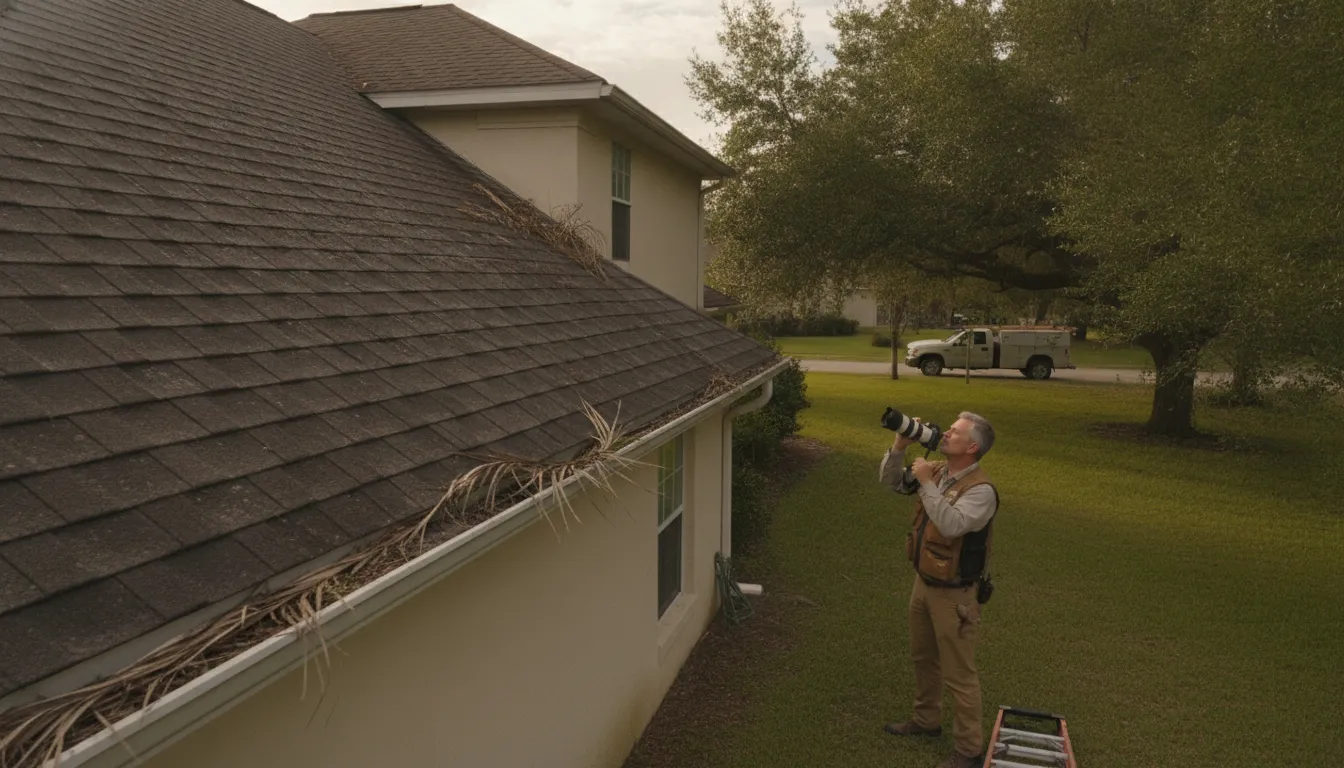
Your deductible reduces the amount available for a covered claim. For smaller losses, the National Association of Insurance Commissioners advises homeowners to check the deductible and consider whether paying for minor repairs themselves makes sense. A contractor can inspect the roof, document visible conditions with photographs, and explain whether the observed damage appears localized or widespread. That documentation can help you discuss the claim, but it does not determine coverage, cause, or the insurer’s final decision.

For background on the construction process and replacement planning, see this guide to what to expect during a Florida roof replacement. Confirm coverage questions, settlement terms, and claim requirements directly with your insurer or a qualified insurance professional.

What Florida’s Roof-Age and 25% Rules Actually Mean

Florida’s roof-age rules address insurance eligibility and renewal. They do not decide whether a specific storm claim will be paid. Under Florida Statute 627.7011, an insurer generally cannot refuse to issue or renew a homeowners policy solely because a residential roof is less than 15 years old. For a roof at least 15 years old. The homeowner must be allowed to obtain an inspection by an authorized inspector before replacement can be required as a condition of issuance or renewal. A qualifying inspection showing at least five years of useful life remaining can also protect against refusal based solely on roof age.

Roof age, ordinance coverage, and the 25% rule are separate questions

The statute calculates roof age from the last date when the full roof surface was built or replaced according to code. It also addresses coverage for costs needed to comply with applicable laws and ordinances. That coverage may be limited to 25% or 50% of the dwelling limit. A dwelling policy is generally deemed to include 25% law-and-ordinance coverage unless the policyholder provides a written refusal. These provisions still depend on the policy’s terms, limits, and exclusions.

The often-mentioned 25% rule is a building-code issue. It limits how much of a roof area or section may be repaired, replaced, or recovered in a 12-month period unless the applicable code requirements are met. See the cited Florida 25% rule explanation. It does not automatically require an insurer to pay for a full replacement. Whether a covered storm loss, code-related work, or replacement cost is payable remains a policy-specific coverage question, not a conclusion a roofer can make.

How to Document Storm Damage Before Filing a Claim

  1. Report the damage promptly. Contact your insurer or agent as soon as you can. Reporting timelines vary, and many insurers set claim deadlines. Ask what documentation and next steps your policy requires. The NAIC recommends prompt notice, while Florida’s consumer guide also advises immediately reporting the claim.
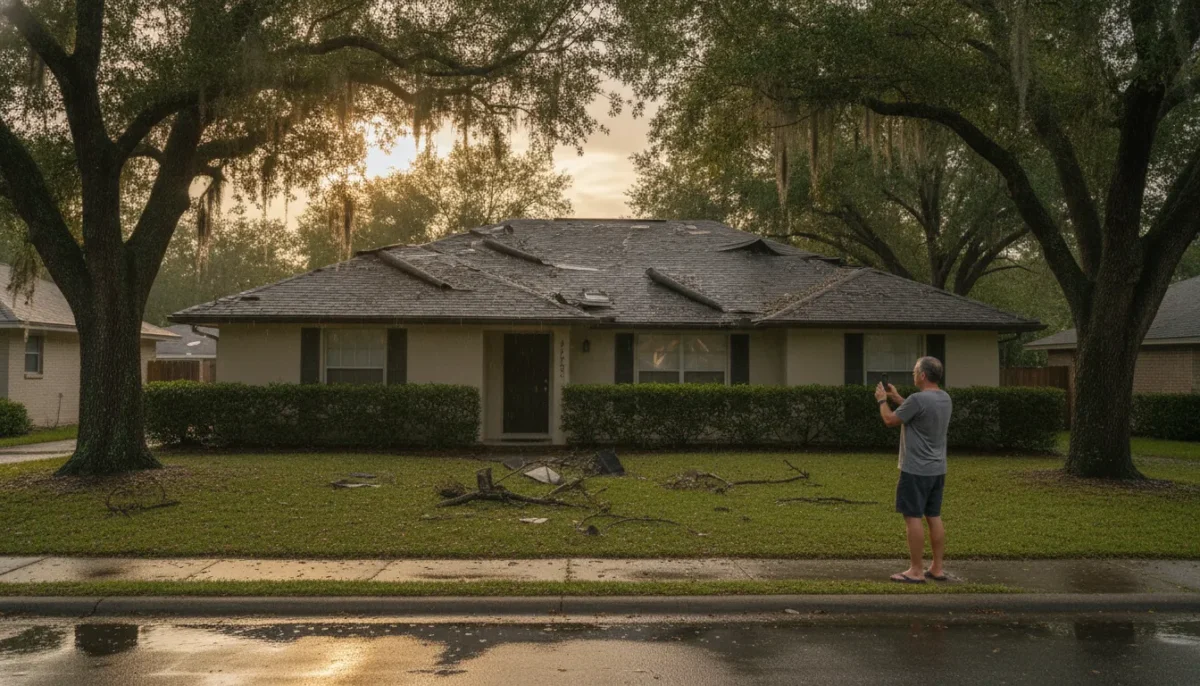
  2. Photograph the property before cleanup. From a safe location, take wide and close-up photos or video of visible roof damage, fallen branches, damaged ceilings, walls, floors, and personal property. If you must make an emergency repair first, photograph the condition before and after the work. Florida’s Department of Financial Services recommends keeping receipts for those repairs. Do not climb onto a wet or unstable roof.
  3. Protect the home from further exposure. Use reasonable temporary measures, such as having a qualified professional cover an opening or place a tarp where needed. Keep every receipt and note what was done. Temporary protection is not the same as authorizing permanent repairs, and reimbursement depends on the policy and covered loss.
  4. Build a damaged-item inventory. List each affected item with a specific description, approximate age when known, and location. Include photos, videos, purchase records, and receipts for repairs or newly purchased items. Keep copies in a secure location.
  5. Preserve evidence when practical. Do not discard damaged materials or belongings before the insurer has a reasonable opportunity to inspect them, unless leaving them in place creates a safety risk. Save samples or debris and record the storm date and visible conditions.
  6. Prepare for the insurer’s inspection. After a loss is reported, the insurer may send an adjuster, use a drone, or hire another expert to evaluate the cause and scope of damage. Be present if possible, provide your records, and request a copy of the written estimate or decision. A roofing contractor can document roof conditions, but cannot decide coverage.
  7. Check repair provisions before signing. Before entering a repair contract, ask your insurer whether the policy includes managed-repair requirements or preferred vendors. Read the agreement carefully, and do not sign under pressure. The Florida DFS consumer guide recommends confirming these provisions first: review its claim guidance for the process and limitations.

What to Do If Your Insurance Claim Is Denied or Underpaid

A denial or smaller-than-expected payment is not the end of the process, but it is a reason to slow down and review the details. Ask for the insurer’s written decision, itemized estimate, and explanation of the policy language used. Florida’s consumer guidance says you should generally receive a written denial or payment for the undisputed portion within 60 days of reporting a claim, subject to stated exceptions.

Review the scope before deciding what comes next

Compare the insurer’s scope with the damage observed during a qualified roof inspection. Look for omitted roof slopes, flashing, vents, interior water damage, or temporary protection needs. A contractor can document visible conditions and prepare an estimate, but cannot decide whether your policy covers the loss. For a practical overview of documenting weather-related damage, see this storm damage roof repair guide.

If the scope does not match the documented conditions. The Florida Department of Financial Services recommends obtaining estimates from contractors of your choice and submitting them to the insurer for reconsideration. Include photos, measurements, reports, and a clear explanation of each difference. Before signing a repair contract, confirm whether your policy includes managed-repair provisions or preferred vendors. Do not let anyone pressure you into work you do not understand or want.

If you still disagree, ask the Florida Department of Financial Services whether you qualify for its Residential Property Mediation program. The consumer guide identifies it as a no-cost option for eligible disputes. Mediation is not a guarantee of payment. North Wood’s Roofing can provide a straightforward inspection and documentation without pressure or a promise of claim approval.

How a Roofing Contractor Can Help Without Deciding Coverage

A qualified roofing contractor can help you understand the roof’s physical condition and organize useful documentation. That support can make conversations with your insurer more productive. But it does not answer the question, “does homeowners insurance cover roof replacement in Florida?” Coverage depends on your policy. The cause of loss, exclusions, deductible, and the insurer’s review.

What a contractor can document

During an inspection, a roofer can photograph observed damage and note visible signs of wind or weather impact. The roofer can explain whether the roof appears to need a repair or more extensive replacement. The contractor can also prepare a clear scope describing the work, materials, and areas requiring attention. If the roof is actively exposed, the roofer may recommend safe temporary measures to help limit additional damage. Florida consumer guidance also recommends documenting emergency repairs before and after the work and keeping receipts: Florida’s claim guide.

North Wood’s Roofing can provide roof repair and storm-damage services for homeowners in Gainesville, Live Oak, Lake City, and nearby North Florida communities. However, a roofer cannot interpret your policy, act as your adjuster, or guarantee claim approval. The insurer makes the coverage decision. If you disagree with that decision, Florida guidance says you may submit contractor estimates for reconsideration. Before signing repair work, confirm any preferred-vendor or managed-repair requirements with your insurer. You can request a free roof inspection to document the condition and discuss practical next steps without pressure.

Frequently Asked Questions

Can you insure a 20 year old roof in Florida?

Possibly. Roof age can affect eligibility, renewal, inspection requirements, and policy terms, but it does not by itself answer whether a later loss is covered. Florida law addresses certain issuance and renewal decisions for older roofs, including an inspection option in some circumstances. Review your policy and ask your insurer what documentation it requires.

Can I get my roof replaced for free in Florida?

There is no general free-roof replacement program through homeowners insurance. A policy may pay for covered damage after the deductible and subject to its limits, exclusions, and settlement terms. Normal aging, wear, or maintenance issues may not qualify. A contractor can document conditions and prepare repair or replacement options, but the insurer decides coverage.

What is the new law in Florida about roofs?

Florida’s roof-age provisions apply to homeowners policies issued or renewed on or after July 1, 2022. For qualifying roofs at least 15 years old, the law addresses when an insurer may require replacement and allows an authorized inspection in certain situations. It is an insurance eligibility rule, not a promise that storm damage will be paid. Read the Florida statute.

What is the 25% roof replacement rule in Florida?

The 25% rule is often confused with an automatic insurance payment rule. Florida law addresses law-and-ordinance coverage, which may be limited to 25% or 50% of the dwelling limit depending on the policy option. Building-code requirements and claim payment still depend on the applicable code, policy language, covered cause, limits, and deductible. Check the statute and your policy.

Schedule a Free, Honest Roof Inspection

A clear inspection can help you understand your roof’s condition and organize documentation before discussing storm damage with your insurer. North Wood’s Roofing can provide a straightforward assessment without deciding what your policy covers. To request a free, honest roof inspection, contact North Wood’s Roofing.
Categories
Blog

GAF Certified Roofing Contractor: What It Means

A roofing credential is useful only when you understand what it actually confirms. GAF certification is a manufacturer program, not a replacement for Florida licensing, insurance checks, or a close look at the contractor’s proposal and workmanship.

A GAF certified roofing contractor has met GAF’s requirements for participation in its contractor program and may offer certain GAF enhanced warranties associated with that certification level. Certified Plus is a separate level with different warranty access, so homeowners should verify the contractor’s current status rather than relying on a logo or sales claim.

For homeowners in Gainesville, Live Oak, Lake City, and nearby North Florida communities, that distinction makes the credential one useful part of a broader hiring decision. You can compare the contractor’s certification, Florida license, insurance, experience, written scope, and warranty details before signing. North Wood’s Roofing is listed in GAF’s contractor directory as Certified Plus. First, it helps to define what the certification itself means.

What Does a GAF Certified Roofing Contractor Mean?

Answer: A GAF certified roofing contractor is a roofer recognized by GAF, a roofing-material manufacturer, as participating in one of its contractor certification levels. The credential tells homeowners that the contractor has a relationship with GAF and may be eligible to offer certain GAF enhanced warranties. Subject to the applicable program rules and project requirements.

That is useful information when comparing roofers, but it is not the same thing as a Florida contractor license. GAF certification comes from the manufacturer. State licensing is a separate government-regulated credential. A careful homeowner should check both rather than treating one as a substitute for the other.

GAF presents Certified, Certified Plus, and Master Elite as separate levels. The level matters because the enhanced warranty options associated with a contractor can differ. GAF says certified contractors can offer its System Plus Limited Warranty. While its contractor information identifies other enhanced warranty offerings for higher certification levels, including Golden Pledge for Master Elite contractors. These options are not automatic, and certification alone does not guarantee workmanship, installation quality, or a particular warranty on every roof.

What the credential can tell you

  • The roofer is listed within a GAF contractor certification program.
  • The certification level may affect which GAF enhanced warranty options the contractor can offer.
  • The contractor’s current status can be checked through GAF’s official directory rather than relying only on an advertisement or sales presentation.

For example, North Wood’s Roofing is listed as GAF Certified Plus in GAF’s contractor directory. That listing is a starting point for confirming the manufacturer’s designation. You should still ask which roofing system is being proposed, what warranty applies to that specific system, and what the written scope of work includes.

In short, GAF certification is one screening signal, not a complete hiring decision. Pair it with license and insurance verification, a clear written estimate, and a conversation about how the contractor will handle your home’s repair or replacement needs.

GAF Certified vs Certified Plus: What Is the Difference?

Both GAF Certified and GAF Certified Plus are manufacturer program levels, not substitutes for a state contractor license. GAF’s published guidelines list state licensing where required, liability insurance, and workers’ compensation insurance among the program criteria shown for its certification levels. GAF may also consider factors such as roofing experience and customer reviews. Those published guidelines are useful context, but they are not a complete checklist for every contractor or project.

How GAF certification levels are described in GAF’s published materials
GAF level What GAF materials indicate Warranty distinction
Certified A GAF certification level for qualifying contractors that meet the program’s applicable requirements. GAF lists the System Plus Limited Warranty as an enhanced warranty available to Certified contractors, when the applicable requirements and roofing system qualify.
Certified Plus A separate GAF certification level with its own program status and eligibility considerations. GAF lists System Plus and Silver Pledge Limited Warranty options for Certified Plus contractors, subject to the applicable terms and qualifying system.
Master Elite A separate, higher GAF program level. It should not be treated as another name for Certified Plus. GAF lists the Golden Pledge Limited Warranty among offerings associated with Master Elite contractors, subject to the applicable terms and qualifications.

These distinctions matter because GAF says contractors may offer only the enhanced warranties associated with their certifications. Certification can provide access to certain warranty options, but it does not mean every roof automatically receives an enhanced warranty. The roofing products, system requirements, installation, registration, and warranty terms still matter. A contractor should explain which option applies to your proposed project before work begins.

North Wood’s Roofing is listed as GAF Certified Plus in GAF’s contractor directory under Contractor ID 1147800. Its Florida roofing license, CCC1335501, is a separate credential. Homeowners can review both types of information when comparing a GAF shingle roofing option or discussing a replacement.

What Does GAF Certification Protect Homeowners From?

A manufacturer credential cannot remove every risk from a roofing project, but it can give you another useful point of comparison. GAF’s program connects certified contractors with certain manufacturer warranty offerings, and GAF states that contractors may offer only the enhanced warranties associated with their certification level. That means certification can help you ask more precise questions about product systems, warranty eligibility, and the contractor’s current standing.

It does not, by itself, prove that a contractor will do excellent work on every project. It also does not replace a Florida contractor license, proof of insurance, a written scope of work, or your own review of the proposal. A GAF certification is a manufacturer relationship. Licensing and insurance are separate parts of evaluating who is qualified and prepared to work on your home.

What certification can help you evaluate

GAF says only contractors certified by GAF can offer its enhanced warranties, and the available options depend on the contractor’s certification level and the qualifying roofing system. Homeowners should treat that as a reason to request the exact warranty name, requirements. And exclusions in writing, not as an automatic promise that every installation receives enhanced coverage. GAF’s published program guidelines can also change, so current verification matters.

Certification may also make it easier to compare contractors who work with the roofing products you are considering. For example, North Wood’s Roofing is listed in GAF’s directory as GAF Certified Plus. You can review the company’s current listing and contractor information in the GAF contractor directory. That status should be considered alongside the company’s Florida license, project proposal, communication, and inspection findings.

What it cannot guarantee

Certification cannot guarantee workmanship, a leak-free result, a specific installation timeline, or a particular warranty outcome. It also cannot tell you whether the recommended repair or replacement is appropriate for your roof. A careful inspection and a clear written scope still matter. The FTC recommends checking that a contractor is licensed and insured, asking for proof of insurance. And getting a written estimate that identifies the work, materials, completion date, and price.

  • Confirm the contractor’s current certification in GAF’s official directory.
  • Ask which exact warranty, if any, applies to your proposed roofing system.
  • Verify the state license and ask for current proof of insurance.
  • Request a written scope that explains materials, work, timing, and price.
  • Compare the proposal and inspection findings before choosing a contractor, rather than selecting based on a credential alone.

For more context on choosing a roofing contractor, use certification as one screening tool within a broader, written evaluation.

How Can You Verify a GAF Certified Roofing Contractor?

A manufacturer credential is useful only when it matches the contractor you are considering and is current. Before signing a roofing agreement, take a few minutes to verify the company in the official directories. This helps you separate a GAF program listing from a Florida license, because they are different credentials maintained by different organizations.

  1. Search the official GAF contractor directory. Use GAF’s contractor verification page to search by the contractor’s name or business. Look for the exact legal or business name, location, certification level, and any contractor identification information shown in the listing. Do not rely only on a logo, badge, or statement on a contractor’s website.
  2. Match the listing to the company you plan to hire. For North Wood’s Roofing, compare the details with the North Wood’s Roofing listing in GAF’s directory. The listing identifies North Wood’s Roofing Inc. as GAF Certified Plus and shows Contractor ID 1147800. Check the listing directly when you are evaluating the contractor, since program information can change.
  3. Check the Florida license separately. GAF certification is a manufacturer program. It is not the same as authorization to perform construction work in Florida. Florida’s Construction Industry Licensing Board provides license information through the state’s DBPR verification resources. Search by license number, contractor name, or business name, then open the matching record to confirm the licensee and associated business.
  4. Compare the records carefully. North Wood’s Roofing’s Florida Certified Roofing Contractor license is listed as CCC1335501, while 1147800 is the GAF Contractor ID. Treat them as separate numbers and confirm that the business names and relevant details line up. If a search returns similar records, open the record rather than assuming the first result is correct.
  5. Ask what the current credentials mean for your project. Ask the roofer to identify the applicable GAF products, installation scope, and any warranty option being discussed in writing. Certification can affect which GAF enhanced warranties a contractor may offer, but it does not automatically guarantee a specific warranty, workmanship result, or outcome on every project. Verify the current details before moving forward.

This process gives you a clearer starting point when comparing roofers in Gainesville, Live Oak, Lake City, and surrounding North Florida communities. It also leaves room to review insurance, references, scope, and the written estimate before making a hiring decision.

Why GAF Certification Matters in North Florida

Roofing decisions in Gainesville, Live Oak, Lake City, and surrounding North Florida communities should account for more than the material selected. A manufacturer credential can give homeowners another concrete detail to verify when comparing contractors, especially when a roof repair or replacement is a significant investment.

GAF certification does not replace Florida licensing, and it does not guarantee workmanship or a particular project result. It is a manufacturer program that helps distinguish contractors who participate in GAF’s contractor network. That distinction is useful when you want to ask better questions about experience, installation plans, product selection, and the documentation that will accompany your project.

For example, North Wood’s Roofing is listed in GAF’s directory as a GAF Certified Plus contractor. The same listing identifies the business separately with Florida license number CCC1335501 and GAF Contractor ID 1147800. Those are different credentials, and checking both helps avoid treating a manufacturer’s certification as a substitute for state licensing.

A local credential should support a broader hiring review

Certification is most helpful when it fits into a complete evaluation of the company serving your area. Consider the contractor’s communication, inspection process, written scope of work, insurance information, and ability to explain why a particular roofing system fits your home. You can also review North Wood’s local roofing experience to learn more about the team and its approach to residential work.

North Wood’s Roofing offers both shingle and metal roofing services. If you are comparing shingle systems, review the company’s GAF shingle roofing options and ask which products and installation details fit your home’s condition. The right choice depends on the roof, not simply on a credential or product name.

A careful process also starts with seeing the roof’s actual condition. Scheduling a professional roof inspection can help you understand whether the next step is repair, maintenance, or replacement. For homeowners across North Florida, GAF certification is one useful hiring signal, but clear findings and straightforward recommendations matter just as much.

What Else Should You Check Before Hiring a Roofer?

A manufacturer credential can be useful, but it should be one part of a broader hiring decision. Before signing, use a practical checklist that confirms the contractor is properly qualified, adequately insured, clear about the work, and willing to document the agreement. The FTC recommends considering only licensed and insured contractors, checking licenses with the appropriate government office, and asking for proof of insurance. Its home-improvement guidance is a useful reference as you compare roofing companies.

Confirm the license and insurance

In Florida, construction businesses must be qualified by a properly licensed individual contractor. The Florida licensing authority says homeowners can verify a contractor using the license number. Contractor name, or business name, then review the record to confirm the licensee and associated business. A Florida license is separate from GAF manufacturer certification, so check both credentials independently when a contractor presents both.

Ask for current proof of liability insurance and workers’ compensation coverage. Do not rely on a badge, logo, or verbal assurance alone. The FTC specifically advises homeowners to request proof of insurance. If the contractor uses subcontractors, ask who will perform the work and how coverage applies to everyone on the project.

Look beyond a certificate

Ask for references from comparable roof projects and review feedback with a critical eye. The FTC recommends seeking recommendations from people you know and trust, checking local consumer-protection resources for complaints, and using reputable review sites. A GAF certification can be a helpful screening signal, but it does not replace questions about communication, supervision, cleanup, and how the contractor handles problems.

Get the scope in writing

A written estimate should identify the work, materials, expected completion date, and price. Ask whether the scope includes removal and disposal, ventilation, flashing, deck repairs, permits, cleanup, and warranty documentation when those items apply. Compare estimates on what each contractor will actually do, not just the bottom-line figure. The FTC also recommends reading the contract carefully and confirming the contractor’s name, address, phone number, and license number. For more planning questions, see this roof replacement guide for homeowners.

Frequently Asked Questions

What does GAF certification mean?

It means the roofer participates in a credential program from GAF, a roofing-material manufacturer. The certification can indicate eligibility to offer certain GAF enhanced warranties, but it does not guarantee workmanship, project results, or that every roof qualifies for a specific warranty. Homeowners should review the proposed roofing system and warranty terms in writing.

What is the difference between GAF Certified and Certified Plus?

They are separate GAF certification levels with different program benefits. GAF lists System Plus as an enhanced warranty available through Certified contractors, while Certified Plus contractors may offer System Plus and Silver Pledge limited warranties. Availability depends on the certification level and qualifying roofing system, so ask which warranty applies to the specific project. GAF outlines these warranty distinctions.

How can I verify a roofer’s GAF status?

Search the contractor’s exact business name in GAF’s contractor verification directory, then compare the listing’s location and certification level with the proposal. For example, North Wood’s Roofing is listed as GAF Certified Plus with Contractor ID 1147800. Also verify the contractor’s Florida license separately through the state’s license lookup, because a manufacturer credential and a state license are different records.

What should I check besides GAF certification?

Confirm the roofer’s applicable Florida license, insurance, written scope of work, materials, completion expectations, and price. Florida’s licensing authority says homeowners can search by license number, contractor name, or business name. Compare the result with the legal business information on your estimate, and ask questions about ventilation, cleanup, workmanship coverage, and the exact warranty documents before signing.

Get Started With a Clear Roof Evaluation

If you are comparing roofing credentials or want a better understanding of your roof’s condition, a professional evaluation can help you make a more informed decision. Contact us to request a free, honest roof inspection or estimate from North Wood’s Roofing. Share your questions and project details through the North Wood’s Roofing contact page, and the team can discuss an appropriate next step for your North Florida home.

Categories
Blog

How Long Does a Roof Last in Florida?

A Florida roof does not age on a calendar alone. Sun, heat, heavy rain, storm exposure, material quality, roof design, and maintenance all affect how long it continues to protect your home.

So, how long does a roof last in florida? Common estimates range from about 10 to 20 years for asphalt shingles and 17 to 20 years for metal, while some materials can last considerably longer. These are general ranges, not guarantees, and a roof’s condition matters more than its age by itself.

A few isolated storm or flashing issues may be repairable, while widespread damage or an aging system may point toward replacement. This roof replacement guide for Florida homeowners explains that decision in more detail. First, compare the typical lifespan of each roofing material and the conditions that can shorten or extend it.

How Long Does a Roof Last in Florida by Material?

Roofing material makes a meaningful difference, but a published lifespan is only a planning estimate. Florida exposure, the specific product, installation quality, maintenance, and proximity to saltwater can all affect how long a roof remains dependable. The ranges below are useful for comparison, not a deadline for replacement.

Estimated roof lifespans by material in Florida
Material General Florida estimate Variables to consider
3-tab asphalt shingles About 10 to 12 years Heat, storms, installation, and maintenance can affect service life.
Architectural asphalt shingles About 15 to 20 years Product quality and Florida weather exposure can move the result higher or lower.
Metal roofing About 17 to 20 years in one industry estimate; other reported ranges reach 35 to 70 years Panel type and proximity to saltwater are important variables.

One Florida roofing life-expectancy reference places 3-tab shingles at roughly 10 to 12 years, architectural shingles at roughly 15 to 20 years, and metal at roughly 17 to 20 years. Another reported Florida range puts metal roofing at approximately 35 to 70 years, depending on the system and its proximity to saltwater. That difference is a reminder to ask what product and exposure conditions a number describes before using it to plan a replacement.

For homeowners comparing GAF shingle roofing options, North Wood’s Roofing installs GAF Timberline HDZ and Timberline UHDZ systems. The company’s metal roofing options page describes its offering as having a 50+ year lifespan with minimal maintenance. That is an offering-specific description, not a guarantee for every metal roof.

So, how long does a roof last in Florida? The material range is a starting point, while the roof’s actual condition and exposure determine what action makes sense. An inspection can help distinguish normal aging from damage that needs timely attention.

Why Florida Roofs Age Faster Than National Averages

Florida roof life is shaped by more than the material listed on the estimate. Local weather, roof design, material quality, installation, and maintenance all influence how long a roof performs. That is why a general answer to “how long does a roof last in florida” should be treated as an estimate, not a deadline. North Florida roofs face their own combination of heat, humidity, heavy rain, and storm exposure, even when they are well maintained.

Heat, sunlight, and humidity add ongoing stress

Heat and ultraviolet exposure gradually work against asphalt roofing materials. InterNACHI notes that hot climates can significantly reduce asphalt shingle life. Repeated heating and cooling can also place stress on roofing components and the connections around them. Humid conditions keep the roof system in a demanding environment, particularly when moisture has an opportunity to collect around flashing, penetrations, or poorly ventilated areas.

Ventilation matters because the roof assembly needs a reasonable way to manage heat and moisture. Poor airflow does not automatically mean a roof will fail, but it can contribute to an environment that is harder on materials. The design of the roof, attic, and drainage details should be considered alongside the roofing product itself.

Rain and storms can shorten the timeline

Heavy rain tests flashing, pipe penetrations, valleys, and drainage paths. Wind-driven rain can reach areas that ordinary rainfall may not, especially around edges, transitions, and other vulnerable details. Well-maintained flashing can last a long time, but its connections can fail, which is one reason seasonal inspection and maintenance are recommended.

Severe weather can shorten a roof’s overall service life or create isolated damage that needs repair. A single storm does not always mean the entire roof needs replacement, but missing or damaged components should be evaluated before a small problem becomes a leak. Homeowners dealing with recent high winds or heavy weather can review storm damage roof repair options for practical next steps.

Installation and maintenance still matter

Climate exposure is only part of the explanation. A roof installed with attention to building design and vulnerable connections may perform differently from one with installation defects or neglected maintenance. Promptly addressing damage, keeping drainage paths clear, and checking flashing can help identify problems earlier. North Wood’s Roofing serves homeowners in Gainesville, Live Oak, Lake City, and nearby North Florida communities. A roof assessment should consider actual condition and exposure rather than relying on a national average alone.

How Do You Know When a Florida Roof Is Near the End of Its Life?

A roof does not reach the end of its useful life on one universal date. Age, exposure, installation quality, maintenance, and storm history all affect its condition, so warning signs should prompt a closer inspection rather than automatically prove that replacement is necessary.

Look for changes across the roof surface

Shingles that are curling, cracking, blistering, or missing deserve attention, especially when the pattern extends beyond one isolated spot. Heavy granule loss can leave bald-looking areas in the shingle surface or collect in gutters. These changes may indicate weathering, but an inspection is needed to determine whether the roof can be repaired or whether deterioration is widespread.

Pay attention to leaks and attic conditions

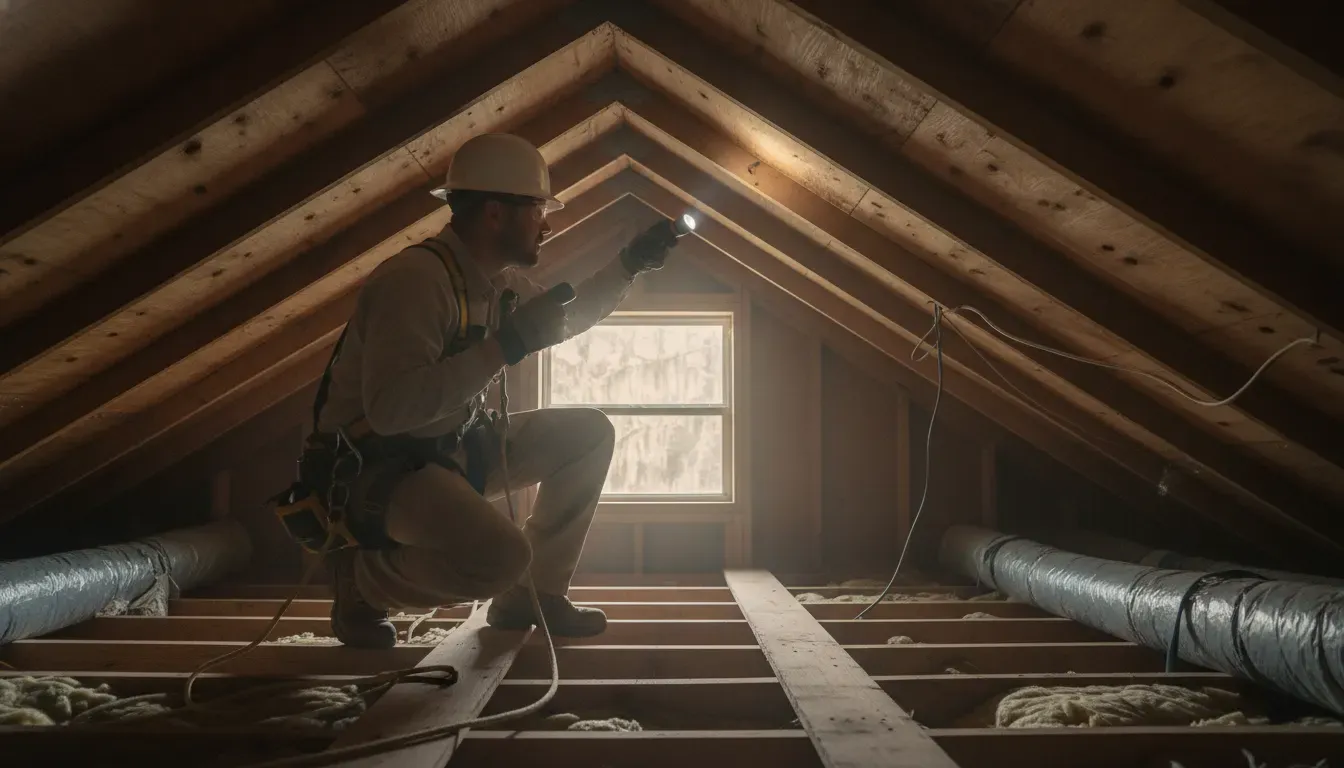
A recurring leak, water stain, damp insulation, musty odor, or visible daylight in the attic should not be ignored. Some leaks appear only during heavy rain or wind-driven rain, and water can travel before it becomes visible inside the home. For more detail on what to watch for, review these warning signs of a roof leak.

Check structural and detail areas

A sagging roofline is a more serious concern because it can point to moisture-related damage or a problem with the roof structure. Damaged, loose, or separated flashing around chimneys, walls, vents, and other roof penetrations can also create entry points. Flashing itself may last a long time when maintained, but its connections can fail, which is why seasonal inspection and maintenance are recommended. InterNACHI’s Florida roof-life guidance supports treating flashing condition as part of the overall evaluation.

Repeated storm repairs are another reason to look at the complete roof rather than addressing each leak in isolation. Severe weather can shorten a roof’s overall service life or cause isolated damage that is still repairable. A series of patches does not automatically mean replacement is required, but it can show that the damage pattern, remaining materials, and age should be reviewed together. Because lifespan figures are estimates and exposure varies, a qualified in-person assessment is more useful than an age cutoff alone.

How to Extend Your Roof’s Lifespan in North Florida

Roof maintenance is less about making a promise about a certain number of extra years and more about protecting the materials you have. In North Florida, a consistent routine can help you find small problems before water, heat, humidity, or storms turn them into larger repairs.

Schedule inspections and address small problems early

Arrange periodic roof inspections, especially after severe weather or when you notice a change inside the attic or home. Seasonal inspection and maintenance are particularly important for flashing because the connections can fail even when the flashing itself still appears serviceable. Prompt attention to lifted or damaged shingles, small leaks, loose flashing, and worn pipe boots may help preserve more of the existing roof. Whether repair is appropriate depends on the roof’s condition and the pattern of damage, so avoid treating one isolated issue as proof that the entire roof needs replacement.

Keep water and vegetation under control

Keep gutters and downspouts clear so leaves and storm debris do not interfere with normal drainage. Trim branches and manage vegetation near the roof, while avoiding aggressive cleaning methods that can damage shingles, coatings, or flashing. Do not walk on the roof or use pressure washing as a do-it-yourself shortcut. If moss, algae, debris, or another condition needs attention, ask a roofing professional which cleaning method is safe for the material.

Check the details around the roof

Flashing around walls, valleys, chimneys, and roof penetrations deserves close attention. Pipe boots and seals can become vulnerable points, allowing water to enter even when the main field of roofing looks intact. Adequate attic airflow also matters because ventilation helps manage heat and moisture, but the right solution depends on the home’s existing design. Do not add vents or close openings without understanding how the attic system is intended to work.

Keep inspection photos, repair invoices, and notes about storm events in one place. This documentation makes it easier to spot recurring issues and explain the roof’s history during a future assessment. North Wood’s Roofing’s roof tune-up and preventive maintenance service includes inspection, gutter blowout, pipe-boot and flashing resealing, and a photo report, giving homeowners a documented starting point for ongoing care.

Should You Repair or Replace an Aging Roof?

Roof age matters, but it is not a decision by itself. A roof near the end of its estimated service life may still have repairable, isolated damage. A newer roof can also need more extensive work after a severe storm. Use this sequence to organize the decision before committing to either option.

  1. Start with the roof’s age and material. Treat published lifespan ranges as estimates, not deadlines. Heat, weather, installation quality, maintenance, and design all affect how long a roof remains dependable. An older roof deserves closer scrutiny, but age alone does not prove that replacement is necessary. A qualified assessment should consider how much useful life the existing material may have left.
  2. Map where the damage occurs. One leak, a limited area of storm damage, or a failed flashing connection may point toward a targeted repair. Damage spread across multiple roof planes, recurring failures in several locations, or widespread deterioration suggests a broader problem. Flashing connections can fail even when the surrounding material appears sound, so do not assume every leak means the entire roof has reached the end of its life. Review the roof repair options for examples of damage that may be addressed without full replacement.
  3. Look at the condition of the remaining material. An inspection should examine more than the spot where water appeared. It should consider whether shingles, metal panels, underlayment, flashing, penetrations, and roof edges remain in usable condition. If most of the roof is still performing well and the problem is localized, repair may be a reasonable way to extend its life. If the material is broadly brittle, damaged, or deteriorated, patching one area may not solve the larger issue.
  4. Review the leak and repair history. A single, clearly identified leak is different from repeated leaks after prior repairs. Keep photos, inspection notes, and invoices when available. A pattern of recurring problems can indicate that the roof needs a more comprehensive solution, even when each individual repair seems small. North Wood’s Roofing describes repair as a potential way to address leaks and age- or weather-related damage without full replacement. But the right outcome depends on the roof’s actual condition.
  5. Account for storm impact separately. Severe weather can shorten a roof’s overall service life or create isolated damage that is repairable. After a storm, document visible conditions from the ground and arrange an inspection rather than guessing from one missing shingle or interior stain. A storm damage roof repair assessment can help separate localized impact from broader aging.
  6. Get an in-person assessment before deciding. The practical choice between repair and replacement depends on age, damage pattern, remaining material condition, leak history, storm impact, and what an inspector finds on site. If you are unsure, request a free roof inspection and ask for clear photos and options. If replacement is the better long-term path, review this roof replacement guide for Florida homeowners so you can compare the scope with confidence.

Frequently Asked Questions

How long does a typical roof last in Florida?

There is no single deadline because heat, storms, installation quality, ventilation, maintenance, and material all matter. As a general estimate, InterNACHI lists Florida life expectancies of about 10 to 12 years for 3-tab asphalt shingles. 15 to 20 years for architectural shingles, 17 to 20 years for metal, and 50 or more years for slate. These are ranges, not guarantees. Review the Florida roof life estimates.

Does a 15-year-old roof always need to be replaced?

No. Fifteen years is an evaluation point, not an automatic replacement order. An inspection should consider the roof material, visible condition, leak history, storm damage, flashing, and whether problems are isolated or widespread. A well-maintained roof may have useful service life remaining, while a heavily exposed or poorly installed roof may need work sooner.

Which roofing material lasts the longest in Florida?

Material comparisons depend on the specific product, installation, exposure, and maintenance. Metal and slate generally have longer potential service lives than asphalt shingles, but the roof system still needs proper detailing and upkeep. North Wood’s Roofing describes its metal-roofing offering as having a 50-plus-year lifespan with minimal maintenance, which is an offering-specific description, not a guarantee for every metal roof.

How do Florida heat and storms affect roof life?

Hot conditions can reduce asphalt shingle life, while severe weather can shorten overall service life or cause isolated damage that may be repairable. Wind-driven rain and storms also make flashing and other roof connections important inspection points. After a significant storm, look for leaks or visible damage and arrange an assessment rather than assuming the roof is unaffected.

Should I repair an aging roof or replace it?

Repair may be appropriate when damage is limited and the surrounding roofing remains in sound condition. Replacement becomes more likely when damage is widespread, leaks recur, or the roof is near the end of its expected service life. The right decision depends on the damage pattern, age, material condition, and an in-person assessment, not age alone.

Schedule a Free, Honest Roof Inspection

Roof age and visible warning signs do not always tell the whole story. A closer assessment can help you understand whether maintenance, a targeted repair, or replacement makes sense for your North Florida home. North Wood’s Roofing serves homeowners in Gainesville, Live Oak, Lake City, and nearby communities. Request a free roof inspection with a straightforward, no-pressure evaluation.

Categories
Blog

GAF Timberline HDZ Shingles: Worth It for Florida?

Choosing a roof shingle in North Florida means weighing more than color: wind, heavy rain, installation details, and the terms behind a product claim all matter.

GAF Timberline HDZ shingles may be worth considering for a Florida home if their documented features and written warranty fit your priorities, and the full roofing system is installed correctly. They are not a promise that a roof will avoid storm damage, so the shingle alone should not decide the purchase.

GAF identifies LayerLock technology and a wide nailing area as installation features. Its product page also lists a Class 3 UL 2218 impact test result. Those details are useful starting points, not a substitute for checking the roof assembly and applicable warranty terms. Before comparing options, it helps to understand what the product is designed to do and what those specifications do not guarantee. If replacement is on the horizon, this guide to the roof replacement process in Florida explains the broader decisions involved.

What GAF Timberline HDZ Shingles Are Built to Do

Timberline HDZ is a laminated architectural asphalt shingle. Its layered profile gives a roof more visual dimension than a flat, uniform surface. The shingle format suits homeowners who want a familiar asphalt roof with a more textured appearance. Color and style availability can vary, so it is worth reviewing actual options for the home rather than assuming every color is available everywhere.

GAF also builds the product around installation features. LayerLock technology is part of the shingle design, and GAF describes its StrikeZone nailing area as the widest in the industry. In practical terms, these features are intended to give the installer a clear, usable area for fastening shingles in place. They are installation aids, not a promise that a roof cannot lose shingles or suffer damage. The finished roof still depends on the whole assembly, the roof’s condition, and work completed according to the manufacturer’s instructions. GAF’s Timberline HDZ product information describes the product and its stated features.

A wider nailing area can make the fastening target easier to identify during installation, but it does not replace correct placement and fastening. Homeowners can ask the roofing contractor how the crew will follow the applicable installation instructions and what components are included in the proposed roof system. That is more useful than treating a product feature as a stand-alone guarantee of wind performance or roof life.

HDZ also has a limited algae-protection warranty, but its scope is specific. GAF’s 25-year StainGuard Plus Algae Protection Limited Warranty applies to blue-green algae discoloration. It is available only on products sold in packages bearing the StainGuard Plus logo. This is not a general warranty against all staining, roof wear, or other roof problems. Check the package and the applicable warranty documents for the product being installed. GAF’s product page provides the current stated term and limitation.

Those features may help explain why a homeowner considers this shingle, but they do not answer every selection question. Appearance, the home’s roof design, the other roofing components, installation details, and written warranty terms all matter. To compare available GAF shingle roofing options, start with the styles and product choices that fit the home’s needs, then discuss how the complete roof will be installed.

How GAF Timberline HDZ Shingles Fit Florida Wind and Storm Conditions

North Florida roofs face more than one kind of weather stress. Strong winds can lift or tear roofing materials, while wind-driven rain, hail, and other storm hazards can create different kinds of damage. GAF Timberline HDZ shingles offer documented product features that are relevant to some of these concerns, but the shingle alone cannot make a roof stormproof.

GAF says Timberline HDZ passes the UL 2218 Class 3 impact-resistance test. That classification is a useful comparison point, not a promise that shingles will escape damage in every hail event. UL and IBHS explain that the steel-ball test does not capture every real-world damage mode, including dents or loss of granules. A rating should therefore be considered alongside the home’s exposure, roof condition, and the limits of the applicable warranty. GAF’s HDZ product information and UL and IBHS testing overview describe these product and test details.

HDZ also may qualify for GAF’s WindProven Limited Wind Warranty, which GAF describes as having no maximum wind-speed limitation when the required combination of accessories is used. For HDZ, GAF lists starter strips, roof deck protection, ridge cap shingles, and either a leak barrier or attic ventilation. The warranty has its own terms and eligibility requirements. Its no-maximum wording is not a guarantee against storm damage, and it should not be read as a claim that a roof can withstand any wind event. Review the current written warranty and confirm that the planned products and installation meet its conditions.

Insurance treatment is separate from a product warranty. Florida’s Office of Insurance Regulation says mitigation discounts apply only to the hurricane-wind portion of a policy and are not calculated by simply adding individual discounts together. A Class 3 rating or a particular roof covering does not establish that an insurer will discount a policy. Homeowners should ask their insurer what documentation and roof features count. Florida’s mitigation guidance explains how these discounts are considered.

Wind is only part of hurricane risk. NOAA’s Saffir-Simpson scale categorizes hurricanes by sustained wind speed, but it does not account for storm surge, rain flooding, or tornadoes. Those hazards can affect a home even when a roof covering performs as intended. NOAA’s hurricane scale explanation makes those limits clear.

That is why the complete roof assembly matters. FEMA guidance calls attention to proper roof-sheathing attachment, underlayment laps and fastening, and roof-edge flashing. These layers and connections help determine how the roof performs and how the home is protected if shingles are lost. Product approval must match the proposed installation. Florida’s product approval record lists approval FL39780-R2 under the 2023 code. Applicability depends on the product, assembly, local requirements, and authority having jurisdiction. FEMA’s roofing advisory offers practical context for these assembly details. When comparing bids, ask what components are included and how the proposed system will be installed, not just which shingle is named.

GAF Timberline UHDZ vs HDZ: What Changes with the Upgrade?

The most concrete differences are the impact-test classification on eligible products and the stated algae-discoloration warranty term. Neither difference, by itself, establishes how long a roof will last or means that a roof is hail-proof. The package details and complete written warranty matter, so compare the exact products being proposed rather than relying on a shorthand model name.

Documented product differences:

  • Impact test: GAF lists HDZ as UL 2218 Class 3. UHDZ with UltraMat is Class 4 only on qualifying packages with the UltraMat logo and Class 4 statement.
  • Algae warranty: HDZ has a 25-year limited warranty against blue-green algae discoloration on eligible packages. UHDZ has a 30-year version of that limited algae warranty on eligible packages.
  • Appearance: Compare available colors and samples for the exact products. Choose the visual style that fits the home.

GAF describes HDZ as Class 3 and UHDZ with UltraMat as Class 4. The UHDZ qualification is specific: look for the UltraMat mark and Class 4 statement on the package. GAF says the Class 4 test was performed under controlled laboratory conditions. A higher test classification is not a promise that shingles will avoid damage in a real hail event, and it does not establish a longer service life. GAF also states that hail damage is not covered under the UHDZ limited warranty. Review the current product and warranty documents before making a decision.

The algae terms address a narrower issue than general roof performance. The HDZ term is 25 years; the UHDZ term is 30 years. Both apply to blue-green algae discoloration only when the product is sold in packaging bearing the applicable warranty logo. Those stated terms should not be read as the expected life of the shingles or as a broader promise about roof condition. Ask which package and warranty apply to the quoted installation.

Appearance is a separate consideration from the test rating. Look at the actual color choices and samples available to you. Consider how each shingle will look alongside your siding, trim, and other exterior finishes. A product name alone does not tell you which shade or visual effect you will prefer. North Wood’s Roofing can help homeowners compare GAF shingle roofing options and review the product details alongside the roof system and written warranty. The better fit depends on what matters for your home, not on treating one rating or warranty term as a guarantee of overall performance.

For a fair comparison, ask the contractor to identify the exact model. Confirm any package markings needed for a stated classification or algae term, and provide the applicable warranty documents. That keeps the decision grounded in the product actually being installed.

What Does the GAF Timberline HDZ Warranty Actually Cover?

Warranty names can sound broader than the protection they describe. For eligible Timberline HDZ packages bearing the StainGuard Plus logo, GAF offers a 25-year limited warranty against blue-green algae discoloration. That is a specific algae-related benefit, not a promise that the entire roof will stay stain-free or that every kind of damage is covered. Check the package and the applicable written warranty for the product installed. GAF’s Timberline HDZ product information outlines this qualification.

HDZ also has a 15-year WindProven Limited Wind Warranty. GAF describes no maximum wind-speed limitation for qualifying installations. This phrase is part of a limited warranty, not a guarantee that shingles cannot lift or a roof will withstand a storm without damage. The warranty applies to GAF shingles with LayerLock technology and requires four accessory categories: starter strips, roof deck protection, ridge cap shingles, and either leak barrier or attic ventilation. Missing or substituted components may affect eligibility, so confirm the exact system rather than relying on the shingle name alone. Review the product terms with GAF.

It is also important to separate a manufacturer’s limited product warranty from an installer’s workmanship promise. A manufacturer warranty sets out the manufacturer’s coverage and conditions for the product; it does not automatically define what an installer will cover for its labor or installation. Those terms are separate and should be provided in writing. North Wood’s Roofing is GAF Certified Plus, not Master Elite, and no particular workmanship warranty term should be assumed based on that certification.

Before work begins, ask the contractor to identify the exact HDZ package and warranty document. List the components being installed, and explain which warranty applies to each part of the roof system. Ask how installation-related concerns are handled, what exclusions or conditions matter, and who to contact if an issue arises. Keep the written documents with the estimate and project records.

Warranty details are only one part of comparing a proposal. The roof deck, underlayment, flashing, and other components also shape the finished system. For context on selecting materials and planning the project, see this guide to choosing roofing materials during roof replacement. A careful review of the written terms can help North Florida homeowners compare options without treating a warranty headline as a promise of storm-proof performance.

What Matters During a Timberline HDZ Roof Installation?

The shingle is only the visible part of a roof. Performance also depends on the condition and attachment of the roof deck, water-shedding layers beneath the shingles, details at edges and penetrations, and compatible system components. Before work begins, ask the contractor to explain what the estimate includes and how the existing roof will be assessed.

Start with the roof deck. Once old roofing is removed, damaged or deteriorated sheathing may need attention, and the deck must be fastened appropriately for the specific roof and project. FEMA advises verifying proper attachment of the roof sheathing before underlayment is installed, and checking that the deck is nailed as specified before the roof covering goes on. Those recommendations are useful prompts for a conversation, not a one-size-fits-all fastening schedule. Ask how the crew will inspect and document the deck, and how any needed repairs or fastening work will be handled.

Underlayment provides another layer beneath the shingles. Its product choice, laps, fastening, and integration with flashing affect how the assembly manages water if moisture gets beneath the roof covering. FEMA’s advisory discusses underlayment as an enhanced secondary water barrier in hurricane-prone areas, including inland locations, and calls attention to proper laps and fastening. Ask which underlayment is specified, where it will be used, and how it will be installed. Details should match the roof design and applicable project requirements rather than being assumed from a generic checklist.

Roof edges deserve a close look as well. FEMA specifically identifies roof-edge flashing as an item to verify on asphalt-shingle roofs. Flashing helps manage water at vulnerable transitions, while correctly selected and installed components around valleys, walls, and penetrations help complete the system. Ask how existing flashing will be evaluated and whether the proposal includes replacement or reuse; the answer should be specific to the roof rather than a blanket promise.

Compatible accessories and ventilation also matter. GAF’s product information says its WindProven Limited Wind Warranty requires LayerLock shingles and four GAF accessory categories. These are starter strips, roof deck protection, ridge cap shingles, and either a leak barrier or attic ventilation. The warranty language applies only when its conditions are met; it is not a guarantee that a roof cannot be damaged by wind. Confirm which components are included and request the applicable warranty terms in writing. Ventilation should be considered as part of the home’s overall roof design, not treated as a substitute for sound deck work or water-management details.

For a broader overview of planning, tear-off, and other roof replacement steps, review the replacement guide. A clear proposal should make it easier to understand both the Timberline HDZ shingles and the system being installed beneath and around them.

Is GAF Timberline HDZ Worth Considering for a North Florida Home?

GAF Timberline HDZ may be worth considering if its proposed roof assembly, installation plan, and written warranty fit your home. It is not automatically right for every replacement. Judge the complete proposal against your priorities, not by one product feature alone.

Start with the condition and needs of your roof. Ask what the inspection found, whether replacement is necessary, and which parts of the roof system are included in the scope. Deck condition, underlayment, flashing, ventilation, and compatible accessories all affect what is being proposed. A shingle choice should be considered alongside those components and the installation details, rather than as a stand-alone promise of protection.

Then look at the written terms. Ask which manufacturer warranty applies to the exact products and accessories in the proposal, what conditions it requires, and what it does not cover. Keep that separate from the contractor’s workmanship terms. Request both in writing and make sure the installation plan matches any product requirements. This gives you a clearer basis for comparing options without assuming that a warranty covers every component or every kind of storm damage.

For homeowners in Gainesville, Live Oak, and Lake City, local weather is part of the decision, but a shingle alone cannot make a roof stormproof. Consider your priorities for appearance, the roof’s existing condition, and how the quoted assembly addresses the home’s needs. If you are reviewing estimates, compare the same scope of work and materials where possible. Our guide to factors that shape a roof replacement estimate explains what to look for beyond the product name.

A practical comparison can begin with a short list of questions: What exact shingle and accessories are included? What parts of the roof system are being replaced or retained? Which warranty documents will apply, and what installation conditions do they require? Who will explain the inspection findings and the options if hidden roof conditions change the scope? Clear answers make it easier to compare proposals on the work being offered, rather than relying on a product label or broad performance language.

HDZ may suit a project when its features and documented terms meet your needs and the full installation is clearly specified. Consider another option if you need a different documented product characteristic, prefer another appearance, or cannot get clear answers about the scope and terms. There is no universal best choice; a useful comparison is specific to your roof and priorities.

If you are unsure what your roof needs, North Wood’s Roofing offers a free, honest inspection or estimate with clear information and no pressure. Request an inspection or estimate to discuss the roof and available options before deciding.

Frequently Asked Questions

Are GAF Timberline HDZ shingles a good choice?

They may be a suitable option when their appearance, impact-test rating, and warranty terms fit the home and the full roof system is installed correctly. GAF describes HDZ as passing the UL 2218 Class 3 impact-resistance test, but that rating is not a promise that a roof will avoid storm damage. Review the product details and written warranty before choosing.

What is the difference between Timberline HD and HDZ shingles?

Do not assume the names refer to identical product specifications or warranty terms. Ask for the exact product name and current package or manufacturer documentation for the shingles being quoted, then compare the listed features and warranty. That keeps the decision tied to the actual product rather than a shorthand name.

Is a 50-year shingle warranty a guarantee the roof will last 50 years?

No. A warranty term describes specified coverage under its written conditions, not a guaranteed roof service life. GAF describes HDZ as having a lifetime limited warranty against manufacturing defects for the original owner, or an eligible second owner, while they own the home. Read the applicable GAF warranty for coverage, exclusions, and eligibility.

How long do Timberline HDZ shingles last?

There is no single lifespan number that applies to every roof. The result depends on the roof assembly, installation, weather exposure, and ongoing condition. Instead of treating a warranty term as a lifespan estimate, ask the roofer to assess the roof deck, ventilation, flashing, and other system details for your home.

What is the difference between Class 3 and Class 4 shingles?

They are different UL 2218 impact-test classifications. GAF lists HDZ as Class 3. Timberline UHDZ with UltraMat is Class 4 only when its package bears the UltraMat logo and Class 4 classification statement. A higher test class is not a guarantee against hail damage; GAF says hail damage is not covered under the UHDZ limited warranty.

Contact Us for a Roof Inspection or Estimate

Whether Timberline HDZ fits your plans depends on your roof and the complete installation. An evaluation can help you compare practical options. North Wood’s Roofing offers free, honest inspections or estimates with clear photos and no-pressure options. To discuss your roof, contact us through our contact page.

Categories
Blog

Roof Replacement Cost in Florida: Honest Guide

A roof replacement estimate starts with the roof itself, not the square footage listed on your property records. Eaves, garages, porches, overhangs, multiple sections, pitch, and access can all change the amount of roofing material and labor involved.

There is no single statewide number for roof replacement cost in Florida that works as a reliable quote. The estimate depends on your roof’s measured area, material, pitch, and tear-off requirements. Underlying condition, access, local labor, permits, ventilation, and flashing also matter.

That is why a useful estimate should explain the scope instead of offering a broad figure without seeing the roof. Before comparing bids. It helps to understand what a Florida replacement estimate is actually measuring and why two homes with similar living areas can have very different project requirements.

What Is the Roof Replacement Cost in Florida?

There is no single statewide price that reliably answers the question, “What is the roof replacement cost in Florida?” A useful estimate must be based on the measured roof system and selected materials. It must also account for removal requirements, access, and the home’s condition. A free, honest inspection with clear photos can show what the project actually involves before you compare numbers.

The roof surface is not the same as your home’s heated living area. Eaves, overhangs, garages, porches, multiple roof sections, and pitch can all increase the area a contractor must cover. Roofers commonly measure this surface in squares, with one square equal to 100 square feet. A simple square-footage figure from a real-estate listing therefore cannot produce a dependable replacement estimate by itself.

Material is another major variable. Asphalt shingles, metal, tile, and other systems have different installation requirements, product specifications, and long-term considerations. Florida roofing guidance also emphasizes that a complete roof system includes design, ventilation, moisture protection, and quality materials, not just the visible covering. Florida Building Commission roofing guidance.

The existing roof can change the scope as well. Tear-off may expose damaged decking, while flashing, ventilation, underlayment, disposal, permits, steep slopes, skylights, or difficult access may require additional work. Local labor markets and permitting conditions also differ across Florida, so a quote for one property should not be treated as a statewide benchmark.

For homeowners in Gainesville, Live Oak, Lake City, and nearby North Florida communities. The clearest next step is a written explanation of the recommended work, material choice, and any conditions that could change the scope. North Wood’s Roofing can provide a photo-documented assessment and no-pressure options. For a broader overview of the process, see this complete roof replacement guide.

Which Factors Change a Roof Replacement Estimate?

A roof replacement estimate is based on the work your particular roof needs, not just the size of your house. The roof surface can be larger than the home’s listed floor area because of pitch, eaves, garages, porches, and multiple roof sections. Contractors commonly measure that surface in squares, with one square equal to 100 square feet. A careful measurement helps establish the material quantity before the other project variables are considered.

  • Roof area and pitch: A larger or steeper roof generally requires more material, safety equipment, labor, and installation time.
  • Roofing material: Asphalt shingles, metal, tile, and other systems have different material, installation, and preparation requirements. The exact product line matters, not just the broad material category.
  • Existing layers and tear-off: The number of roofing layers to remove affects labor, disposal, and the time needed to prepare the deck for the new system.
  • Access and roof complexity: Multiple stories, valleys, dormers, skylights, tight work areas, and limited places for equipment or a dumpster can change the scope.
  • Decking and structural condition: Removing the old roof may reveal damaged or deteriorated decking. Any replacement needed should be explained as a condition-based part of the estimate.
  • Flashing and ventilation: Areas around chimneys, vents, skylights, walls, and roof edges may need flashing work. Ventilation and moisture protection also belong in the system design, as the Florida Building Commission explains in its roofing fact sheet.
  • Disposal, local labor, and permits: Hauling away old materials, local labor conditions, and the permit requirements for the property’s jurisdiction can all affect the final scope.

These details are why a statewide roof replacement cost in Florida cannot be treated as a reliable quote for every home. A visual and photo inspection can help document the roof’s visible condition, identify areas that deserve closer attention, and clarify the proposed scope. It cannot guarantee a final price, reveal every condition concealed beneath existing materials, or promise that an insurance claim will be approved. A useful estimate should show the selected material, tear-off assumptions, likely contingencies, included cleanup, and any work that may depend on what is found during removal.

For a fair comparison, ask each contractor to explain the same scope in writing. Clear photos and plain-language notes make it easier to understand what you are paying for and which items are confirmed versus conditional.

How Do Shingle and Metal Roofing Costs Compare?

Material choice is one of the biggest planning decisions in a replacement, but the lowest upfront bid is not automatically the lowest long-term value. A Florida roof is a system that includes the roof covering, waterproofing, ventilation, flashing, and other components. The right comparison should look at the complete scope, expected service life, maintenance needs, and how well the material fits your home and North Florida conditions.

Planning comparison: asphalt shingles and metal roofing
Consideration Asphalt shingles Metal roofing
Upfront planning Often offers a familiar replacement path with many style and product options. The estimate should identify the exact shingle line, underlayment, tear-off, flashing, and disposal. Requires a product-specific proposal that identifies the panel system, finish, trim, fasteners, underlayment, and installation details. Roof shape and access can affect the labor scope.
Product life Life expectancy depends on the selected product, installation, ventilation, exposure, and maintenance. North Wood’s Roofing offers GAF Timberline HDZ and Timberline UHDZ options. North Wood’s Roofing describes its metal options as lasting 50 or more years, but longevity remains product-specific and is not a universal guarantee.
Heat and storms A properly designed and installed shingle system must account for Florida heat, moisture, wind, and ventilation requirements. Metal can be worth considering for homeowners focused on long-term durability and reflective performance. The assembly and product approvals still matter for local wind conditions.
Maintenance and repairs Individual shingles and flashing can often be evaluated and repaired as part of a targeted service, depending on the condition of the full system. Repairs require matching the specific panel, finish, trim, and fastening details. Routine inspection remains important even when a product is described as low maintenance.
Appearance and warranty GAF Timberline HDZ emphasizes a familiar shingle appearance, while Timberline UHDZ is a premium option. Review both material and workmanship warranty terms. Metal provides a different architectural appearance and finish range. Ask which warranty applies to the product, finish, and installation, and what exclusions apply.

Compare the complete scope, not just the covering

When reviewing proposals, confirm that each contractor is pricing the same work. Ask whether tear-off includes every existing layer, how concealed decking damage will be handled, and whether ventilation, flashing, permits, cleanup, and haul-away are included. The exact material and product line should be written into the estimate, along with warranty terms for both the materials and workmanship.

North Wood’s Roofing can help you review Florida roofing material options, including GAF shingle roofing options and metal roofing for North Florida homes. A free, honest inspection with clear photos can document the roof’s condition and give you no-pressure options before you decide which system fits your home.

How Does North Florida Location Affect the Project?

Location can shape the work involved in a roof replacement, but it does not create a reliable fixed price for every home in one city. Gainesville, Live Oak, Lake City, and the communities between them have different homes, neighborhoods, permit jurisdictions, access conditions, and contractor logistics. The right way to compare your roof replacement cost in Florida is to compare the scope of work, materials, and assumptions in each written estimate.

In Gainesville, a roof may be easy to access from a developed residential street. Or it may include additions, multiple roof sections, or limited space for a trailer and material delivery. Live Oak properties can have a different mix of home styles, lot sizes, and rural access considerations. Lake City and surrounding areas may likewise present homes with different roof ages, pitches, storm exposure, or existing repairs. Those differences are specific to the property, not a reason to assign an automatic city-by-city premium.

What local conditions can change

  • Roof access: Steep driveways, fencing, landscaping, detached structures, and limited staging space can affect how crews move materials and remove debris.
  • Permits and code requirements: The applicable permit jurisdiction and Florida wind-design requirements can influence the roof assembly and project scheduling. Confirm what is included in the estimate rather than assuming every contractor handles it the same way.
  • Material availability: The selected shingle or metal product, color, and delivery timing may affect planning. A substitute should be discussed before it is ordered.
  • Storm and moisture exposure: North Florida heat, humidity, wind, and severe weather can leave different roofs with different levels of wear. The inspection should document the actual condition of your roof.
  • Home-specific scope: Tear-off may reveal decking, flashing, ventilation, or underlayment work that could not be priced accurately from a street view alone.

North Wood’s Roofing serves homeowners across these distinct markets. Review its North Florida roofing services to see the communities and project types covered. A free. Honest inspection with clear photos can connect local conditions to a written scope without pretending that a Gainesville estimate automatically applies to a home in Live Oak or Lake City.

Will Homeowners Insurance Pay for a Florida Roof Replacement?

Sometimes, but there is no automatic answer. Homeowners insurance coverage usually depends on the policy, the cause of the damage, exclusions, the documentation available, and the insurer’s review. A roof replacement that follows a covered storm event may be handled differently from a roof that has reached the end of its useful service life or has damage related to deferred maintenance.

What should you document after a storm?

Start with photographs and notes from the ground. Record the date of the storm, visible missing or damaged roofing materials, fallen branches, water stains, and any interior damage. Avoid climbing onto the roof or making extensive repairs before the damage is documented. If temporary work is needed to limit further water intrusion, keep receipts and photograph the condition before and after the work.

A professional inspection can add useful detail. An inspector may identify damaged shingles, exposed underlayment, affected flashing, or other conditions and provide clear photos for your records. That documentation can help you and your insurer understand what happened, but it does not guarantee that a claim will be approved.

Does an inspection mean the insurer must pay?

No. A roofing contractor can describe observed conditions and prepare a repair or replacement scope, but your insurer or insurance agent is the appropriate source for interpreting policy provisions. The Florida Department of Financial Services also advises consumers that a contractor cannot interpret insurance coverage unless separately licensed as a public adjuster. Ask your insurer about deductibles, covered causes, deadlines, and the claims process before assuming that insurance will pay.

Repair or replacement: which one is appropriate?

That depends on the extent and location of the damage, the roof’s condition, the availability of matching materials, and the policy terms. A localized issue may be better addressed with a repair, while widespread storm damage or an aging roof with multiple defects may lead to a replacement discussion. If you are unsure whether the problem calls for repair or replacement, review the findings with a contractor who will explain the options without pressure. North Wood’s Roofing can document conditions and discuss roof repair versus replacement. You can also review signs your Florida roof needs attention while planning your next step.

Keep the insurance decision separate from the roofing decision: document the condition. Ask the insurer precise policy questions, and get a written scope of work before committing to a project.

How Can You Get an Honest Roof Replacement Estimate?

A useful estimate should help you understand the work, not pressure you into choosing the highest or lowest number. Before comparing bids, ask each contractor to inspect the roof and explain what the price includes. A free, honest assessment with clear photos can give you a practical starting point while leaving room to consider your options.

  1. Request an on-site inspection. Ask the contractor to look at the roof system, not just the visible shingles or metal from the ground. The inspection should consider roof sections, pitch, access, existing layers, flashing, ventilation, and signs of underlying damage. If the inspection is connected to a storm or insurance question, remember that coverage depends on your policy and insurer review. The inspection documents conditions; it does not guarantee approval or a particular replacement cost.
  2. Confirm how the roof area and pitch were measured. Your home’s heated living area is not necessarily the same as its roof surface. Eaves, garages, porches, overhangs, multiple sections, and slope can all affect the measured area. Ask the contractor to explain the measurement and how pitch affects labor, safety, and material requirements. This makes it easier to compare estimates that are based on the same scope.
  3. Review the material options. The written estimate should identify the exact material and product line, along with the underlayment and other major components. Ask how the recommended option fits your home’s design, North Florida weather, maintenance expectations, and long-term plans. You can also review these Florida roofing material options before making a decision.
  4. Ask what preparation and site work includes. Have the contractor state whether tear-off, the number of existing layers, decking contingencies, flashing, ventilation work, cleanup, haul-away, and disposal are included. If damaged decking is discovered during tear-off, ask how that work will be documented and priced. Also ask whether access limitations, multiple stories, skylights, or other roof complexity could change the scope.
  5. Request clear photos and a written scope. Photos should support the explanation of recommended work rather than replace it. Your written scope should identify the materials, preparation, installation, cleanup, exclusions, and any allowances or contingencies. A clear explanation helps you distinguish necessary work from optional upgrades.
  6. Compare bids by scope, not only by total. Florida consumer guidance recommends getting at least three estimates and asking for references. When comparing them, check that each contractor is pricing the same material quality, tear-off, underlayment, disposal, and repair assumptions. A lower total may reflect a narrower scope rather than a better value.
  7. Review warranty terms before signing. Ask which warranties apply to materials and workmanship, who provides them, what maintenance or registration is required, and what is excluded. If financing would help you evaluate the project, you may review financing and available offers separately, without assuming approval or specific terms. For a no-pressure starting point, request an honest roof assessment and ask for the findings in writing.

Frequently Asked Questions

How much does it cost to roof a 1,500-square-foot house in Florida?

A 1,500-square-foot home does not necessarily have a 1,500-square-foot roof. Pitch, overhangs, garages, porches, and multiple roof sections can increase the measured roofing area. Material, tear-off, access, decking, permits, and local labor also affect the estimate, so a reliable number requires an inspection and roof measurement.

What is the 25% roof rule in Florida?

The phrase usually refers to Florida building-code requirements that may apply when a significant portion of an existing roof is repaired or replaced. The exact application depends on the project scope, roof assembly, current code, and permit jurisdiction. Ask the contractor and local building department to confirm which requirements apply instead of treating 25% as an automatic statewide replacement price or rule.

What is the 15-year roof rule in Florida?

Roof age can affect insurance underwriting, but a 15-year-old roof does not automatically mean it must be replaced. Florida consumer guidance says homeowners should be allowed an authorized inspection before replacement is required solely because of age. Coverage and renewal decisions still depend on the policy and insurer. See the Florida CFO consumer guidance for details.

How do most people afford a new roof?

Homeowners commonly compare a repair with replacement, review written estimates, consider whether documented storm damage may be covered under their policy, and ask about available financing options. Insurance coverage is not automatic, and a contractor cannot promise approval. Compare the full scope, materials, exclusions, and payment terms before choosing an option.

What should I ask for before accepting a roof replacement estimate?

Request the measured roof area, exact material and product line, tear-off and disposal details. Underlayment, flashing, ventilation, decking contingencies, permits, warranty terms, and a written explanation of any exclusions. Clear inspection photos can help you compare bids and understand why the roof replacement cost in Florida varies from one property to another.

Ready to Get a Clear Roof Replacement Estimate?

A roof replacement estimate is more useful when it reflects your actual roof, materials, and project conditions. North Wood’s Roofing can provide a free, honest inspection with clear photos and no-pressure options, so you can better understand the work being considered. Contact us to request your free roof inspection or estimate and take the next step with information you can review.

Categories
Blog

Gutter Installation Florida: A Homeowner Guide

Gutters do more than catch rain at the roof edge. In North Florida, heat, storms, humidity, heavy rain, and tree debris can all affect how runoff moves away from your home. A system that looks adequate may still overflow, sag, or send water toward areas that need attention.

Good gutter installation Florida planning starts with the home itself. Consider roof area and pitch, expected runoff, gutter design, slope, downspout placement, and fascia condition. The way water moves across the property also matters. There is no single size or layout that fits every Gainesville, Live Oak, or Lake City home.

Understanding those local conditions makes it easier to compare options, plan maintenance, and recognize when a repair or replacement deserves a closer look.

Why gutter installation Florida homeowners plan for North Florida conditions

Gutters have a straightforward job. They collect water moving off the roof and guide it toward designated discharge points. That can help manage roof runoff around the home, but a gutter system is not a universal solution for every drainage concern. Its performance depends on design, sizing, slope, condition, downspout layout, roof area, roof pitch, rainfall, and site drainage.

That is why planning matters when you are considering gutter services in North Florida. A layout that works on one home may not be appropriate for another, even when the houses are in the same neighborhood. Roof shape, valleys, corners, existing fascia, landscaping, and the location of suitable discharge areas can all affect the installation. Good planning looks beyond the visible edge of the roof and considers the path water will take after it leaves the downspout.

North Florida weather adds several variables

Homes in Gainesville, Live Oak, Lake City, and surrounding communities experience heat, humidity, storms, heavy rain, and periods of intense roof runoff. Those conditions can expose weak points in a system. Water may overflow when the layout or condition is not suited to the roof. Storms can move leaves and other debris into gutters. Nearby trees can also add maintenance between inspections. Heat and moisture make it important to watch the roof edge, fasteners, seals, fascia, and soffit.

Overflow is not automatically proof that the entire system needs replacement. It may relate to debris, a blocked or poorly placed downspout, an incorrect slope, a damaged section, or site drainage beyond the gutter itself. An evaluation can separate a maintenance issue from a layout or condition problem. It can also identify roof-edge, fascia, or soffit concerns that deserve attention before they become more extensive.

Plan for the property, not just the roofline

Effective gutter planning connects roof runoff to the rest of the property. Consider downspout locations alongside walkways, entrances, landscaping, and areas where water already collects. The goal is to direct water appropriately. It is not to promise that gutters alone will prevent foundation, soil, or drainage problems. Those outcomes depend on the system, the site, and how water behaves beyond the home.

For homeowners comparing installation, repair, or replacement, a photo-documented review and clear explanation can make the next step easier. North Wood’s Roofing serves North Florida homeowners with an owner-led, no-pressure approach. The recommendation can match the actual condition of the roof edge and drainage system rather than a one-size-fits-all assumption.

Which gutter system is right for a Florida home?

There is no single gutter setup that fits every Florida home. A roofline with several corners, a steep section, heavy tree cover, or difficult downspout routing may call for a different approach than a simple one-story roof. When comparing options, look beyond the channel itself. Materials, joints, attachment points, fascia condition, and maintenance access all affect how practical the system will be over time.

Sectional versus seamless gutters

Sectional gutters arrive in shorter lengths and are joined at corners and connection points during installation. They can be a reasonable choice for a straightforward repair or a limited replacement, especially when the existing system is otherwise sound. Their joints need careful sealing and inspection because each connection is a potential location for a leak or separation.

Seamless gutters are formed in longer runs to fit the measured roofline, which reduces the number of joints along straight sections. Fewer joints can mean fewer seam-related repair points, but seamless construction does not correct poor slope, inadequate downspout placement, weak fascia, or an unsuitable layout. Installation quality and the condition of the home still matter.

Gutter system factors to compare
Factor Sectional system Seamless system
Joints More connections along the gutter run require sound seals and periodic inspection. Longer formed runs have fewer joints on straight roofline sections.
Appearance Connection points may be more visible, depending on the roofline and finish. Continuous runs can create a cleaner look along the edge of the home.
Repairs An isolated section or joint may be replaceable without changing an entire run. A local issue may still be repairable, but the installer should assess the full run and its attachments.
Planning Works best when sections, corners, slope, and downspouts are measured and connected carefully. Requires accurate roofline measurements and a sound surface for secure attachment.

Materials and gutter guards

Material selection should account for the home’s appearance, roof edge, exposure, and maintenance expectations. The right choice is not simply the heaviest or most expensive option. A contractor should also inspect the fascia before attachment. If the supporting wood is deteriorated, installing new gutters over it may leave the underlying problem unresolved.

Gutter guards can reduce the amount of leaves and debris entering a system, but they do not make maintenance unnecessary. Their suitability depends on nearby trees, roof design, debris type, and how water reaches the gutter. Ask how the guard will be accessed for inspection and how the system handles heavy rain. For a North Florida home, a careful evaluation is more useful than a universal product recommendation.

How gutter sizing and downspout layout are determined

There is no universal gutter measurement or one-size-fits-all rule for Florida homes. A system that works on one roofline may be poorly matched to another, even on the same street. Proper planning starts with the way water reaches the edge of the roof, then follows that water through the gutters, outlets, downspouts, and surrounding drainage area.

Roof area is one of the first considerations. Larger roof sections can collect more runoff, while a steep pitch can move water toward the edge with greater speed. Rainfall patterns and the intensity of a storm also matter, particularly in North Florida, where heavy rain can arrive quickly. These factors are considered together rather than treated as separate checkboxes.

The gutter profile is part of that decision. Its shape and capacity need to suit the roof area and expected runoff, but the appropriate choice depends on the home and installation conditions. Exact dimensions should be selected from a project-specific assessment, not copied from a generic recommendation online.

Why the roofline and outlets matter

Layout affects performance just as much as the gutter itself. Long runs, inside and outside corners, valleys, and changes in roof direction can concentrate water in particular areas. Installers consider where outlets can be placed and how downspouts can carry water away without creating a new problem at the base of the wall.

Downspout placement should account for the roof sections feeding each run, the available discharge areas, and the site’s existing drainage. Gutters may help direct roof runoff, but they do not automatically solve standing water or protect every foundation area. Soil, grading, hard surfaces, landscaping, and the distance water travels after leaving the downspout all influence the result.

The roof edge also deserves attention before any new system is installed. Damaged or soft fascia can affect how gutters are supported, while soffit and fascia staining may point to recurring overflow or leakage. A careful evaluation can identify whether the drainage layout, the supporting wood, or another roof-edge condition needs attention first.

Finally, maintenance is part of the layout conversation. Leaves, pine needles, and storm debris can reduce the working capacity of a correctly planned system. Review how often to clean gutters for practical guidance, then adjust the plan to the trees and conditions around your home. For homeowners in Gainesville, Live Oak, Lake City, and nearby communities. A site-specific review is the reliable way to match gutter sizing and downspout layout to the actual roof and drainage conditions.

What happens during professional gutter installation?

A professional installation is more than fastening a channel along the roof edge. The installer needs to understand how water leaves each roof section, where it should be directed, and whether the existing roof edge can support the planned system. That matters for homes across Gainesville, Live Oak, Lake City, and surrounding North Florida communities. Heavy rain, storms, humidity, and tree debris can all affect drainage.

  1. Inspect the roofline and surrounding drainage areas. The process starts with a close look at the roof edges, fascia, soffit, existing gutters, downspouts, corners, valleys, and discharge areas. The goal is to identify visible deterioration, poor attachment points, staining, or places where runoff may be concentrating. A gutter system can only perform as intended when its design fits the roof and site conditions.
  2. Measure the roofline and map the water path. The installer measures gutter runs, notes roof sections and corners, and identifies practical locations for outlets and downspouts. Roof area, pitch, rainfall and runoff patterns, gutter profile, slope, and the surrounding grade all influence the layout. There is no single size or downspout arrangement that fits every Florida home.
  3. Remove an existing system when needed. If old gutters are being replaced, the crew removes failing sections, loose hangers, damaged seals, and other components that should not remain beneath the new installation. Removal also provides a clearer view of the fascia and soffit. Any concealed or newly visible concern should be documented and discussed before it is covered.
  4. Check the fascia, soffit, and attachment points. Fascia is the board along the roof edge where many gutter hangers attach. The installer checks whether it appears sound enough for secure fastening and looks for signs of drainage-related wear around the soffit and roof edge. If repair or additional evaluation is appropriate, that should be addressed as part of the project scope rather than assumed away.
  5. Set the custom layout and attach the gutters. Gutters are positioned to follow the planned roofline and slope toward their outlets. Hangers and fasteners are placed to support the system, while corners and end caps are fitted to match the layout. Where sections join, the installer seals the connections carefully. The objective is a stable, continuous path for runoff, not simply a visually straight line.
  6. Install and direct the downspouts. Downspouts connect the upper gutter runs to suitable discharge points. Elbows, outlets, and extensions are arranged so water does not simply collect beside the home. Final discharge depends on the property, grade, and existing drainage. So the installer should explain how the completed system is intended to move water away from the roof edge.
  7. Verify water flow and clean the work area. The final review checks that gutters are secure, connections are sealed, outlets are open, and water can travel through the planned route without obvious pooling or obstruction. The crew should remove installation debris and leave the roofline and surrounding area orderly. Ask for photos and clear notes about any recommended follow-up, especially if fascia, soffit, or site drainage concerns were observed.

How should Florida homeowners maintain gutters through the year?

North Florida gutters deal with changing conditions rather than one predictable season. Heat, humidity, heavy rain, storms, and tree debris can all affect how well a system moves roof runoff. A practical maintenance plan should follow your property, roof design, and weather patterns instead of an arbitrary calendar. Homes under mature trees may need attention sooner than homes with little surrounding vegetation. While roof shape, gutter condition, and downspout layout can change what you see after a storm.

Before the heavier rain periods

  • Look along the roof edge for leaves, pine needles, and other debris that could restrict water entry.
  • Check visible gutters and downspouts for sagging, separation, cracks, holes, or signs that sections are pulling away from the fascia.
  • Look for staining on the fascia or soffit and note areas where water appears to collect near the home.
  • Confirm that downspout outlets are not blocked and that discharged water has a reasonable path away from the house. Gutters can help direct runoff, but the result depends on the entire drainage setup and site conditions.

Do not lean a ladder against unstable gutter sections or climb onto a wet roof to inspect a problem. From the ground, binoculars can help you spot obvious issues. If the roof edge, ladder position, or storm damage makes inspection unsafe, arrange a professional assessment instead.

After storms and during leaf fall

After strong weather, check for new overflow marks, displaced sections, loose fasteners, and debris packed into corners or outlets. Heavy rain can reveal problems that are not obvious on a dry day, including water spilling over one section or backing up at a downspout. During periods of falling leaves or persistent debris, inspect based on what your property is collecting, not on a universal monthly rule. Clear buildup before it becomes compacted, and pay special attention to valleys, inside corners, and areas beneath overhanging branches.

For more detail on deciding how often to clean gutters, use the existing North Florida cleaning guide as a starting point, then adjust the timing to your trees, roof, and observed debris. Cleaning alone may not address a damaged slope, undersized layout, failing seal, or drainage issue elsewhere on the property.

When a broader check makes sense

If you are already arranging roof maintenance, North Wood’s Roofing’s roof tune-up and gutter blowout includes a gutter blowout, full inspection, and photo report. That service is a roof maintenance option, not a transfer of its price to gutter installation or replacement. A photo-documented review can help clarify whether the next step is cleaning, a focused repair, or a broader evaluation of the roof edge, fascia, soffit, and drainage conditions.

When should you repair gutters or replace the system?

Gutter problems do not automatically mean the entire system needs to be replaced. An isolated leak, loose fastener, or small section of damage may be repairable, especially when the rest of the roofline, gutters, and downspouts remain in sound condition. On the other hand, repeated failures across several sections can indicate that patching is only postponing a larger solution.

Signs a repair may be enough

Look for a specific problem rather than assuming the whole system has failed. A small crack or hole in one section, a separated joint. Or a short area that is pulling away may be addressed with a targeted repair when the surrounding material is still stable. A gutter that sags in one location could need adjustment, new support, or correction at the fascia rather than complete replacement.

Cleaning can also resolve overflow when leaves, roof granules, or other debris are blocking the channel or downspout. If water flows normally after cleaning and the system holds its shape, replacement may not be necessary. However, overflow that continues after the gutters are clear deserves a closer look. The cause may involve slope, downspout layout, roof runoff, site drainage, or a gutter section that no longer performs as intended.

When replacement deserves consideration

Widespread rust, multiple holes, long cracks, extensive sagging, or gutters that are pulling away along several parts of the roofline point to broader deterioration. Repeated patches are another warning sign. A patch can address a symptom, but a pattern of recurring leaks suggests the material or connections may be failing in more than one place.

Pay attention to the areas around the gutter, too. Staining on the fascia or soffit, soft-looking trim, peeling paint, or recurring dampness can signal that water is escaping where it should not. These signs do not identify the exact cause by themselves, but they justify an inspection of the roof edge and related components. If runoff has contributed to a roof-edge concern, roof repair after runoff damage may be part of the evaluation.

There is no reliable age threshold that applies to every home in Florida. Heat, storms, humidity, debris, installation quality, roof design, and maintenance history all affect condition. A sound decision starts with examining the gutters, fascia, soffit, downspouts, roof runoff, and surrounding drainage together. North Wood’s Roofing can document what is visible and explain whether a focused repair. Additional maintenance, or a new gutter system makes the most practical sense for your North Florida home.

How can you choose a gutter contractor in Gainesville, Live Oak, or Lake City?

Choosing a contractor for gutter installation Florida homeowners can trust starts with the evaluation, not the sales pitch. Whether your home is in Gainesville, Live Oak, Lake City, or a nearby North Florida community. Look for a company that explains what it sees and why it recommends a particular approach.

Ask for a written scope

A useful estimate should describe the work clearly. It should identify the rooflines involved, the gutter material and profile, downspout locations. Removal of an existing system if needed, sealing or fastening work, cleanup, and any related fascia or soffit concerns. Be cautious of a one-line price that does not explain what is included. The goal is to compare complete scopes, not just totals.

Look for a roofline and drainage assessment

Gutters do not work in isolation. A contractor should consider roof area, pitch, corners, slope, downspout layout, existing gutter condition, and where water will discharge on the property. Site drainage also matters, so no contractor can honestly promise that a new gutter system will prevent every runoff, foundation, or moisture problem. Ask how the proposed layout responds to your home’s actual conditions rather than accepting a universal size or design.

Photos can make the evaluation easier to understand. Look for documentation of roof edges, fascia, soffits, seams, outlets, and areas showing overflow or staining. North Wood’s Roofing describes its service approach as expert diagnosis, photo documentation, clear options, and no-pressure recommendations. You can review its gutter services in North Florida to see how gutter work fits within its residential offerings.

Verify credentials and communication

Before authorizing work, ask whether the contractor carries current general liability and workers’ compensation insurance, and request documentation if needed. Confirm the business is properly licensed for the work it performs. Roofing credentials should not automatically be treated as proof of a separate gutter-specific license. Also ask what materials are available, why one option fits your roofline, and whether repair, cleaning, or replacement are all reasonable choices.

Written warranty terms should be specific to the materials and installation being proposed. Do not rely on a verbal promise, and do not assume every system has the same coverage. Finally, pay attention to the conversation. A trustworthy contractor should answer questions directly, explain limitations, and give you time to decide without pressure. If you want a documented starting point, you can request an honest evaluation and compare the recommendations with your home’s needs.

Frequently Asked Questions

How do you determine the right gutter size for a Florida home?

Gutter sizing is based on the roof area, roof pitch, expected rainfall and runoff, gutter profile, downspout layout, and site conditions. There is no single size that fits every home in Gainesville, Live Oak, Lake City, or elsewhere in North Florida. A proper evaluation also considers roofline details, slope, corners, outlets, and whether the existing fascia can support the system.

Are seamless gutters better than sectional gutters?

Neither option is automatically right for every property. The decision depends on the roofline, installation requirements, material choices, existing condition, and the homeowner’s priorities. A contractor should explain the practical differences, identify where joints or transitions occur, and provide clear options rather than promise that one system will solve every drainage concern.

How often should gutters be cleaned in North Florida?

Cleaning timing depends on nearby trees, roof debris, storms, humidity, and how quickly the system collects leaves or sediment. Inspect gutters after major weather and when you notice overflow or slow drainage. Safe access matters. So a professional inspection or a roof tune-up with gutter blowout may be appropriate when the work is difficult to reach or other roof-edge concerns are present.

Should I repair my gutters or replace the entire system?

Repair may make sense for an isolated leak, loose section, or localized issue. Replacement deserves consideration when the system has widespread rust, cracks, sagging, repeated overflow, recurring leaks, or multiple failed patches. Staining around the fascia or soffit can also signal a broader roof-edge or drainage concern. An inspection can help distinguish a repairable problem from deterioration that requires a larger plan.

Ready to Plan Your Gutter Next Step?

A closer look at the gutters, roof edge, and surrounding drainage conditions can help clarify whether your home needs maintenance, a focused repair, or a broader replacement plan. For a straightforward review without pressure, request an honest evaluation from North Wood’s Roofing. Share what you have noticed, and the team can discuss practical options for your North Florida home.

Categories
Blog

Storm Damage Roof Repair: Florida Homeowner Guide

A severe thunderstorm or hurricane can leave a North Florida roof looking mostly normal while wind, rain, fallen branches, or flying debris have created damage that worsens with the next storm. Storm damage roof repair starts with safety and careful documentation, not a rushed decision from the driveway. This guide explains what to look for, what to record, when to call for help, and how to approach a professional inspection in Gainesville, Live Oak, Lake City, and nearby communities.

Request a free, photo-documented roof inspection from North Wood’s Roofing when you want an honest evaluation and clear next-step options.

What counts as storm damage to a roof in Florida?

Storm damage includes visible or hidden changes caused by wind, wind-driven rain, hail, lightning, falling limbs, or flying debris. Missing or lifted shingles are obvious examples, but damage can also affect flashing, vents, pipe boots, gutters, soffits, fascia, roof decking, and the attic. A professional inspection helps connect what happened during the storm with what the roof needs now.

In North Florida, common signs include:

  • Shingles that are missing, lifted, creased, cracked, or no longer lying flat
  • Exposed underlayment, roof decking, or fasteners
  • Damaged flashing around chimneys, walls, valleys, skylights, or roof penetrations
  • Loose or bent vents, drip edge, gutters, downspouts, soffit, or fascia
  • Small punctures or impact marks from branches and airborne debris
  • New granules collecting in gutters or at downspout outlets
  • Water stains, damp insulation, musty odors, or daylight visible in the attic
  • Ceiling or wall damage that appeared after the storm

A roof does not have to be dramatically torn open to need attention. A small opening or lifted edge can allow repeated rain to reach the roof assembly. That is why a ground-level check should lead to documentation and a professional evaluation rather than an assumption that everything is fine.

What should you do immediately after a storm?

The safest first response is to protect people, observe the property from a safe location, document what you can, and arrange the appropriate help. Do not climb onto a wet or damaged roof. Do not enter an area with downed power lines, an unstable ceiling, or another immediate hazard. If anyone is in danger, contact emergency services before calling a roofing contractor.

  1. Wait until conditions are safe. Stay away from downed wires, standing water near electrical equipment, unstable trees, and visibly damaged structures.
  2. Look from the ground. Use binoculars or your phone’s zoom to look for missing materials, loose edges, debris, and changes around the roofline.
  3. Check the inside without taking risks. If it is safe to do so, look for new stains or damp areas in the attic and living spaces. Do not enter a room with a sagging ceiling.
  4. Record the condition before cleanup. Take wide photos, close photos, and short videos of the exterior, interior signs, yard debris, gutters, and other affected property.
  5. Reduce further damage only when it is safe. Move belongings away from a leak and use a container for dripping water. Leave roof covering, tarping, tree removal, and electrical work to qualified professionals.
  6. Review your insurance policy and contact your insurer. Coverage, deductibles, notice requirements, and claim decisions depend on your policy and circumstances. The Florida Department of Financial Services guide to hurricane deductibles is a useful official starting point, but it does not replace your policy or insurer’s instructions.
  7. Arrange a professional roof inspection. Choose an established contractor who can show you photos, explain the scope, and separate urgent protection from permanent repair options.

The Florida Division of Emergency Management hurricane guide also provides broader preparation and recovery information. Use official sources for emergency planning, and use your own policy and qualified professionals for decisions about coverage and roof work.

What can homeowners safely check from the ground?

Walk the perimeter only when the yard and surrounding conditions are safe. Look for shingles or metal pieces on the ground, branches resting on the roof, new openings, displaced vents, bent gutters, or a roofline that looks uneven. Compare the visible roof with older photos if you have them. A ground check can identify reasons to call for an inspection, but it cannot rule out hidden damage.

Why can storm damage be easy to miss?

Roofing materials can hide damage when viewed from the street. A shingle may remain in place while its seal or fastening has been disturbed. Water can enter around flashing or a penetration without leaving an immediate ceiling stain. Wind-driven rain may also expose a weak point that does not leak during ordinary rainfall. North Florida’s heat, humidity, and repeated storms can make a small defect more consequential over time.

Roofing professional photographing a North Florida roof during a safe ground-based storm damage inspection
A photo-documented inspection can help connect visible roof conditions with practical repair options.

How should you document storm damage for insurance and repair?

Good documentation creates a clear record of what you observed, where you observed it, and when you observed it. Photograph the property before moving debris or making nonessential changes, provided doing so is safe. Keep the original files, note the date and approximate time, and store copies in more than one place. Your insurer and contractor may each need different information.

A useful documentation folder can include:

  • Wide exterior photos showing each side of the home and the surrounding yard
  • Close photos of roofline changes, missing materials, debris, gutters, vents, flashing, soffits, and fascia
  • Interior photos or video of new stains, dripping, damp insulation, or affected belongings
  • A short video walkthrough that explains where each photo was taken
  • Photos of fallen branches and other debris before removal, when safe
  • Photos of damaged exterior features beyond the roof, such as siding, screens, or fencing
  • Notes about when the storm occurred and when you first noticed a symptom
  • Copies of inspection reports, estimates, invoices, receipts, and communication with your insurer or contractor
  • Any older roof photos or maintenance records that help show the roof’s condition before the event

Do not make a technical conclusion from a photograph alone. A photo can show a lifted shingle or damaged gutter, but it cannot determine the full condition of the underlayment, decking, flashing, or attic. Ask the inspector to identify what is visible, what requires closer examination, and what is recommended now.

When is storm damage a roofing emergency?

Storm damage deserves prompt attention when water is entering the home, a large section of the roof is open, a tree or branch has struck the structure, the ceiling is sagging, or roof materials are creating an immediate hazard. A contractor can help with temporary protection and next steps, while emergency services or utility professionals should handle life-safety, fire, electrical, or structural hazards outside a roofing contractor’s scope.

Call for prompt help if you notice:

  • Active water entering living areas or spreading quickly
  • A ceiling that is bulging, sagging, or showing signs of possible collapse
  • A large opening, missing roof section, or roof covering visible from below
  • A tree or heavy limb on the home or pressing on the roof
  • Downed wires, sparking equipment, or electrical concerns near wet areas
  • Loose materials that could fall or be blown onto people, vehicles, or neighboring property
  • Water near electrical outlets, panels, appliances, or other electrical equipment

For a smaller suspected issue, prompt does not necessarily mean panic. It means documenting the condition, preventing avoidable interior damage when safe, and getting a qualified person to evaluate it before the next round of rain.

See North Wood’s Roofing roof repair services for a safety-first evaluation of leaks, storm damage, and worn roofing components.

What happens during a professional storm damage roof inspection?

A professional storm damage inspection should examine the roof system and the related areas that can explain a leak or visible change. The contractor should begin with the information you can provide, then inspect accessible roof surfaces and components, review attic or interior signs when appropriate, and document findings with clear photos. The goal is a usable record, not a rushed sales pitch.

Depending on conditions, an inspection may consider:

  • The condition and attachment of shingles or other roof covering
  • Ridges, hips, valleys, edges, and transitions where wind and water can concentrate
  • Flashing around walls, chimneys, skylights, vents, and other penetrations
  • Pipe boots, vents, drip edge, soffit, fascia, gutters, and downspouts
  • Signs of impact, wind displacement, water entry, or age-related wear
  • Attic ventilation, insulation, decking, or moisture evidence when accessible
  • Whether the observed issue appears localized or affects a broader roof area
  • Temporary protection needs and the difference between an urgent repair and a planned project

Ask for a written scope that explains the observed condition, recommended work, materials, and any items that were not accessible. A photo report is especially useful when you are comparing repair options or discussing the roof with an insurer. North Wood’s Roofing provides free honest inspections with clear photos and no-pressure options, so homeowners can understand the condition before deciding what to do.

Can storm damage be repaired, or does the roof need replacement?

Storm damage roof repair is often appropriate when the issue is limited and the rest of the roof system remains serviceable. Replacement may be considered when damage is widespread, the roof has reached the end of its useful life, the underlying assembly is compromised, or a repair would not provide a durable result. Only an inspection of the specific roof can support that choice.

Situation What an inspection may find Typical planning question
Localized damage A limited number of damaged shingles, flashing components, or accessories Can the affected area be repaired while preserving the surrounding roof?
Widespread wind or impact damage Multiple roof planes or components affected by the same storm Would a broader project provide a more consistent and reliable result?
Storm damage on an older roof New damage combined with advanced wear or previous repairs Which option best balances immediate protection and long-term planning?
Leak with no obvious exterior sign Possible flashing, penetration, attic, or roof-deck issue What testing or closer inspection is needed before choosing a repair?
Tree or large-object impact Damage that may involve more than the visible roof covering Which qualified professionals need to evaluate the home before work begins?

Be cautious of any recommendation made without an inspection, photos, or a clear scope. A reputable contractor should explain why repair or replacement is being proposed and identify the evidence supporting that recommendation. North Wood’s Roofing offers shingle roofing, metal roofing, roof repair, emergency repairs, and roof tune-ups, which allows the conversation to focus on the home’s actual condition rather than a one-size-fits-all answer.

How should Florida homeowners handle insurance conversations?

Insurance coverage is determined by the policy, the cause of loss, the facts of the claim, and the insurer’s process. A roofing contractor can document visible conditions and provide a scope of work, but should not promise that a claim will be approved or tell you what your policy covers. Read your policy, contact your insurer through an official channel, and ask questions when a document or estimate is unclear.

Keep these principles in mind:

  • Report a potential loss according to the notice instructions in your policy.
  • Keep copies of all photos, reports, estimates, receipts, emails, and claim reference details.
  • Ask whether temporary measures are needed to reduce further damage and how they should be documented.
  • Do not sign an assignment, contract, or other document you do not understand.
  • Do not allow pressure to replace a roof before you understand the scope and options.
  • Ask the contractor to distinguish storm-related observations from ordinary wear or preexisting conditions.
  • Use official Florida consumer resources for general information, then rely on your own policy and insurer for claim-specific answers.

Florida’s hurricane deductible rules can be different from other policy deductibles, and the details depend on the policy and event. That is why the Florida Department of Financial Services resource linked above is a starting point, not a substitute for a coverage decision.

Why can North Florida storms create hidden roof problems?

North Florida roofs face a combination of intense sun, humidity, heavy rain, wind, mature trees, and rapid weather changes. Storm exposure can loosen or damage components, while heat and moisture make the roof assembly work through demanding conditions. A roof that has no visible indoor leak today may still benefit from an inspection after a significant event, especially when debris or wind has affected the roofline.

Local context matters when evaluating a roof. A home in Gainesville may have different tree cover and roof exposure from a home in Live Oak or Lake City. Materials, roof slope, installation details, attic ventilation, previous repairs, and maintenance history also affect how a roof responds. North Wood’s Roofing serves these North Florida communities and can explain the findings in the context of the specific home.

How do you choose a storm damage roof repair contractor?

Choose a contractor who makes the inspection and repair decision easier to understand. Look for a local company with verified licensing and insurance, clear communication, relevant storm and repair experience, and a willingness to provide photos and a written scope. A contractor should be comfortable explaining what is urgent, what can wait, and what questions belong with your insurer.

Before authorizing work, ask:

  • What damage did you observe, and where are the supporting photos?
  • Which part of the roof or related system needs attention first?
  • Is the recommendation for temporary protection, repair, maintenance, or replacement?
  • What materials and components are included in the proposed scope?
  • What areas were not accessible or could not be confirmed?
  • What warranty information applies to the proposed work and materials?
  • Who will answer questions if you need to compare the scope with an insurer’s information?

North Wood’s Roofing is a veteran-owned, local residential roofing contractor with 18 years of roofing experience. The company is licensed and insured, offers GAF-certified Timberline HDZ and Timberline UHDZ shingle systems, and approaches inspections with clear photos, honest options, and no-pressure conversations. Those details do not replace an inspection, but they give a homeowner a practical standard for evaluating the repair conversation.

Contact North Wood’s Roofing for a free, honest roof inspection and clear photo documentation after a North Florida storm.

What is the next step after storm damage?

Start with safety, document the property, review your insurance instructions, and arrange an inspection when the roof or home may have been affected. Do not climb onto the roof or let a rushed decision determine the scope. A clear photo report and written options can help you decide whether the right next step is temporary protection, a targeted repair, ongoing maintenance, or a larger roofing project.

Storm damage roof repair is not one identical process for every Florida home. The best outcome comes from matching the response to the evidence, the roof’s condition, and the homeowner’s actual needs. If you are in Gainesville, Live Oak, Lake City, or nearby North Florida, North Wood’s Roofing can help you understand what the roof is showing and move forward with an honest evaluation.

Categories
Blog

7 Signs Your Florida Roof May Have a Leak

A roof leak in Florida does not always begin with a dramatic drip. The signs of roof leak Florida homeowners notice first may be a faint ceiling mark, damp insulation, loose shingle, or water that appears only after a storm. These clues do not prove the roof is leaking, but they are worth taking seriously. This checklist explains what you can observe without climbing onto the roof, which symptoms may have another cause, and when a photo-based inspection can help identify practical next steps.

Request an honest roof assessment from North Wood’s Roofing if you are unsure what a new stain, drip, or exterior roof change means.

What are the most common signs of a roof leak in Florida?

Common warning signs include ceiling or wall stains, active drips, peeling paint, musty odors, damp attic materials, daylight through the roof deck, missing or lifted shingles, damaged flashing, and unusual water after heavy rain. A single symptom can have another explanation, so the pattern, timing, and location all matter.

  1. Brown or yellow ceiling and wall stains. A new discolored patch, bubbling paint, or a ring-shaped mark may mean water has reached drywall or plaster. Photograph the area and note whether it grows after rain.
  2. Drips, dampness, or a musty smell. Water may show up as an active drip, wet insulation, or a persistent musty odor. Condensation and plumbing problems can cause similar symptoms, so do not assume the roof is the source from smell alone.
  3. Peeling paint or soft interior materials. Paint that blisters, wood trim that swells, or drywall that feels soft can point to repeated moisture. Do not press a sagging ceiling or disturb material that looks unstable.
  4. Moisture or daylight in the attic. From a stable, accessible location, look for damp insulation, dark staining on the underside of the roof deck, rust around fasteners, or visible daylight. Use a flashlight, and do not crawl across insulation or step where the framing is not clearly supported.
  5. Missing, lifted, cracked, or visibly worn shingles. From the ground, look for a shingle that is out of alignment, a bare-looking patch, or roofing debris in the yard after wind. A ground-level view cannot confirm the condition of the underlayment or decking.
  6. Damaged flashing, pipe boots, or roof-edge details. From a safe position, you may notice lifted metal, cracked sealant, or an opening around a vent or skylight. These details are difficult to evaluate from the yard, and they should not be handled by a homeowner on a roof.
  7. Water that appears after a storm or heavy rain. A ceiling mark that returns after wind-driven rain, or water near an exterior wall or roof edge, deserves attention even if the roof looks mostly intact. Water can travel before it becomes visible inside.

Why can a small roof leak become a bigger problem?

A small roof leak can allow repeated moisture into roofing materials, insulation, framing, or interior finishes before the source becomes obvious. The visible ceiling mark may be several feet from the entry point because water can follow the underside of the roof deck or other building materials. Early observation helps you document the symptom before more damage obscures the source.

Florida homes face repeated sun, humidity, heavy rain, and wind exposure. Those conditions can affect roof coverings as well as details such as flashing, pipe boots, valleys, and roof edges. A roof may look acceptable from the driveway while a seal or connection needs a closer inspection. That is why a symptom-led checklist is useful for deciding what to document, but not for diagnosing the repair by itself.

If the same stain returns, expands, or appears in more than one place, treat it as a reason to arrange an evaluation rather than simply repainting the ceiling. North Wood’s Roofing describes its repair service as focused on finding the underlying cause, with inspections of roof components including soffit and fascia when needed.

See North Wood’s Roofing roof repair options when a leak symptom is recurring, active, or difficult to trace.

What can a homeowner safely check?

Homeowners can document interior symptoms and observe the roof from the ground, but a safe check has clear limits. Look up from the yard, inspect accessible rooms, and photograph what you see in good light. Do not climb onto a wet roof, walk on shingles, open a damaged ceiling, or enter an attic that is hot, unstable, contaminated, or difficult to access.

Roofing professional checking attic framing for possible Florida roof leak signs

Safe observation What it may suggest What it cannot confirm
Ceiling stain or peeling paint Moisture reached an interior finish The exact roof entry point
Dark attic mark or damp insulation Recent or repeated moisture Whether the roof or another source caused it
Loose shingle visible from the yard Possible wind or wear damage Underlayment or deck condition
Water near a gutter or roof edge Possible drainage or flashing concern Whether the gutter, roof, or wall is responsible

Take wide photos that show the room, closer photos of the mark, and a few exterior photos from the ground. Include the date in your notes and record whether the symptom appeared after a storm, steady rain, or no recent rain. Avoid moving wet electrical equipment or touching fixtures near water.

When should you stop investigating and call a roofer?

Stop investigating when the next step would require a roof climb, walking on a wet or damaged surface, entering an unsafe attic, touching electrical equipment near water, or disturbing a sagging ceiling. Call for professional help when water is actively entering, the stain is growing, a storm has caused visible damage, or you cannot tell whether the issue is roofing, drainage, plumbing, or condensation.

  • Keep people away from a sagging ceiling or visibly unstable area.
  • Move furniture and belongings away from a drip when it is safe to do so.
  • Use a container to catch water if the area is stable and there is no electrical hazard.
  • Photograph the damage before cleanup changes what can be seen.
  • Do not seal, patch, or paint over the symptom before its source is understood.
  • Do not get on the roof to look for a missing shingle after rain or a storm.

These steps are for observation and damage control, not a substitute for a roof assessment. A professional can compare the interior symptom with the roof surface and related components instead of assuming the nearest visible defect is the source.

Contact North Wood’s Roofing for a photo-based, no-pressure next step if the area is safe to document but the cause is unclear.

How does a photo-based roof inspection help?

A clear photo-based inspection gives a roofer useful context before discussing repair or replacement options. Interior photos show where the symptom appeared, while ground-level exterior photos can show the roof slope, edge, debris, or storm-related changes. Photos do not replace an on-site inspection, but they can help organize the conversation around what is visible and what still needs to be checked.

North Wood’s Roofing emphasizes free honest inspections with clear photos and no-pressure options. That approach is helpful when the visible symptom does not identify the actual entry point. The goal is to understand whether the issue appears localized, related to drainage or a roof detail, or broad enough to warrant a more complete evaluation. Do not treat a photo as proof that a roof needs replacement, and do not assume a roof is sound simply because no stain is visible yet.

What if I notice only one warning sign?

One warning sign may be enough to document and monitor, especially if it is new or follows a storm. It is not enough to diagnose a roof leak on its own. Compare the timing with rain, plumbing use, indoor humidity, and gutter overflow, then arrange an evaluation if the symptom returns, spreads, or cannot be explained safely.

For a younger roof, a preventive check may also make sense when you are already seeing roof-edge wear, debris buildup, or loose details from the ground. North Wood’s Roofing offers a roof tune-up service that its site describes as including pipe boot and flashing resealing, gutter blowout, a roof health inspection, and a photo report. Confirm the current service details with the company before scheduling.

How can you tell a roof issue from a plumbing or condensation issue?

A ceiling mark is evidence of moisture, not proof of a roof leak. Compare when it appears with rainfall, plumbing use, air-conditioning operation, and gutter overflow, while keeping your observations simple and safe. A roof-related symptom may return after wind-driven rain, while plumbing or condensation can follow a different pattern. Only a qualified inspection can confirm the source when clues overlap.

Write down the room, approximate size, color, odor, and timing of the mark. Photograph the same area again after the next significant rain rather than opening walls or removing insulation. This record helps a roofer distinguish a recurring pattern from a one-time event and keeps the conversation focused on what can actually be verified.

A practical next step for North Florida homeowners

The safest response to possible roof leak signs is simple: contain any active water when you can do so safely, document the interior and ground-level exterior clues, stay off the roof, and ask for an evaluation when the symptom is recurring or unclear. North Wood’s Roofing serves homeowners in Gainesville, Live Oak, Lake City, and nearby North Florida communities with a local, owner-led approach.

Schedule a free, honest roof inspection with North Wood’s Roofing to discuss what your photos and observations may mean.

A visible stain is a reason to pay attention, not a reason to panic or guess at a repair. The right next step depends on the roof’s condition, the source of the moisture, and what can be verified safely.

Categories
Blog

Metal vs. Shingle Roofs in Florida: Which Is Better?

If you are comparing a metal vs shingle roof in Florida, the better choice depends on your home’s exposure, your project plans, your maintenance preferences, and the roofing system selected by your contractor. Metal can be a strong fit for long-term durability, while architectural shingles offer flexible styles and a familiar replacement path. This guide explains the tradeoffs for homeowners in Gainesville, Live Oak, Lake City, and nearby North Florida communities.

Schedule a free honest roof assessment with North Wood’s Roofing.

What is the difference between a metal and shingle roof in Florida?

A metal roof uses interlocking or seamed panels, while a shingle roof uses layered asphalt shingles over the rest of the roof system. In Florida, both can protect a home when properly designed, installed, flashed, ventilated, and maintained. The main difference is how each material balances service life, appearance, maintenance, and project planning.

A roof is more than its visible covering. Underlayment, flashing, ventilation, fasteners, roof decking, penetrations, drainage, and installation details all affect performance. A premium material cannot correct a weak roof assembly or poor workmanship. That is why a material comparison should be followed by an inspection of the specific home.

How do metal and shingle roofs handle Florida heat and storms?

North Florida roofs deal with long periods of sun, humidity, heavy rain, wind, falling limbs, and fast-changing weather. Metal roofing and architectural shingles can both be appropriate, but their performance depends on the product, the roof design, the installation, and the condition of the full assembly. Storm exposure should be evaluated rather than assumed from material alone.

Heat and sun exposure

Metal roofing is often selected for reflective finishes and long-term resistance to weathering. North Wood’s Roofing describes its metal roofing options as energy-efficient and designed to help keep homes cooler. Shingle systems can also be selected for Florida conditions. North Wood’s Roofing installs GAF Timberline HDZ and GAF Timberline UHDZ shingles, and its shingle roofing service information highlights solar heat reflection as one feature of its shingle offerings.

Color, roof slope, attic ventilation, insulation, and the location of the home all influence how a roof handles heat. A homeowner should ask how the proposed roof system will work with the attic and existing ventilation, not just compare the surface material.

Wind and rain exposure

Neither metal nor shingles should be treated as automatically storm-proof. Wind performance depends on the complete system, including attachment, edge details, underlayment, flashing, and correct installation. A roof that looks sound from the ground may still have lifted tabs, damaged seals, loose flashing, or hidden moisture after a storm.

For shingle projects, North Wood’s Roofing highlights GAF systems with features such as LayerLock technology and DuraGrip adhesive protection from wind and wind-driven rain. For either material, ask the contractor to explain the proposed installation details and what the warranty actually covers.

Metal roof vs. shingle roof: A practical comparison

The table below summarizes the decision factors that matter most to many North Florida homeowners. It is a planning tool, not a promise that one material will perform the same way on every home. Your roof’s slope, deck, ventilation, exposure, installation quality, and maintenance history still need to be assessed.

Long-term planning

  • Metal roofing: Often considered by homeowners planning to stay in the home for many years and wanting a long service life.
  • Architectural shingles: Often selected for a familiar replacement cycle and broad residential style options.

Florida heat

  • Metal roofing: Reflective finishes may help manage solar heat, depending on the system and roof assembly.
  • Architectural shingles: Product selection, color, ventilation, and the full roof assembly influence heat performance.

Storm planning

  • Metal roofing: Panel attachment, seams, edges, and penetrations are key questions for wind and rain exposure.
  • Architectural shingles: Nailing, seals, starter details, underlayment, flashing, and ventilation are key questions for wind and rain exposure.

Maintenance

  • Metal roofing: May need fewer routine material repairs, but panels, fasteners, seams, coatings, and penetrations still need inspection.
  • Architectural shingles: Individual shingles and accessories can be repaired or replaced when damage is localized.

Appearance

  • Metal roofing: Available in different colors and finishes, with a profile that can look modern or traditional.
  • Architectural shingles: Available in many colors and styles, including premium architectural and slate-look options.

Best next step

  • Metal roofing: Review the roof structure, panel system, finish, flashing plan, and workmanship warranty.
  • Architectural shingles: Review the shingle line, ventilation, underlayment, accessories, warranties, and repair plan.

The comparison shows why the question is not simply whether metal is better than shingles. The right choice is the one that fits the home, the homeowner’s time horizon, the desired look, and the installation plan.

Which roof needs more maintenance in North Florida?

Both roof types need inspection and maintenance because Florida weather affects more than the roof covering. Metal systems should be checked for damaged panels, loose fasteners, coating wear, seam or flashing concerns, and conditions around vents and other penetrations. Shingle systems should be checked for missing or lifted shingles, granule loss, curling, cracked pipe boots, damaged flashing, and algae or moisture concerns.

Maintenance also includes the areas that support the roof. Keep gutters and downspouts clear, watch for branches that rub against the surface, and address interior water stains promptly. North Wood’s Roofing offers a roof tune-up that includes pipe boot resealing, flashing resealing, a gutter blowout, a roof health inspection, and a photo report. That type of documented check can help a homeowner understand whether a roof needs maintenance, repair, or replacement.

One practical difference is repairability. A localized problem on a shingle roof may be easier to match and repair, depending on the age and availability of the shingles. Metal panels can also be repaired, but matching the panel profile, finish, and attachment details matters. In either case, a repair should address the source of the problem, not only the visible symptom.

Ask about a documented roof tune-up if your roof needs preventive maintenance.

Which option fits your home and project plan?

Metal roofing may fit a homeowner who values a long service life, wants a distinct roof appearance, prefers low routine material maintenance, or is planning around long-term ownership. Shingle roofing may fit a homeowner who wants many style choices, a familiar residential material, and the ability to address localized damage with individual shingle repairs when the rest of the system remains sound.

Think through these questions before requesting proposals:

  • How long do you expect to remain in the home?
  • Is the existing roof near the end of its useful life, or is a repair still reasonable?
  • Has the roof experienced wind, falling branches, leaks, or repeated moisture problems?
  • Does the home need decking, ventilation, flashing, or drainage work before a new covering is installed?
  • Which appearance fits the home’s architecture and your neighborhood?
  • Do you prefer a roof system that can be repaired in small sections, or are you prioritizing a longer replacement horizon?
  • What installation details, product warranties, and workmanship coverage will be included in writing?

In Gainesville, Live Oak, Lake City, and surrounding North Florida areas, the same material can make sense for one home and not for another. A contractor should be willing to explain the reasoning, show photos of the roof condition, and provide options without using pressure to force a decision.

What should you ask about warranties?

A warranty discussion should separate product coverage from workmanship coverage. Product warranties come from the manufacturer and depend on the exact material and installation requirements. Workmanship coverage comes from the contractor and addresses the installation work under that company’s stated terms. Ask for both documents, the exclusions, the maintenance requirements, and the steps for making a claim.

North Wood’s Roofing states that it provides a 10-year workmanship warranty on installations and repairs, along with access to GAF product warranties for qualifying shingle systems. Its shingle service information references GAF Timberline HDZ and GAF Timberline UHDZ options. If a specific GAF warranty matters to your decision, ask which accessories and installation requirements apply to the proposal for your home, and review the company’s warranty information.

Do not compare warranty years as if they were identical promises. Coverage can vary by product, installer status, registration, maintenance, transfer rules, and the event that caused damage. A clear proposal should identify the roof system, the responsible parties, and the homeowner’s responsibilities after installation.

Do insurance companies prefer metal roofs in Florida?

There is no single insurance answer for every Florida home or carrier. Eligibility for credits, underwriting decisions, inspections, and documentation can depend on the roof system, local requirements, the policy, the carrier, and the home’s other wind-mitigation features. Ask your insurance representative what documents they need before choosing a material, and do not assume a discount will apply.

Your roofer can help document the proposed roof system and installation details, but the insurance company decides how those details affect your policy. If insurance questions are part of your replacement decision, request the carrier’s requirements in writing and share them with the contractor before the proposal is finalized.

What is the best type of roof to have in Florida?

The best roof for a Florida home is the roof system that matches the property’s structure, exposure, drainage, ventilation, appearance, maintenance plan, and the homeowner’s time horizon. Metal and architectural shingles can both be reasonable choices. A free, honest inspection can identify the conditions that should guide the decision instead of reducing it to a generic material ranking.

North Wood’s Roofing serves homeowners in Gainesville, Live Oak, Lake City, and nearby North Florida communities with metal roofing, shingle roofing, repairs, inspections, and replacement planning. Its approach is to review the roof condition, explain options, and provide clear photos and no-pressure recommendations.

Request a free honest assessment before choosing between metal and shingle roofing.

Questions to ask before choosing a roof

Is metal roofing always more durable than shingles?

Material alone does not determine durability. Metal can offer a long service life, while a properly installed architectural shingle system can also protect a home for many years. Ask about the complete assembly, installation details, maintenance needs, exposure, and warranty terms before making a comparison.

Are shingles a good choice for North Florida homes?

Shingles can be a practical choice for North Florida homes when the product, installation, ventilation, flashing, and maintenance plan fit the property. North Wood’s Roofing installs GAF Timberline HDZ and Timberline UHDZ options and can explain which system is appropriate for the home’s condition and the homeowner’s goals.

Can a roof inspection tell me which material to choose?

An inspection can identify roof age, damage, ventilation concerns, decking issues, flashing conditions, drainage problems, and other factors that affect the recommendation. It cannot decide your budget or how long you plan to stay, but it gives you a factual starting point for comparing repair and replacement options.

Should I choose metal or shingles after storm damage?

First document the damage and make temporary safety measures only when it is safe to do so. A contractor should inspect the roof system and explain whether the damage is localized or widespread. If replacement is appropriate, compare both materials using the home’s structure, exposure, project plan, and written warranty details.

There is no universal winner in the metal vs. shingle roof Florida decision. The most useful next step is a property-specific assessment that connects the material choice to your roof’s condition, North Florida weather exposure, and long-term plans.

Categories
Blog

How Often Should You Clean Gutters in North Florida?

There is no single gutter-cleaning schedule that fits every North Florida home. As a practical starting point, inspect your gutters before a period of heavy rain and again after major storms. Homes under live oaks, pines, palms, or mixed tree cover may need closer monitoring because leaves, needles, acorns, moss, and storm debris can return quickly. Adjust the timing when debris builds up, water overflows, or a downspout stops draining normally.

Need help with a gutter concern? Visit North Wood’s gutter installation and repair page or contact North Wood’s Roofing for an honest conversation about your home.

How often should you inspect and clean gutters in North Florida?

For many North Florida homes, a seasonal inspection before heavy rain and a ground-level check after major storms are sensible starting points. This is a planning guide, not a promise that every property needs exactly two cleanings. Tree cover, roof shape, gutter length, downspout design, nearby construction, debris type, and recent storms can all change the right interval. If the system stays clear and drains normally, continue monitoring. If debris returns quickly or water overflows, shorten the interval or request an evaluation.

Think of frequency as a feedback loop rather than a date on a calendar:

  • Inspect the gutters from a safe position before heavy rain seasons and after major storms.
  • Note how much leaf, pine needle, seed, or shingle debris has collected.
  • Check whether downspouts discharge water away from the home without backing up.
  • Shorten the interval if debris is already limiting flow or water is overflowing.
  • Have the system evaluated if cleaning does not resolve overflow, sagging, or water stains.

A light layer of loose leaves is different from compacted pine needles, wet organic matter, or sediment that has formed a plug. The volume and type of debris matter as much as the number of months since the last cleaning.

The table below gives a practical starting point, not a universal prescription. If your property has more than one of these conditions, use the more frequent starting point and watch how the system performs.

Property condition. Starting point for inspection. What to watch.
Open roofline with little nearby vegetation. At least seasonally, then adjust. Roof grit, windblown debris, and downspout flow.
Several mature trees near the roof. More often than an open roofline. Leaf mats, seed pods, twigs, and damp buildup.
Live oaks, pines, palms, or Spanish moss nearby. Frequent checks during active shedding. Compacted needles, acorns, moss, and blocked outlets.
Recent tropical storm or severe thunderstorm. Ground-level check after the storm. Branches, displaced sections, overflow, and loose fasteners.
Gutter guards or screens installed. Inspect rather than assume maintenance is eliminated. Debris on top, fine material below, and blocked downspouts.

Gutter guards can change how debris enters the system, but they do not remove the need to inspect the gutters, seams, end caps, and downspouts. Fine material can collect on top of a guard, and larger debris can still block an outlet or valley area.

How seasonal debris changes gutter maintenance

North Florida properties do not all shed the same material at the same time. A Gainesville neighborhood with mature oaks may have a different pattern from a Live Oak home bordered by pines or a Lake City property with mixed woods. Even neighboring homes can need different maintenance because of roof orientation, canopy density, and how wind moves debris across the roof.

Live oak leaves and acorns

Live oak debris can collect in layers and stay damp after rain. Acorns, stems, and small twigs can settle at corners or over a downspout opening. If the gutter looks clear along a straight run but water still spills at a corner, inspect the outlet and the section where roof valleys direct runoff.

Pine needles

Pine needles can interlock into dense mats that resist a quick rinse. They may also work through some screens and collect at the downspout entrance. A gutter that appears only partly full can still have a restricted outlet, especially after several storms.

Palms, moss, and windblown material

Palm pieces, Spanish moss, and windblown leaves can bridge across a gutter and trap smaller debris. After a storm, look for material resting on the roof edge or hanging from the gutter. Do not climb onto a wet roof to remove it. A professional can determine whether the issue is only debris or whether the gutter, fascia, or roof edge was damaged.

What signs mean your gutters need attention?

Visible overflow is one warning sign, but it is not the only one. A gutter can be partly blocked while still looking acceptable from the ground on a dry day. During safe ground-level checks and the next suitable rain, watch for changes at the gutter edges, corners, seams, downspout outlets, fascia, and soffits. Repeated trouble may involve more than loose leaves, so do not assume another cleaning will solve it.

  • Water pours over the front edge. Overflow during an ordinary rain may mean the channel or downspout cannot carry the incoming water.
  • Water spills at a corner or seam. This can point to a local blockage, a loose connection, or a section that no longer drains correctly.
  • The gutter sags or pulls away. Debris weight, standing water, or failing fasteners can change the slope and keep water from reaching the outlet.
  • There are stains below the gutter. Damp streaks on siding, fascia, or soffits deserve attention, especially when they appear after rain.
  • Plants are growing in the channel. Soil and organic matter have accumulated enough to hold moisture and roots.
  • Downspouts stop discharging. If water backs up or exits at a joint, the blockage may be below the visible section.
  • Water collects beside the foundation. The gutter may be flowing, but the outlet or extension may not be moving water far enough away from the home.
  • Granules collect heavily near a downspout. This may be related to roof wear, not just gutter maintenance, and is a reason to look at the roofline as a whole.

Never wait for an interior leak before investigating a drainage problem. By the time water reaches a ceiling or wall, repeated overflow may already have affected roof-edge materials, fascia, soffits, siding, or the ground around the home.

How can you check gutters safely from the ground?

A homeowner can perform useful checks from the ground. Use a flashlight, phone camera with zoom, or binoculars to view accessible gutter runs and downspout outlets. Watch the next rain from a protected location and note where water flows. Keep children and pets away from runoff and do not stand beneath a section that is visibly loose.

Cleaning becomes a different risk when it requires climbing. Do not get on a wet roof, walk on a steep roof, reach beyond a ladder’s safe position, or work near overhead electrical lines. A ladder should never be used on unstable ground or without a spotter, and a homeowner should not attempt a height or position that feels unsafe. If you cannot keep three points of contact while reaching the work area, stop and choose professional service.

Also avoid using a pressure washer from a ladder or aiming high-pressure water under shingles, flashing, soffits, or siding. The goal is to restore drainage without forcing water into parts of the home that are designed to shed it in a different direction.

A simple ground-level inspection routine

Begin at each downspout and look for a clear outlet, a secure connection, and a discharge path that does not end against the foundation. Follow the gutter line with binoculars or a phone camera. A low section, open seam, or loose hanger can be easier to notice when you compare it with the straight sections beside it.

During the next rain, observe one roof section at a time from a covered, stable location. Note whether water reaches the channel, whether it spills over the front edge, and whether the downspout continues to discharge after the first rush of runoff. A brief video can help a professional understand an intermittent problem that is not visible on a dry day.

Keep a short record after each inspection. Write down the date, recent weather, debris type, problem locations, and whether the downspout flowed normally. This record is especially useful for homes in Gainesville, Live Oak, and Lake City with mature trees or mixed roof drainage. It turns a vague maintenance concern into a pattern that can guide the next inspection.

When should you request professional gutter help?

Professional help is the safer option when the work involves height, difficult access, a steep roof, multiple stories, or signs of damage. It is also the better next step when the same area overflows after cleaning. Possible causes include a poor slope, a restricted outlet, a disconnected downspout, damaged fascia, or a roof drainage issue rather than loose leaves alone.

  • The roofline is two stories high, steep, or difficult to reach.
  • The gutter is pulling away, bent, cracked, or separating at a seam.
  • Water is entering near the fascia, soffit, wall, or roof edge.
  • A downspout is blocked below ground or cannot be flushed safely.
  • Storm debris has landed on the roof or damaged the gutter system.
  • You have mobility, balance, or health concerns that make ladder work unsafe.
  • You cleaned the channel but overflow continues during rain.
  • You want the roofline and drainage components checked together.

North Wood’s Roofing provides gutter installation and repair for North Florida homes. A free, honest inspection with clear photos can help separate a cleaning need from a repair need. If you are not sure what the roofline is showing, contact North Wood’s Roofing for a no-pressure evaluation. The recommendation should be based on what the property shows, not on a pressure-filled sales script.

Planning a roofline check? See what a North Wood’s roof tune-up includes, including a full roof health inspection, gutter blowout, and photo report for eligible maintenance needs.

What should you look for after cleaning?

A clean gutter is only useful if the full drainage path works. After debris is removed, check that water moves through each downspout and exits at a safe distance from the home. Look for leaks at seams, standing water in low sections, loose hangers, and places where the gutter edge no longer follows the roofline.

Record the date, weather conditions, amount of debris, and any visible defects. A simple maintenance note helps you see whether the next inspection should happen sooner. If the same outlet blocks repeatedly, do not keep repeating the same cleaning without investigating the underlying restriction.

It also helps to compare the gutter line with the roof above it. If one section collects much more material than the others, a roof valley, overhanging branch, or nearby construction may be directing debris into that spot. If water leaves the downspout at the foundation, the cleaning may be complete but the discharge plan may still need attention. These observations give a roofing professional useful context and can keep a routine visit focused on the actual problem.

For homes with mature trees, make the check part of the same seasonal routine as looking over visible roof edges, soffits, and fascia from the ground. You do not need to climb to collect useful information. A few photos taken from a safe location, along with the date of the last heavy storm, can help distinguish recurring maintenance from new storm damage.

Roofline checks can also reveal issues that are outside routine gutter cleaning. Missing or damaged shingles, exposed fasteners, deteriorated flashing, and wet fascia may need a roofing assessment. North Wood’s roof repair service can help homeowners evaluate visible roof-related concerns instead of guessing from the ground.

  1. Inspect from the ground before heavy rain and after major storms.
  2. Record debris, overflow, downspout flow, and visible damage.
  3. Shorten the inspection interval when debris returns quickly.
  4. Choose professional service when access or damage makes cleaning unsafe.

The right gutter-cleaning interval depends on what your North Florida property shows. Start with a safe ground-level inspection before heavy rain and after major storms. Homes under heavy oak, pine, palm, or mixed tree cover usually need closer monitoring than homes with an open roofline. If debris returns quickly, a downspout stops discharging, or water overflows during ordinary rain, take action sooner. If access is unsafe or the warning signs point to damage, request an evaluation instead of taking a risky shortcut.

Gutter guards can change how debris enters the system, but they do not remove the need to inspect the gutters, seams, outlets, and downspouts. A calendar reminder is a useful prompt, not proof that the system is working properly.

Want a clear next step for your home? Contact North Wood’s Roofing for a free, honest conversation about gutter, roofline, and drainage concerns in Gainesville, Live Oak, Lake City, and nearby North Florida communities.

Frequently Asked Questions About Gutter Cleaning

How often should gutters be inspected after a storm?

Inspect from the ground after a major storm, then watch the next rain only if it is safe to do so. Look for branches, displaced sections, overflow, loose fasteners, or a downspout that stops discharging. Homes under mature trees may need closer monitoring because storm debris can block an outlet even when the straight gutter run looks clear.

Can gutter guards eliminate the need for cleaning?

No. Guards and screens may reduce large debris entering the channel, but fine material can collect on top or below the guard. Downspouts, seams, end caps, and outlets still need inspection. If water continues to overflow, request an evaluation instead of assuming the guard has solved the problem.

Should I clean gutters from a ladder myself?

Only consider work you can do from a stable, safe position without reaching beyond the ladder or working near electrical lines. Never climb onto a wet or steep roof. If the roofline is high, difficult to access, damaged, or unsafe, professional service is the better choice. A ground-level inspection can still provide useful photos and observations.

Get an Instant Free Roof Estimate!

Instant Free Estimate

Get your price NOW!