A severe thunderstorm or hurricane can leave a North Florida roof looking mostly normal while wind, rain, fallen branches, or flying debris have created damage that worsens with the next storm. Storm damage roof repair starts with safety and careful documentation, not a rushed decision from the driveway. This guide explains what to look for, what to record, when to call for help, and how to approach a professional inspection in Gainesville, Live Oak, Lake City, and nearby communities.
Request a free, photo-documented roof inspection from North Wood’s Roofing when you want an honest evaluation and clear next-step options.
What counts as storm damage to a roof in Florida?
Storm damage includes visible or hidden changes caused by wind, wind-driven rain, hail, lightning, falling limbs, or flying debris. Missing or lifted shingles are obvious examples, but damage can also affect flashing, vents, pipe boots, gutters, soffits, fascia, roof decking, and the attic. A professional inspection helps connect what happened during the storm with what the roof needs now.
In North Florida, common signs include:
- Shingles that are missing, lifted, creased, cracked, or no longer lying flat
- Exposed underlayment, roof decking, or fasteners
- Damaged flashing around chimneys, walls, valleys, skylights, or roof penetrations
- Loose or bent vents, drip edge, gutters, downspouts, soffit, or fascia
- Small punctures or impact marks from branches and airborne debris
- New granules collecting in gutters or at downspout outlets
- Water stains, damp insulation, musty odors, or daylight visible in the attic
- Ceiling or wall damage that appeared after the storm
A roof does not have to be dramatically torn open to need attention. A small opening or lifted edge can allow repeated rain to reach the roof assembly. That is why a ground-level check should lead to documentation and a professional evaluation rather than an assumption that everything is fine.
What should you do immediately after a storm?
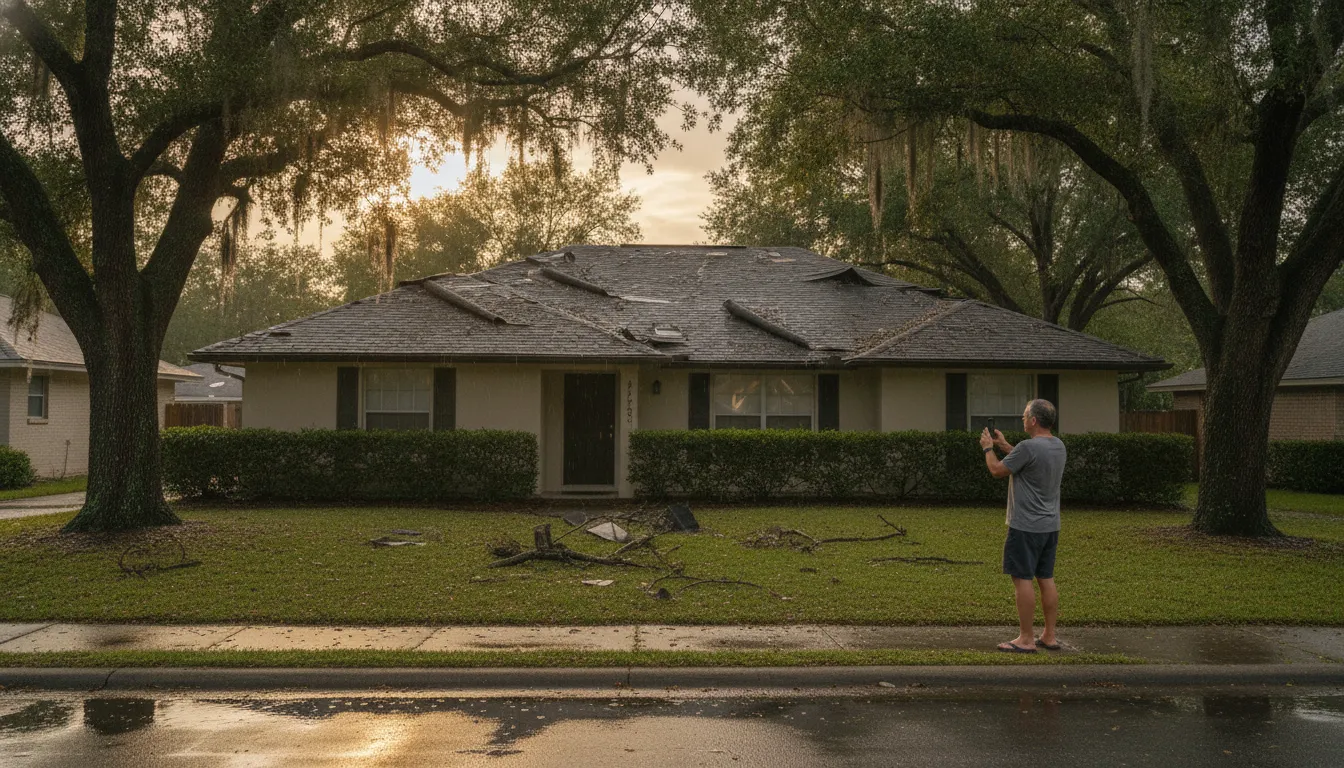
The safest first response is to protect people, observe the property from a safe location, document what you can, and arrange the appropriate help. Do not climb onto a wet or damaged roof. Do not enter an area with downed power lines, an unstable ceiling, or another immediate hazard. If anyone is in danger, contact emergency services before calling a roofing contractor.
- Wait until conditions are safe. Stay away from downed wires, standing water near electrical equipment, unstable trees, and visibly damaged structures.
- Look from the ground. Use binoculars or your phone’s zoom to look for missing materials, loose edges, debris, and changes around the roofline.
- Check the inside without taking risks. If it is safe to do so, look for new stains or damp areas in the attic and living spaces. Do not enter a room with a sagging ceiling.
- Record the condition before cleanup. Take wide photos, close photos, and short videos of the exterior, interior signs, yard debris, gutters, and other affected property.
- Reduce further damage only when it is safe. Move belongings away from a leak and use a container for dripping water. Leave roof covering, tarping, tree removal, and electrical work to qualified professionals.
- Review your insurance policy and contact your insurer. Coverage, deductibles, notice requirements, and claim decisions depend on your policy and circumstances. The Florida Department of Financial Services guide to hurricane deductibles is a useful official starting point, but it does not replace your policy or insurer’s instructions.
- Arrange a professional roof inspection. Choose an established contractor who can show you photos, explain the scope, and separate urgent protection from permanent repair options.
The Florida Division of Emergency Management hurricane guide also provides broader preparation and recovery information. Use official sources for emergency planning, and use your own policy and qualified professionals for decisions about coverage and roof work.
What can homeowners safely check from the ground?
Walk the perimeter only when the yard and surrounding conditions are safe. Look for shingles or metal pieces on the ground, branches resting on the roof, new openings, displaced vents, bent gutters, or a roofline that looks uneven. Compare the visible roof with older photos if you have them. A ground check can identify reasons to call for an inspection, but it cannot rule out hidden damage.
Why can storm damage be easy to miss?
Roofing materials can hide damage when viewed from the street. A shingle may remain in place while its seal or fastening has been disturbed. Water can enter around flashing or a penetration without leaving an immediate ceiling stain. Wind-driven rain may also expose a weak point that does not leak during ordinary rainfall. North Florida’s heat, humidity, and repeated storms can make a small defect more consequential over time.
How should you document storm damage for insurance and repair?
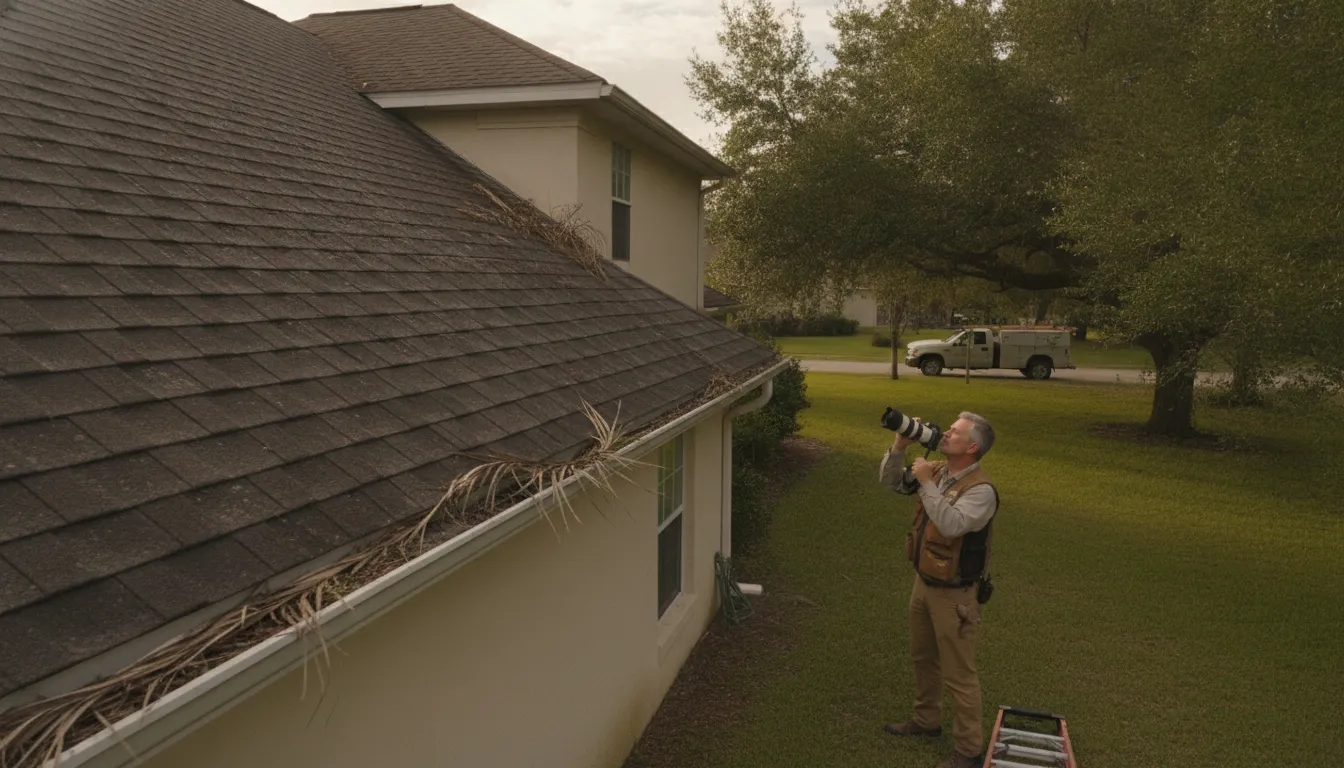
Good documentation creates a clear record of what you observed, where you observed it, and when you observed it. Photograph the property before moving debris or making nonessential changes, provided doing so is safe. Keep the original files, note the date and approximate time, and store copies in more than one place. Your insurer and contractor may each need different information.
A useful documentation folder can include:
- Wide exterior photos showing each side of the home and the surrounding yard
- Close photos of roofline changes, missing materials, debris, gutters, vents, flashing, soffits, and fascia
- Interior photos or video of new stains, dripping, damp insulation, or affected belongings
- A short video walkthrough that explains where each photo was taken
- Photos of fallen branches and other debris before removal, when safe
- Photos of damaged exterior features beyond the roof, such as siding, screens, or fencing
- Notes about when the storm occurred and when you first noticed a symptom
- Copies of inspection reports, estimates, invoices, receipts, and communication with your insurer or contractor
- Any older roof photos or maintenance records that help show the roof’s condition before the event
Do not make a technical conclusion from a photograph alone. A photo can show a lifted shingle or damaged gutter, but it cannot determine the full condition of the underlayment, decking, flashing, or attic. Ask the inspector to identify what is visible, what requires closer examination, and what is recommended now.
When is storm damage a roofing emergency?
Storm damage deserves prompt attention when water is entering the home, a large section of the roof is open, a tree or branch has struck the structure, the ceiling is sagging, or roof materials are creating an immediate hazard. A contractor can help with temporary protection and next steps, while emergency services or utility professionals should handle life-safety, fire, electrical, or structural hazards outside a roofing contractor’s scope.
Call for prompt help if you notice:
- Active water entering living areas or spreading quickly
- A ceiling that is bulging, sagging, or showing signs of possible collapse
- A large opening, missing roof section, or roof covering visible from below
- A tree or heavy limb on the home or pressing on the roof
- Downed wires, sparking equipment, or electrical concerns near wet areas
- Loose materials that could fall or be blown onto people, vehicles, or neighboring property
- Water near electrical outlets, panels, appliances, or other electrical equipment
For a smaller suspected issue, prompt does not necessarily mean panic. It means documenting the condition, preventing avoidable interior damage when safe, and getting a qualified person to evaluate it before the next round of rain.
What happens during a professional storm damage roof inspection?
A professional storm damage inspection should examine the roof system and the related areas that can explain a leak or visible change. The contractor should begin with the information you can provide, then inspect accessible roof surfaces and components, review attic or interior signs when appropriate, and document findings with clear photos. The goal is a usable record, not a rushed sales pitch.
Depending on conditions, an inspection may consider:
- The condition and attachment of shingles or other roof covering
- Ridges, hips, valleys, edges, and transitions where wind and water can concentrate
- Flashing around walls, chimneys, skylights, vents, and other penetrations
- Pipe boots, vents, drip edge, soffit, fascia, gutters, and downspouts
- Signs of impact, wind displacement, water entry, or age-related wear
- Attic ventilation, insulation, decking, or moisture evidence when accessible
- Whether the observed issue appears localized or affects a broader roof area
- Temporary protection needs and the difference between an urgent repair and a planned project
Ask for a written scope that explains the observed condition, recommended work, materials, and any items that were not accessible. A photo report is especially useful when you are comparing repair options or discussing the roof with an insurer. North Wood’s Roofing provides free honest inspections with clear photos and no-pressure options, so homeowners can understand the condition before deciding what to do.
Can storm damage be repaired, or does the roof need replacement?
Storm damage roof repair is often appropriate when the issue is limited and the rest of the roof system remains serviceable. Replacement may be considered when damage is widespread, the roof has reached the end of its useful life, the underlying assembly is compromised, or a repair would not provide a durable result. Only an inspection of the specific roof can support that choice.
| Situation | What an inspection may find | Typical planning question |
|---|---|---|
| Localized damage | A limited number of damaged shingles, flashing components, or accessories | Can the affected area be repaired while preserving the surrounding roof? |
| Widespread wind or impact damage | Multiple roof planes or components affected by the same storm | Would a broader project provide a more consistent and reliable result? |
| Storm damage on an older roof | New damage combined with advanced wear or previous repairs | Which option best balances immediate protection and long-term planning? |
| Leak with no obvious exterior sign | Possible flashing, penetration, attic, or roof-deck issue | What testing or closer inspection is needed before choosing a repair? |
| Tree or large-object impact | Damage that may involve more than the visible roof covering | Which qualified professionals need to evaluate the home before work begins? |
Be cautious of any recommendation made without an inspection, photos, or a clear scope. A reputable contractor should explain why repair or replacement is being proposed and identify the evidence supporting that recommendation. North Wood’s Roofing offers shingle roofing, metal roofing, roof repair, emergency repairs, and roof tune-ups, which allows the conversation to focus on the home’s actual condition rather than a one-size-fits-all answer.
How should Florida homeowners handle insurance conversations?
Insurance coverage is determined by the policy, the cause of loss, the facts of the claim, and the insurer’s process. A roofing contractor can document visible conditions and provide a scope of work, but should not promise that a claim will be approved or tell you what your policy covers. Read your policy, contact your insurer through an official channel, and ask questions when a document or estimate is unclear.
Keep these principles in mind:
- Report a potential loss according to the notice instructions in your policy.
- Keep copies of all photos, reports, estimates, receipts, emails, and claim reference details.
- Ask whether temporary measures are needed to reduce further damage and how they should be documented.
- Do not sign an assignment, contract, or other document you do not understand.
- Do not allow pressure to replace a roof before you understand the scope and options.
- Ask the contractor to distinguish storm-related observations from ordinary wear or preexisting conditions.
- Use official Florida consumer resources for general information, then rely on your own policy and insurer for claim-specific answers.
Florida’s hurricane deductible rules can be different from other policy deductibles, and the details depend on the policy and event. That is why the Florida Department of Financial Services resource linked above is a starting point, not a substitute for a coverage decision.
Why can North Florida storms create hidden roof problems?
North Florida roofs face a combination of intense sun, humidity, heavy rain, wind, mature trees, and rapid weather changes. Storm exposure can loosen or damage components, while heat and moisture make the roof assembly work through demanding conditions. A roof that has no visible indoor leak today may still benefit from an inspection after a significant event, especially when debris or wind has affected the roofline.
Local context matters when evaluating a roof. A home in Gainesville may have different tree cover and roof exposure from a home in Live Oak or Lake City. Materials, roof slope, installation details, attic ventilation, previous repairs, and maintenance history also affect how a roof responds. North Wood’s Roofing serves these North Florida communities and can explain the findings in the context of the specific home.
How do you choose a storm damage roof repair contractor?
Choose a contractor who makes the inspection and repair decision easier to understand. Look for a local company with verified licensing and insurance, clear communication, relevant storm and repair experience, and a willingness to provide photos and a written scope. A contractor should be comfortable explaining what is urgent, what can wait, and what questions belong with your insurer.
Before authorizing work, ask:
- What damage did you observe, and where are the supporting photos?
- Which part of the roof or related system needs attention first?
- Is the recommendation for temporary protection, repair, maintenance, or replacement?
- What materials and components are included in the proposed scope?
- What areas were not accessible or could not be confirmed?
- What warranty information applies to the proposed work and materials?
- Who will answer questions if you need to compare the scope with an insurer’s information?
North Wood’s Roofing is a veteran-owned, local residential roofing contractor with 18 years of roofing experience. The company is licensed and insured, offers GAF-certified Timberline HDZ and Timberline UHDZ shingle systems, and approaches inspections with clear photos, honest options, and no-pressure conversations. Those details do not replace an inspection, but they give a homeowner a practical standard for evaluating the repair conversation.
What is the next step after storm damage?
Start with safety, document the property, review your insurance instructions, and arrange an inspection when the roof or home may have been affected. Do not climb onto the roof or let a rushed decision determine the scope. A clear photo report and written options can help you decide whether the right next step is temporary protection, a targeted repair, ongoing maintenance, or a larger roofing project.
Storm damage roof repair is not one identical process for every Florida home. The best outcome comes from matching the response to the evidence, the roof’s condition, and the homeowner’s actual needs. If you are in Gainesville, Live Oak, Lake City, or nearby North Florida, North Wood’s Roofing can help you understand what the roof is showing and move forward with an honest evaluation.