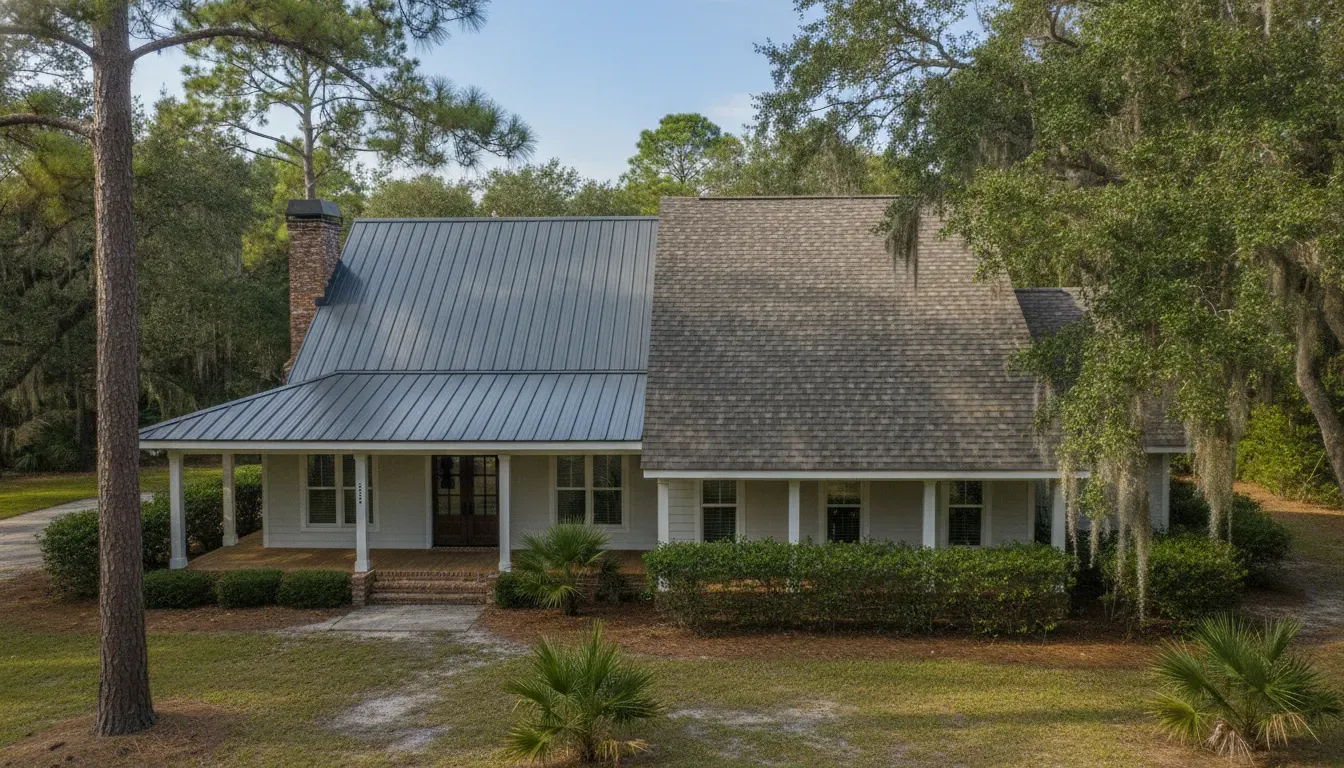
If you are comparing a metal vs shingle roof in Florida, the better choice depends on your home’s exposure, your project plans, your maintenance preferences, and the roofing system selected by your contractor. Metal can be a strong fit for long-term durability, while architectural shingles offer flexible styles and a familiar replacement path. This guide explains the tradeoffs for homeowners in Gainesville, Live Oak, Lake City, and nearby North Florida communities.
Schedule a free honest roof assessment with North Wood’s Roofing.
What is the difference between a metal and shingle roof in Florida?
A metal roof uses interlocking or seamed panels, while a shingle roof uses layered asphalt shingles over the rest of the roof system. In Florida, both can protect a home when properly designed, installed, flashed, ventilated, and maintained. The main difference is how each material balances service life, appearance, maintenance, and project planning.
A roof is more than its visible covering. Underlayment, flashing, ventilation, fasteners, roof decking, penetrations, drainage, and installation details all affect performance. A premium material cannot correct a weak roof assembly or poor workmanship. That is why a material comparison should be followed by an inspection of the specific home.
How do metal and shingle roofs handle Florida heat and storms?
North Florida roofs deal with long periods of sun, humidity, heavy rain, wind, falling limbs, and fast-changing weather. Metal roofing and architectural shingles can both be appropriate, but their performance depends on the product, the roof design, the installation, and the condition of the full assembly. Storm exposure should be evaluated rather than assumed from material alone.
Heat and sun exposure
Metal roofing is often selected for reflective finishes and long-term resistance to weathering. North Wood’s Roofing describes its metal roofing options as energy-efficient and designed to help keep homes cooler. Shingle systems can also be selected for Florida conditions. North Wood’s Roofing installs GAF Timberline HDZ and GAF Timberline UHDZ shingles, and its shingle roofing service information highlights solar heat reflection as one feature of its shingle offerings.
Color, roof slope, attic ventilation, insulation, and the location of the home all influence how a roof handles heat. A homeowner should ask how the proposed roof system will work with the attic and existing ventilation, not just compare the surface material.
Wind and rain exposure
Neither metal nor shingles should be treated as automatically storm-proof. Wind performance depends on the complete system, including attachment, edge details, underlayment, flashing, and correct installation. A roof that looks sound from the ground may still have lifted tabs, damaged seals, loose flashing, or hidden moisture after a storm.
For shingle projects, North Wood’s Roofing highlights GAF systems with features such as LayerLock technology and DuraGrip adhesive protection from wind and wind-driven rain. For either material, ask the contractor to explain the proposed installation details and what the warranty actually covers.
Metal roof vs. shingle roof: A practical comparison
The table below summarizes the decision factors that matter most to many North Florida homeowners. It is a planning tool, not a promise that one material will perform the same way on every home. Your roof’s slope, deck, ventilation, exposure, installation quality, and maintenance history still need to be assessed.
Long-term planning
- Metal roofing: Often considered by homeowners planning to stay in the home for many years and wanting a long service life.
- Architectural shingles: Often selected for a familiar replacement cycle and broad residential style options.
Florida heat
- Metal roofing: Reflective finishes may help manage solar heat, depending on the system and roof assembly.
- Architectural shingles: Product selection, color, ventilation, and the full roof assembly influence heat performance.
Storm planning
- Metal roofing: Panel attachment, seams, edges, and penetrations are key questions for wind and rain exposure.
- Architectural shingles: Nailing, seals, starter details, underlayment, flashing, and ventilation are key questions for wind and rain exposure.
Maintenance
- Metal roofing: May need fewer routine material repairs, but panels, fasteners, seams, coatings, and penetrations still need inspection.
- Architectural shingles: Individual shingles and accessories can be repaired or replaced when damage is localized.
Appearance
- Metal roofing: Available in different colors and finishes, with a profile that can look modern or traditional.
- Architectural shingles: Available in many colors and styles, including premium architectural and slate-look options.
Best next step
- Metal roofing: Review the roof structure, panel system, finish, flashing plan, and workmanship warranty.
- Architectural shingles: Review the shingle line, ventilation, underlayment, accessories, warranties, and repair plan.
The comparison shows why the question is not simply whether metal is better than shingles. The right choice is the one that fits the home, the homeowner’s time horizon, the desired look, and the installation plan.
Which roof needs more maintenance in North Florida?
Both roof types need inspection and maintenance because Florida weather affects more than the roof covering. Metal systems should be checked for damaged panels, loose fasteners, coating wear, seam or flashing concerns, and conditions around vents and other penetrations. Shingle systems should be checked for missing or lifted shingles, granule loss, curling, cracked pipe boots, damaged flashing, and algae or moisture concerns.
Maintenance also includes the areas that support the roof. Keep gutters and downspouts clear, watch for branches that rub against the surface, and address interior water stains promptly. North Wood’s Roofing offers a roof tune-up that includes pipe boot resealing, flashing resealing, a gutter blowout, a roof health inspection, and a photo report. That type of documented check can help a homeowner understand whether a roof needs maintenance, repair, or replacement.
One practical difference is repairability. A localized problem on a shingle roof may be easier to match and repair, depending on the age and availability of the shingles. Metal panels can also be repaired, but matching the panel profile, finish, and attachment details matters. In either case, a repair should address the source of the problem, not only the visible symptom.
Ask about a documented roof tune-up if your roof needs preventive maintenance.
Which option fits your home and project plan?
Metal roofing may fit a homeowner who values a long service life, wants a distinct roof appearance, prefers low routine material maintenance, or is planning around long-term ownership. Shingle roofing may fit a homeowner who wants many style choices, a familiar residential material, and the ability to address localized damage with individual shingle repairs when the rest of the system remains sound.
Think through these questions before requesting proposals:
- How long do you expect to remain in the home?
- Is the existing roof near the end of its useful life, or is a repair still reasonable?
- Has the roof experienced wind, falling branches, leaks, or repeated moisture problems?
- Does the home need decking, ventilation, flashing, or drainage work before a new covering is installed?
- Which appearance fits the home’s architecture and your neighborhood?
- Do you prefer a roof system that can be repaired in small sections, or are you prioritizing a longer replacement horizon?
- What installation details, product warranties, and workmanship coverage will be included in writing?
In Gainesville, Live Oak, Lake City, and surrounding North Florida areas, the same material can make sense for one home and not for another. A contractor should be willing to explain the reasoning, show photos of the roof condition, and provide options without using pressure to force a decision.
What should you ask about warranties?
A warranty discussion should separate product coverage from workmanship coverage. Product warranties come from the manufacturer and depend on the exact material and installation requirements. Workmanship coverage comes from the contractor and addresses the installation work under that company’s stated terms. Ask for both documents, the exclusions, the maintenance requirements, and the steps for making a claim.
North Wood’s Roofing states that it provides a 10-year workmanship warranty on installations and repairs, along with access to GAF product warranties for qualifying shingle systems. Its shingle service information references GAF Timberline HDZ and GAF Timberline UHDZ options. If a specific GAF warranty matters to your decision, ask which accessories and installation requirements apply to the proposal for your home, and review the company’s warranty information.
Do not compare warranty years as if they were identical promises. Coverage can vary by product, installer status, registration, maintenance, transfer rules, and the event that caused damage. A clear proposal should identify the roof system, the responsible parties, and the homeowner’s responsibilities after installation.
Do insurance companies prefer metal roofs in Florida?
There is no single insurance answer for every Florida home or carrier. Eligibility for credits, underwriting decisions, inspections, and documentation can depend on the roof system, local requirements, the policy, the carrier, and the home’s other wind-mitigation features. Ask your insurance representative what documents they need before choosing a material, and do not assume a discount will apply.
Your roofer can help document the proposed roof system and installation details, but the insurance company decides how those details affect your policy. If insurance questions are part of your replacement decision, request the carrier’s requirements in writing and share them with the contractor before the proposal is finalized.
What is the best type of roof to have in Florida?
The best roof for a Florida home is the roof system that matches the property’s structure, exposure, drainage, ventilation, appearance, maintenance plan, and the homeowner’s time horizon. Metal and architectural shingles can both be reasonable choices. A free, honest inspection can identify the conditions that should guide the decision instead of reducing it to a generic material ranking.
North Wood’s Roofing serves homeowners in Gainesville, Live Oak, Lake City, and nearby North Florida communities with metal roofing, shingle roofing, repairs, inspections, and replacement planning. Its approach is to review the roof condition, explain options, and provide clear photos and no-pressure recommendations.
Request a free honest assessment before choosing between metal and shingle roofing.
Questions to ask before choosing a roof
Is metal roofing always more durable than shingles?
Material alone does not determine durability. Metal can offer a long service life, while a properly installed architectural shingle system can also protect a home for many years. Ask about the complete assembly, installation details, maintenance needs, exposure, and warranty terms before making a comparison.
Are shingles a good choice for North Florida homes?
Shingles can be a practical choice for North Florida homes when the product, installation, ventilation, flashing, and maintenance plan fit the property. North Wood’s Roofing installs GAF Timberline HDZ and Timberline UHDZ options and can explain which system is appropriate for the home’s condition and the homeowner’s goals.
Can a roof inspection tell me which material to choose?
An inspection can identify roof age, damage, ventilation concerns, decking issues, flashing conditions, drainage problems, and other factors that affect the recommendation. It cannot decide your budget or how long you plan to stay, but it gives you a factual starting point for comparing repair and replacement options.
Should I choose metal or shingles after storm damage?
First document the damage and make temporary safety measures only when it is safe to do so. A contractor should inspect the roof system and explain whether the damage is localized or widespread. If replacement is appropriate, compare both materials using the home’s structure, exposure, project plan, and written warranty details.
There is no universal winner in the metal vs. shingle roof Florida decision. The most useful next step is a property-specific assessment that connects the material choice to your roof’s condition, North Florida weather exposure, and long-term plans.