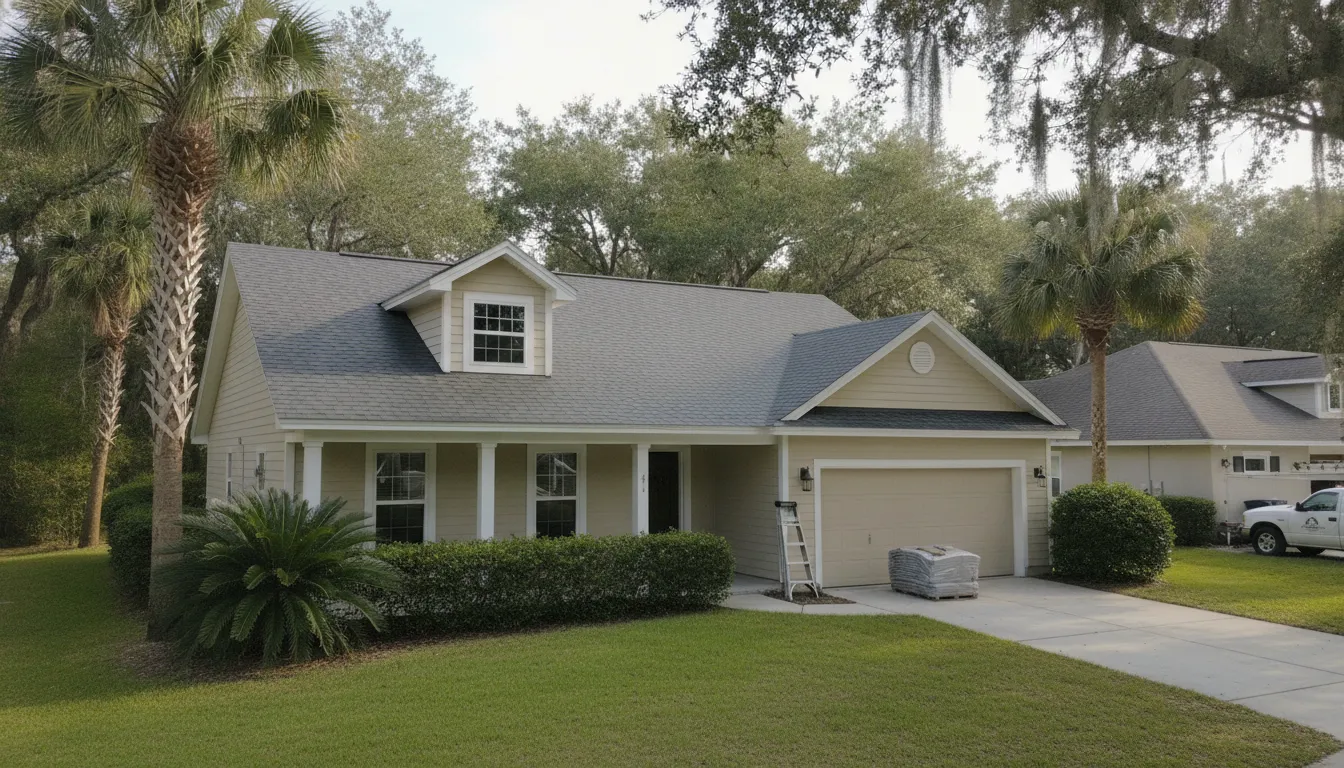
A roof replacement estimate starts with the roof itself, not the square footage listed on your property records. Eaves, garages, porches, overhangs, multiple sections, pitch, and access can all change the amount of roofing material and labor involved.
There is no single statewide number for roof replacement cost in Florida that works as a reliable quote. The estimate depends on your roof’s measured area, material, pitch, and tear-off requirements. Underlying condition, access, local labor, permits, ventilation, and flashing also matter.
That is why a useful estimate should explain the scope instead of offering a broad figure without seeing the roof. Before comparing bids. It helps to understand what a Florida replacement estimate is actually measuring and why two homes with similar living areas can have very different project requirements.
What Is the Roof Replacement Cost in Florida?
There is no single statewide price that reliably answers the question, “What is the roof replacement cost in Florida?” A useful estimate must be based on the measured roof system and selected materials. It must also account for removal requirements, access, and the home’s condition. A free, honest inspection with clear photos can show what the project actually involves before you compare numbers.
The roof surface is not the same as your home’s heated living area. Eaves, overhangs, garages, porches, multiple roof sections, and pitch can all increase the area a contractor must cover. Roofers commonly measure this surface in squares, with one square equal to 100 square feet. A simple square-footage figure from a real-estate listing therefore cannot produce a dependable replacement estimate by itself.
Material is another major variable. Asphalt shingles, metal, tile, and other systems have different installation requirements, product specifications, and long-term considerations. Florida roofing guidance also emphasizes that a complete roof system includes design, ventilation, moisture protection, and quality materials, not just the visible covering. Florida Building Commission roofing guidance.
The existing roof can change the scope as well. Tear-off may expose damaged decking, while flashing, ventilation, underlayment, disposal, permits, steep slopes, skylights, or difficult access may require additional work. Local labor markets and permitting conditions also differ across Florida, so a quote for one property should not be treated as a statewide benchmark.
For homeowners in Gainesville, Live Oak, Lake City, and nearby North Florida communities. The clearest next step is a written explanation of the recommended work, material choice, and any conditions that could change the scope. North Wood’s Roofing can provide a photo-documented assessment and no-pressure options. For a broader overview of the process, see this complete roof replacement guide.
Which Factors Change a Roof Replacement Estimate?
A roof replacement estimate is based on the work your particular roof needs, not just the size of your house. The roof surface can be larger than the home’s listed floor area because of pitch, eaves, garages, porches, and multiple roof sections. Contractors commonly measure that surface in squares, with one square equal to 100 square feet. A careful measurement helps establish the material quantity before the other project variables are considered.
- Roof area and pitch: A larger or steeper roof generally requires more material, safety equipment, labor, and installation time.
- Roofing material: Asphalt shingles, metal, tile, and other systems have different material, installation, and preparation requirements. The exact product line matters, not just the broad material category.
- Existing layers and tear-off: The number of roofing layers to remove affects labor, disposal, and the time needed to prepare the deck for the new system.
- Access and roof complexity: Multiple stories, valleys, dormers, skylights, tight work areas, and limited places for equipment or a dumpster can change the scope.
- Decking and structural condition: Removing the old roof may reveal damaged or deteriorated decking. Any replacement needed should be explained as a condition-based part of the estimate.
- Flashing and ventilation: Areas around chimneys, vents, skylights, walls, and roof edges may need flashing work. Ventilation and moisture protection also belong in the system design, as the Florida Building Commission explains in its roofing fact sheet.
- Disposal, local labor, and permits: Hauling away old materials, local labor conditions, and the permit requirements for the property’s jurisdiction can all affect the final scope.
These details are why a statewide roof replacement cost in Florida cannot be treated as a reliable quote for every home. A visual and photo inspection can help document the roof’s visible condition, identify areas that deserve closer attention, and clarify the proposed scope. It cannot guarantee a final price, reveal every condition concealed beneath existing materials, or promise that an insurance claim will be approved. A useful estimate should show the selected material, tear-off assumptions, likely contingencies, included cleanup, and any work that may depend on what is found during removal.
For a fair comparison, ask each contractor to explain the same scope in writing. Clear photos and plain-language notes make it easier to understand what you are paying for and which items are confirmed versus conditional.
How Do Shingle and Metal Roofing Costs Compare?
Material choice is one of the biggest planning decisions in a replacement, but the lowest upfront bid is not automatically the lowest long-term value. A Florida roof is a system that includes the roof covering, waterproofing, ventilation, flashing, and other components. The right comparison should look at the complete scope, expected service life, maintenance needs, and how well the material fits your home and North Florida conditions.
| Consideration | Asphalt shingles | Metal roofing |
|---|---|---|
| Upfront planning | Often offers a familiar replacement path with many style and product options. The estimate should identify the exact shingle line, underlayment, tear-off, flashing, and disposal. | Requires a product-specific proposal that identifies the panel system, finish, trim, fasteners, underlayment, and installation details. Roof shape and access can affect the labor scope. |
| Product life | Life expectancy depends on the selected product, installation, ventilation, exposure, and maintenance. North Wood’s Roofing offers GAF Timberline HDZ and Timberline UHDZ options. | North Wood’s Roofing describes its metal options as lasting 50 or more years, but longevity remains product-specific and is not a universal guarantee. |
| Heat and storms | A properly designed and installed shingle system must account for Florida heat, moisture, wind, and ventilation requirements. | Metal can be worth considering for homeowners focused on long-term durability and reflective performance. The assembly and product approvals still matter for local wind conditions. |
| Maintenance and repairs | Individual shingles and flashing can often be evaluated and repaired as part of a targeted service, depending on the condition of the full system. | Repairs require matching the specific panel, finish, trim, and fastening details. Routine inspection remains important even when a product is described as low maintenance. |
| Appearance and warranty | GAF Timberline HDZ emphasizes a familiar shingle appearance, while Timberline UHDZ is a premium option. Review both material and workmanship warranty terms. | Metal provides a different architectural appearance and finish range. Ask which warranty applies to the product, finish, and installation, and what exclusions apply. |
Compare the complete scope, not just the covering
When reviewing proposals, confirm that each contractor is pricing the same work. Ask whether tear-off includes every existing layer, how concealed decking damage will be handled, and whether ventilation, flashing, permits, cleanup, and haul-away are included. The exact material and product line should be written into the estimate, along with warranty terms for both the materials and workmanship.
North Wood’s Roofing can help you review Florida roofing material options, including GAF shingle roofing options and metal roofing for North Florida homes. A free, honest inspection with clear photos can document the roof’s condition and give you no-pressure options before you decide which system fits your home.
How Does North Florida Location Affect the Project?
Location can shape the work involved in a roof replacement, but it does not create a reliable fixed price for every home in one city. Gainesville, Live Oak, Lake City, and the communities between them have different homes, neighborhoods, permit jurisdictions, access conditions, and contractor logistics. The right way to compare your roof replacement cost in Florida is to compare the scope of work, materials, and assumptions in each written estimate.
In Gainesville, a roof may be easy to access from a developed residential street. Or it may include additions, multiple roof sections, or limited space for a trailer and material delivery. Live Oak properties can have a different mix of home styles, lot sizes, and rural access considerations. Lake City and surrounding areas may likewise present homes with different roof ages, pitches, storm exposure, or existing repairs. Those differences are specific to the property, not a reason to assign an automatic city-by-city premium.
What local conditions can change
- Roof access: Steep driveways, fencing, landscaping, detached structures, and limited staging space can affect how crews move materials and remove debris.
- Permits and code requirements: The applicable permit jurisdiction and Florida wind-design requirements can influence the roof assembly and project scheduling. Confirm what is included in the estimate rather than assuming every contractor handles it the same way.
- Material availability: The selected shingle or metal product, color, and delivery timing may affect planning. A substitute should be discussed before it is ordered.
- Storm and moisture exposure: North Florida heat, humidity, wind, and severe weather can leave different roofs with different levels of wear. The inspection should document the actual condition of your roof.
- Home-specific scope: Tear-off may reveal decking, flashing, ventilation, or underlayment work that could not be priced accurately from a street view alone.
North Wood’s Roofing serves homeowners across these distinct markets. Review its North Florida roofing services to see the communities and project types covered. A free. Honest inspection with clear photos can connect local conditions to a written scope without pretending that a Gainesville estimate automatically applies to a home in Live Oak or Lake City.
Will Homeowners Insurance Pay for a Florida Roof Replacement?
Sometimes, but there is no automatic answer. Homeowners insurance coverage usually depends on the policy, the cause of the damage, exclusions, the documentation available, and the insurer’s review. A roof replacement that follows a covered storm event may be handled differently from a roof that has reached the end of its useful service life or has damage related to deferred maintenance.
What should you document after a storm?
Start with photographs and notes from the ground. Record the date of the storm, visible missing or damaged roofing materials, fallen branches, water stains, and any interior damage. Avoid climbing onto the roof or making extensive repairs before the damage is documented. If temporary work is needed to limit further water intrusion, keep receipts and photograph the condition before and after the work.
A professional inspection can add useful detail. An inspector may identify damaged shingles, exposed underlayment, affected flashing, or other conditions and provide clear photos for your records. That documentation can help you and your insurer understand what happened, but it does not guarantee that a claim will be approved.
Does an inspection mean the insurer must pay?
No. A roofing contractor can describe observed conditions and prepare a repair or replacement scope, but your insurer or insurance agent is the appropriate source for interpreting policy provisions. The Florida Department of Financial Services also advises consumers that a contractor cannot interpret insurance coverage unless separately licensed as a public adjuster. Ask your insurer about deductibles, covered causes, deadlines, and the claims process before assuming that insurance will pay.
Repair or replacement: which one is appropriate?
That depends on the extent and location of the damage, the roof’s condition, the availability of matching materials, and the policy terms. A localized issue may be better addressed with a repair, while widespread storm damage or an aging roof with multiple defects may lead to a replacement discussion. If you are unsure whether the problem calls for repair or replacement, review the findings with a contractor who will explain the options without pressure. North Wood’s Roofing can document conditions and discuss roof repair versus replacement. You can also review signs your Florida roof needs attention while planning your next step.
Keep the insurance decision separate from the roofing decision: document the condition. Ask the insurer precise policy questions, and get a written scope of work before committing to a project.
How Can You Get an Honest Roof Replacement Estimate?
A useful estimate should help you understand the work, not pressure you into choosing the highest or lowest number. Before comparing bids, ask each contractor to inspect the roof and explain what the price includes. A free, honest assessment with clear photos can give you a practical starting point while leaving room to consider your options.
- Request an on-site inspection. Ask the contractor to look at the roof system, not just the visible shingles or metal from the ground. The inspection should consider roof sections, pitch, access, existing layers, flashing, ventilation, and signs of underlying damage. If the inspection is connected to a storm or insurance question, remember that coverage depends on your policy and insurer review. The inspection documents conditions; it does not guarantee approval or a particular replacement cost.
- Confirm how the roof area and pitch were measured. Your home’s heated living area is not necessarily the same as its roof surface. Eaves, garages, porches, overhangs, multiple sections, and slope can all affect the measured area. Ask the contractor to explain the measurement and how pitch affects labor, safety, and material requirements. This makes it easier to compare estimates that are based on the same scope.
- Review the material options. The written estimate should identify the exact material and product line, along with the underlayment and other major components. Ask how the recommended option fits your home’s design, North Florida weather, maintenance expectations, and long-term plans. You can also review these Florida roofing material options before making a decision.
- Ask what preparation and site work includes. Have the contractor state whether tear-off, the number of existing layers, decking contingencies, flashing, ventilation work, cleanup, haul-away, and disposal are included. If damaged decking is discovered during tear-off, ask how that work will be documented and priced. Also ask whether access limitations, multiple stories, skylights, or other roof complexity could change the scope.
- Request clear photos and a written scope. Photos should support the explanation of recommended work rather than replace it. Your written scope should identify the materials, preparation, installation, cleanup, exclusions, and any allowances or contingencies. A clear explanation helps you distinguish necessary work from optional upgrades.
- Compare bids by scope, not only by total. Florida consumer guidance recommends getting at least three estimates and asking for references. When comparing them, check that each contractor is pricing the same material quality, tear-off, underlayment, disposal, and repair assumptions. A lower total may reflect a narrower scope rather than a better value.
- Review warranty terms before signing. Ask which warranties apply to materials and workmanship, who provides them, what maintenance or registration is required, and what is excluded. If financing would help you evaluate the project, you may review financing and available offers separately, without assuming approval or specific terms. For a no-pressure starting point, request an honest roof assessment and ask for the findings in writing.
Frequently Asked Questions
How much does it cost to roof a 1,500-square-foot house in Florida?
A 1,500-square-foot home does not necessarily have a 1,500-square-foot roof. Pitch, overhangs, garages, porches, and multiple roof sections can increase the measured roofing area. Material, tear-off, access, decking, permits, and local labor also affect the estimate, so a reliable number requires an inspection and roof measurement.
What is the 25% roof rule in Florida?
The phrase usually refers to Florida building-code requirements that may apply when a significant portion of an existing roof is repaired or replaced. The exact application depends on the project scope, roof assembly, current code, and permit jurisdiction. Ask the contractor and local building department to confirm which requirements apply instead of treating 25% as an automatic statewide replacement price or rule.
What is the 15-year roof rule in Florida?
Roof age can affect insurance underwriting, but a 15-year-old roof does not automatically mean it must be replaced. Florida consumer guidance says homeowners should be allowed an authorized inspection before replacement is required solely because of age. Coverage and renewal decisions still depend on the policy and insurer. See the Florida CFO consumer guidance for details.
How do most people afford a new roof?
Homeowners commonly compare a repair with replacement, review written estimates, consider whether documented storm damage may be covered under their policy, and ask about available financing options. Insurance coverage is not automatic, and a contractor cannot promise approval. Compare the full scope, materials, exclusions, and payment terms before choosing an option.
What should I ask for before accepting a roof replacement estimate?
Request the measured roof area, exact material and product line, tear-off and disposal details. Underlayment, flashing, ventilation, decking contingencies, permits, warranty terms, and a written explanation of any exclusions. Clear inspection photos can help you compare bids and understand why the roof replacement cost in Florida varies from one property to another.
Ready to Get a Clear Roof Replacement Estimate?
A roof replacement estimate is more useful when it reflects your actual roof, materials, and project conditions. North Wood’s Roofing can provide a free, honest inspection with clear photos and no-pressure options, so you can better understand the work being considered. Contact us to request your free roof inspection or estimate and take the next step with information you can review.