
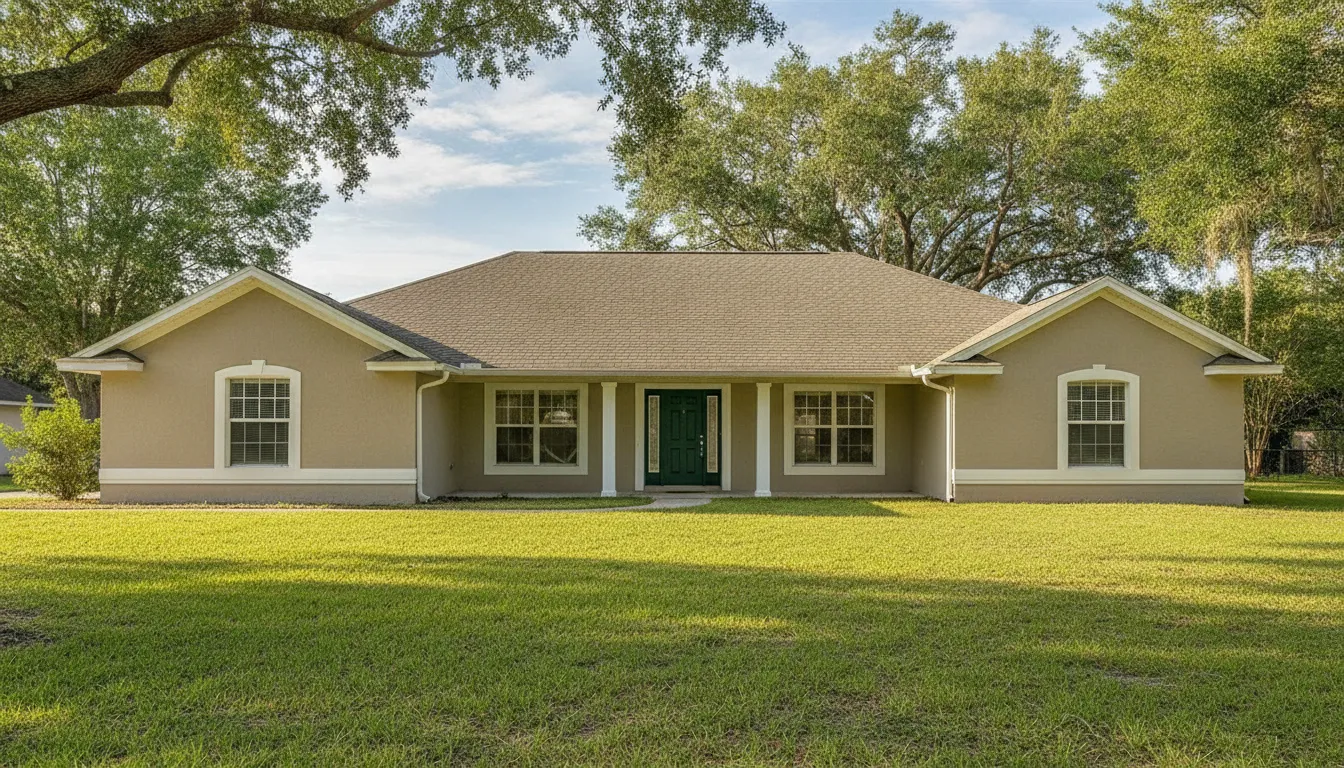
Hurricane roof preparation Florida homeowners can finish before a watch is issued is mostly quiet, ordinary work. The Atlantic hurricane season runs June 1 through November 30. NOAA says the useful window is well before that first date, while crews still have openings and supplies are on the shelf. In Gainesville, Live Oak, and Lake City, look at the roof you already have. Do not shop for a new one because a forecast looks loud.
Request a free, honest roof inspection
This guide is the before list. It covers what you can see from the ground, what to clear, and when a maintenance visit is enough versus when a repair should be booked early. It does not tell you how to judge damage after a storm, how to file a claim, or which roof product is “best” in wind. Those are different questions, and mixing them in is how a useful checklist turns into a sales page.
When hurricane roof preparation Florida work should start
The National Weather Service says the best time to prepare is before hurricane season begins on June 1, and the Atlantic season runs through November 30. Their pre-season checklist starts with knowing your risk, not with a last-minute hardware run. Waiting until a named storm is in the Gulf is how small roof jobs turn into emergency calls. By then, roofers in North Florida are sorting leaks. A loose shingle that was a short visit in April becomes a tarp conversation.
A practical calendar for an existing home looks like this.
- In late winter or early spring, walk the yard. Book an inspection if the roof is older than a few years, or if you have not had one since the last hard storm.
- In April and May, finish agreed repairs. Clear gutters and trim limbs that hang over the roof while the weather is still ordinary.
- June through November: after each strong wind or heavy rain, repeat the ground check. Do not climb the roof to “see how it did.”
- If a watch or warning is posted: stop project work. Secure loose yard items and stay off the roof. New repairs are not a same-day plan once the wind is already forecast.
North Florida is not Miami-Dade. The High-Velocity Hurricane Zone rules that people quote from South Florida do not apply in Alachua, Columbia, or Suwannee counties. Your roof still has to handle inland wind and driving rain. The difference is that a useful local plan starts with the roof that is already on the house, not with a coastal product list.
What you can check from the ground
Stay on the ground. A wet shingle roof is slick, and a fall is not a preparation step. Walk the house in daylight, use binoculars if you have them, and look for things that let wind get under the covering.
- Shingles that are lifted, curled, cracked, or missing. A few missing tabs on a slope that faces the usual storm wind are worth a look before June, not after.
- Exposed nail heads and ridge caps that look uneven or lifted along the peak.
- Debris in the valleys, and granules piled in the gutters. A sudden increase in granules can mean the surface is wearing out.
- Pipe boots and flashing that look cracked or pulled back. You do not need to reseal these yourself. Noting them is enough.
- Skylight edges that stain the ceiling nearby, and soffit or fascia boards that are soft, separated, or hanging.
- Inside, in a dry attic with a flashlight and a safe floor: daylight through the deck, damp insulation, or dark streaks on the wood. If the attic has no walk boards, look from the hatch and stop.
Write down the date and the side of the house. A photo from the yard beats a memory that it looked fine. If you already keep roof photos and maintenance records, add this set to that folder before the season starts.
A ground check is not a roof inspection. It tells you whether to call someone. It does not tell you the deck is sound, the underlayment is sealed, or the roof-to-wall connections are adequate. Those are things a person on the roof, with the right access, has to see.
Clear gutters, limbs, and anything the wind can throw
Water that cannot leave the roof finds another way in. Before the season, clear leaves from gutters and downspouts, and confirm the water leaves the foundation instead of pooling at the wall. In this climate, trees drop debris all spring. A gutter that was clean in January can be packed by May. If you are unsure how often yours need it, the local pattern is covered in our note on how often to clean gutters in North Florida.
Gutters do not stop every drainage problem, and they do not protect a foundation by themselves. They move roof water away from the eaves when they are open, sloped, and attached. Pulled-away spikes and sagging runs are a pre-season repair, not a decoration project. If the system is rusted through or was never sized for the roof, that is a gutter installation and repair conversation, separate from shingle work.
Trim limbs that hang over the roof or brush the shingles in a breeze. You want a licensed tree service for anything over the house. A homeowner with a pole saw on a ladder is how pre-season work turns into a roof hole. Also walk the yard for things wind picks up. That includes patio furniture, empty planters, loose metal, and stored lumber. NOAA’s home guidance treats the building envelope as the thing to strengthen before the season. A loose object in the yard becomes part of that problem once the wind starts.
When a tune-up is enough, and when it is not
Not every roof needs a replacement because hurricane season is on the calendar. Many roofs between about 3 and 12 years old are still serviceable and only need maintenance. North Wood’s Roofing offers a $399 roof tune-up for that range. It reseals pipe boots and flashing, blows out the gutters, inspects the roof, and sends a photo report. It is maintenance. It is not a repair, and it is not a promise that every defect will be fixed. If the visit finds work outside that scope, that work is priced and decided separately.
Use the tune-up when the roof is in that age band and you have no active leak. The ground check should not show missing sections or soft decking. Book roof repair instead when you already see missing shingles, an active stain, a failed boot, or fascia wood that gives under a probe. If the roof is older than that band, or several slopes look tired, ask for an honest inspection. Get clear options before you assume a small visit will carry you through the season.
| What you see | Reasonable next step before June | What it is not |
|---|---|---|
| Roof about 3 to 12 years old. No active leak. Minor seal wear at pipes and flashing. | $399 tune-up. Reseal boots and flashing. Blow out gutters. Inspect and send a photo report. | Not a repair. Not a substitute for replacement. |
| Missing or lifted shingles. A known drip. Cracked boots or loose flashing. | Repair visit with photos. Scope the work to the defect. | Not a ladder repair the week a storm is named. |
| Widespread wear. Soft decking. A roof well past a normal service life. | Inspection and a written replacement option. Schedule it before peak season if you choose it. | Not a decision for the day a watch is posted. |
| Clogged gutters or limbs on the roof. | Cleaning and professional tree trimming. | Not proof the shingles have failed. |
The tune-up page is the source for that $399 scope. Do not treat a blog as a quote. If the inspection shows the roof needs more, you should hear that plainly, with photos, and with room to say no.
What a pre-season inspection is actually for
A free inspection before the season is a condition check, not a claim file and not a wind rating. Ask the person on the roof to photograph the field of the shingles, the ridge, the penetrations, the flashing, and any soft wood. Ask what is maintenance, what is a repair, and what can wait. A useful report lets you decide in May, when a crew can still schedule the work.
The Florida Building Commission’s 2020 roofing fact sheet explains why the layer under the shingles matters. When wind removes the primary covering, water can soak insulation and finishes. On newer roofs, the code response is a sealed roof deck. That secondary layer is meant to limit water if the shingles are lost. That is a reroof topic. A tube of cement on an old roof does not recreate it. If your roof was replaced under a recent Florida code, ask which underlayment was used and keep that record. If it is older, do not assume a sealed deck is there.
People also ask about a 25 percent rule and a new roof law. Florida’s Existing Building code has long tied larger roof-covering replacements to extra work. Those triggers have changed across code editions. The exact percentage, and what it forces, depends on the code in effect and on your local building official. It is not a statewide sentence you can apply from a blog. If you are already planning to replace more than a small area, ask your county building department what the current reroof trigger requires. Ask before you sign anything. Do not let a salesperson use a percentage as a reason you must replace the whole roof this month.
Wind ratings on a shingle are a product and installation fact, not a weather guarantee. For the plain version of slope, see roof pitch in Florida. For how the roof is built up, see the layers in a residential roof. Those pages are background. They are not a shopping list.
Records to pull before a watch is issued
NOAA also tells people to review insurance before the season. Flood coverage is a separate policy and has a waiting period. Roof paperwork is the matching chore. Before June, find the last permit, the warranty, any prior repair invoices, and a recent set of photos of all four slopes. Put them where you can reach them if the power is out. Our guide to which roof records to keep lists the set that is actually useful.
This is organization, not a claim strategy. We are not telling you what a carrier will pay, and a pre-season photo is not a substitute for whatever your policy requires later. If you want the separate question of how replacement coverage is usually discussed in Florida, that lives on its own page about whether homeowners insurance covers roof replacement. Read your own policy. A roofing company is not your adjuster.
If you do need work and want to spread the cost, roof financing options are available through a third-party lender, and current promotions are posted on that page. Promotions change. Confirm them when you ask for an estimate. Do not build a storm plan around a discount line from an older article.
What to stop doing once a storm is on the board
Preparation has a stopping point. Once a tropical watch or warning includes your county, do not start a roof project. Do not climb up to nail a few shingles. Do not schedule tree work over the house. Secure outdoor items, check your family plan, and leave the roof alone. Ready.gov’s hurricane page covers the household side of that plan, including alerts and evacuation. The roof side is already done, or it waits until the weather clears.
After the wind passes, the job changes. Looking for damage and keeping water out are covered in the guide to storm damage signs after a hurricane. Repair choices are covered in storm damage roof repair in Florida. If water is already coming in, use the steps to take after a roof leak and call for emergency repair. Those pages exist so this one can stay a before-the-season list.
If the ground check turned up lifted shingles, a soft fascia board, or a roof you have not had looked at in years, ask North Wood’s Roofing for a free inspection with photos. We serve Gainesville, Live Oak, Lake City, and the communities between them. You will get a straight read on the next step. That may be a tune-up, a repair, or nothing at all before June.
Frequently asked questions
When should a Florida homeowner start hurricane roof preparation?
Start well before June 1. NOAA says the Atlantic hurricane season runs June 1 through November 30, and the useful work happens before that opening date. In North Florida, late winter through May is the realistic window to inspect, clean gutters, trim overhanging limbs, and finish any repair you already know about.
Can I do hurricane roof preparation myself?
You can do the ground-level part. Walk the yard, photograph each slope, clear gutters you can reach safely, and put loose outdoor items away. Do not climb the roof, and do not cut limbs that hang over it. Sealing, nailing, and deck repairs belong to a licensed roofer. A fall or a new hole is not a savings.
Is a $399 roof tune-up the same as hurricane preparation?
It can be one piece of it for a roof about 3 to 12 years old that is still in serviceable shape. The tune-up reseals pipe boots and flashing, blows out the gutters, inspects the roof, and sends you a photo report. It does not repair storm damage, fix structural problems, or replace a worn-out roof. If the inspection finds bigger work, that work is a separate decision.
Does the Florida 25% roof rule mean I must replace my whole roof before hurricane season?
No. A blog cannot apply that rule to your house. Florida’s Existing Building code has tied larger roof-covering replacements to extra requirements, and the details have changed by code edition. If you are already replacing more than a small area, ask your county building department what the current reroof trigger requires. A pre-season inspection is not the same thing as a code-mandated reroof.
What should I do if a hurricane watch is already posted?
Stop roof work. Secure what you can from the ground, stay off the roof, and follow local emergency guidance. Preparation is a spring task. Once a watch includes Gainesville, Live Oak, or Lake City, the next roofing step waits until the storm has passed and someone can look at the roof safely.