Does homeowners insurance cover roof leaks in Florida? It may cover damage when a covered event causes the leak, but the answer depends on your policy, the cause, and the facts of the loss. A sudden storm-related opening may be handled differently from a leak caused by long-term wear or an unresolved maintenance issue. Your insurer makes the coverage decision under your specific policy, so document what you find and ask for the relevant terms in writing.
When might homeowners insurance cover a roof leak?
A homeowners policy is a contract, and its language controls. The insurer will consider the reported cause of the damage, the roof’s condition, the resulting water damage, applicable exclusions, and any deductible or limit. A covered sudden event might be treated differently from deterioration that developed over time. This is a general explanation, not a promise that any particular claim will be accepted.
For example, if wind during a storm damages roofing material and rain enters through that area, the insurer may investigate whether the reported storm damage and resulting interior damage fall within the policy. If water is entering around old, deteriorated materials, the insurer may examine the history and policy terms differently. The ceiling stain alone does not establish when the leak began or what caused it.
It can help to separate the questions involved:
- What happened to the roof? Look for observable damage, but do not assume its cause based on appearance alone.
- What damage followed? Note interior water, damaged belongings, and any areas that remain damp.
- What does the policy say? Review covered causes, exclusions, deductibles, limits, duties after a loss, and claim procedures.
- What does the insurer need? Ask about inspections, photos, estimates, and timing before making non-urgent repairs.
For questions about Florida insurance and consumer information, you can also consult the Florida Office of Insurance Regulation. For a specific claim, rely on your own policy and your insurer’s written guidance.
What roof leak causes may be treated differently?
Two leaks that look similar indoors can have different causes. Water may travel along decking, framing, or other surfaces before it appears as a stain, so the point where it drips inside may not be the point where it entered. The insurer may review roof conditions, weather information, prior repairs, and other documentation when assessing a claim.
| What you observe | What to document or ask | Why it matters |
|---|---|---|
| Water appears after a storm | Record when it began, the weather you observed, and any visible damage from a safe location. | Timing may help describe the event, but does not by itself prove the cause or coverage. |
| A stain grows or returns over time | Note when you first saw it, whether it changes after rain, and any earlier repairs. | A history can help distinguish a new problem from a recurring or gradual one. |
| Roof materials look aged or worn | Ask the insurer how policy terms apply; have visible conditions documented. | Wear, deterioration, and maintenance provisions may affect how a claim is evaluated. |
| Interior materials or belongings are wet | Photograph affected areas and make a list of damaged items, if safe. | Keep a clear record of the resulting damage and any steps taken to protect property. |
| The cause is uncertain | Avoid guessing; ask about inspections and keep contractor observations separate. | Careful, factual records are more useful than an unsupported conclusion. |
Policies may address gradual seepage, wear, maintenance, or specific storm-related conditions in different ways. Do not conclude that a claim is covered—or excluded—before reviewing the applicable language. If the insurer limits or denies a claim, ask for the explanation and policy provisions in writing.
What should you do first when you find a leak?
Start with safety and reasonable steps to limit additional damage. Do not climb onto a wet, steep, or damaged roof. Avoid wet electrical fixtures and wiring. If water is near electrical equipment, keep clear and seek qualified help. A leak can be stressful, but a simple sequence helps you preserve information while you arrange assistance.
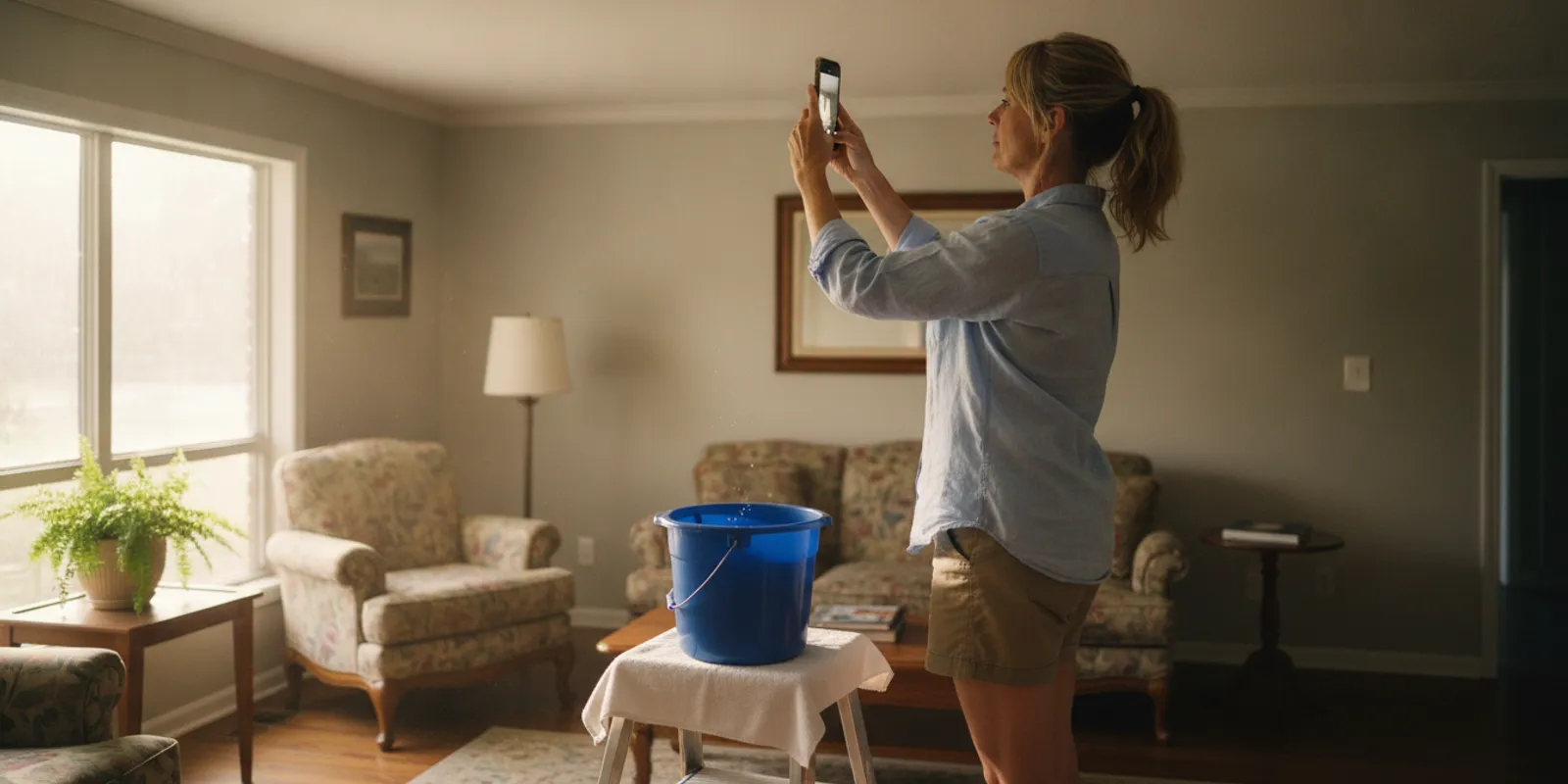
- Protect people and belongings. Move items away from the water if it is safe. Use a bucket to catch active drips and protect the floor. Do not enter an area that may be unsafe.
- Photograph what you can safely see. Take dated photos or video of the interior stain, active water, affected possessions, and exterior conditions visible from the ground. Do not risk a roof climb to get pictures.
- Write down the timeline. Record when you first noticed the leak, when it became active, recent weather you observed, and any earlier issues in the same area. Keep notes factual; label guesses as unknown.
- Contact your insurer promptly. Ask how to report the loss, what documents it needs, whether an adjuster should inspect before permanent repairs, and what deadlines apply. Save the claim number and the dates and names associated with calls.
- Ask about temporary protection. Find out what measures are appropriate to prevent further damage and whether the insurer has documentation or approval requirements. Do not leave an active leak unaddressed while waiting for a routine appointment.
- Arrange a professional roof assessment. A roofer can describe visible roof conditions and possible repair needs. That assessment does not determine whether your policy covers the loss.
For additional context on visible warning signs, see this guide to signs of a roof leak in Florida. After a storm, the separate guide to storm damage roof repair can help you think through roof observations and repair planning.
What should you ask your insurer before repairs?
Ask whether the insurer wants to inspect the roof or interior before permanent work begins. If immediate temporary protection is needed, ask how to document it and what records to submit. Get clear instructions about photos, contractor estimates, invoices, damaged materials, and any forms. Keep copies of messages and note the date of each conversation.
Ask the insurer to identify the deductible that applies, including whether a separate storm-related deductible is relevant to your policy. Confirm whether it is evaluating roof damage, interior damage, or both. If the insurer reaches a decision, ask which facts and policy provisions it relied on. Keep your questions neutral and specific; a roofing contractor can report observed conditions but cannot promise an insurance outcome.
Florida homeowners can also use the state insurance regulator’s website for general consumer information. That resource is not a substitute for your contract, an insurer’s claim determination, or professional advice about a dispute.
How can a roof inspection help with next steps?
A roof inspection can document visible conditions such as displaced or damaged roofing material, worn areas, or concerns around roof openings and transitions. Clear photos and written observations can help you understand what a contractor sees and provide factual material when communicating with your insurer. An inspection cannot establish policy coverage on its own, and an honest assessment should distinguish observed facts from conclusions about cause.
North Wood’s Roofing offers free inspections with clear photos and no-pressure options. The company serves Gainesville, Live Oak, Lake City, and North Florida. You can review its roofing services and information about roof repair to understand the kinds of assessment and repair work that may be relevant. A visit can help clarify roof condition; the insurer remains responsible for its coverage decision.
When you receive a recommendation, ask what was observed, which areas were accessible, and whether the suggested work is temporary protection or a permanent repair. Request the proposed scope in writing. If the recommendation is broad, ask which specific findings support it and whether there are other practical options. Keep estimates and photos with your claim records.
How should you compare repair recommendations?
Compare the written scope rather than relying only on a verbal summary. Check which roof area is included, what materials and work are proposed, whether interior work is included, and what conditions could change the scope. Ask how the contractor will document the work and whether cleanup is described. If replacement is recommended instead of repair, ask what observations make repair unsuitable and request that reasoning in writing.
Review warranty terms and ask which work and materials they cover. North Wood’s provides information about its warranty coverage; read the applicable written terms and ask questions before authorizing work. Do not sign based solely on a verbal assurance that an insurer will pay. Keep any work authorization, change orders, invoices, and proof of payment in the same file as your claim documents.
If the immediate problem has been addressed and you are considering routine upkeep, review the roof tune-up service. It is a maintenance and inspection service for eligible roofs, not a substitute for needed repairs or a guarantee that a defect will be corrected. Have repair needs evaluated separately.
Which records should you keep?
Create one folder for the policy and declarations, claim correspondence, inspection reports, photographs, repair estimates, invoices, receipts, and notes from calls. Save copies in a secure digital location. A simple timeline can include the date you first noticed the leak, each contact with the insurer or contractor, inspections, temporary measures, and completed work.
Keep records even if you do not file a claim. Previous repairs and inspection reports may help describe the roof’s history if another issue appears later. North Wood’s guide to roof records homeowners should keep offers more recordkeeping context. If you need a roof assessment in a particular community, you can also find information about roof repair for Live Oak homeowners and roof repair in Lake City.
Frequently asked questions about roof leak coverage
Does homeowners insurance pay for every roof leak?
No. Coverage depends on the policy, the reported cause, and the circumstances. A sudden event may be evaluated differently from wear, deterioration, or a maintenance issue. Ask your insurer to explain how the policy applies to your specific loss.
Should I repair the roof before the adjuster visits?
Ask the insurer what inspections or documentation it requires before permanent repairs. Take safe photos and ask how to prevent further damage. For urgent protection, do not assume you must leave the home exposed; document the condition, communicate with the insurer, and keep receipts and records for work performed.
Can a roofing contractor tell me whether my claim is covered?
A roofing contractor can describe visible conditions and offer a repair recommendation. The insurer reviews the policy and makes the coverage determination. Keep those roles distinct and be cautious of anyone promising that a claim will be paid.
What if my insurer denies or limits the claim?
Request the explanation and the policy provisions relied on in writing. Review the documents, ask what information was considered, and submit relevant factual records through the process your insurer provides. If you need help understanding your options, consider consulting an appropriate insurance professional or attorney.
Can an inspection guarantee that a leak will not return?
No. An inspection reports conditions observed at a particular time and may not reveal every concealed issue. Ask what was checked, what could not be evaluated, and whether the recommendation is maintenance, repair, or further investigation.
How can North Florida homeowners take a careful next step?
Put safety first, document the leak, and contact your insurer to learn its process. Then arrange a roof assessment to understand the visible condition and possible repair needs. North Florida homeowners can use the contact page to ask about an honest, no-pressure evaluation, or review the company’s service information before deciding what to do next.
Because policies and roof conditions differ, use your own policy and your insurer’s written guidance to make decisions about a specific leak.