Roof repair cost in Florida depends on the specific problem, how far it has spread, the materials involved, and the work needed to reach and repair it. A small, accessible repair is different from damage that extends beneath the roof covering or affects several roof details. For North Florida homeowners, the useful first step is to identify the cause and scope—not rely on a statewide average that may not match the roof.
Request a free roof inspection
Why can roof repair cost vary so much?
A repair estimate is based on the work a particular roof needs. Two homes can show a similar ceiling stain but have different causes. Water may enter through damaged shingles, a roof penetration, flashing, or another vulnerable detail. The visible stain indoors does not show how much of the roof assembly is affected.
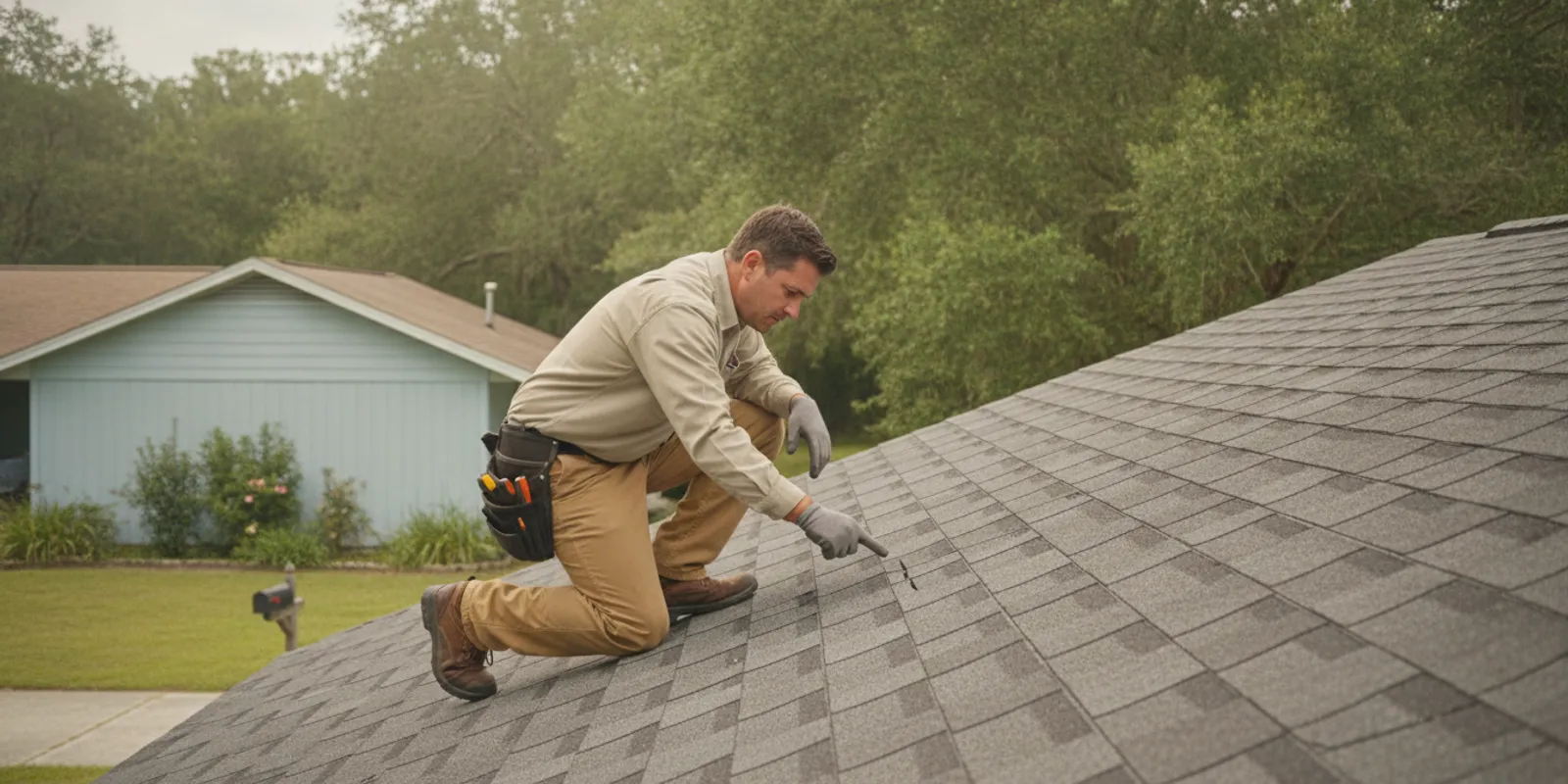
Roof repair costs also depend on the type and amount of material that must be removed and replaced, the roof’s height and pitch, access to the damaged area, and whether more than one location needs attention. A contractor has to inspect the roof to distinguish a limited repair from a larger problem. A general online figure cannot account for those site-specific details.
A university-hosted paper on roof repair costs likewise identifies material type, roof size, and location as factors that can change the cost. Those broad variables are a starting point, not a substitute for a written estimate based on your roof. (How Much Does It Cost to Repair a Roof)
What factors influence roof repair cost in Florida?
What caused the damage, and how extensive is it?
The cause helps determine the repair approach. A few damaged shingles may call for a different scope than a leak where water has affected underlayment or roof decking. A repair may also involve more than one area, especially when an inspection finds separate issues that need attention.
It is important not to equate the size of a stain with the size of the roof repair. Water can travel before appearing inside, and a mark on a ceiling does not confirm where water entered. Likewise, a missing shingle is a clue to investigate, not proof by itself that the damage stops directly beneath it. Ask the roofer to show you the observed condition and explain what work is included.
Which roofing material is on the home?
Repair methods and materials vary by roof system. Asphalt shingles, metal roofing, and other coverings have different components and installation details. The replacement material needs to be suitable for the existing roof and the repair area. A contractor may need to consider whether matching material is available and how the repair can be integrated with the surrounding roof.
North Wood’s Roofing works with shingle and metal roofing systems, among other residential roofing services. If you are weighing material choices as part of a larger project, read about metal versus shingle roofs in Florida. A repair estimate is still specific to the existing roof; choosing a different material or replacing a larger section can change the scope and should be clearly explained.
Is the repair at a roof detail or penetration?
Roof penetrations and transitions—such as pipe boots, skylights, valleys, and connections where roof planes meet—need careful evaluation because they interrupt the roof covering. Flashing helps direct water around vulnerable transitions. A problem at a detail can require different work than replacing a field shingle, so ask which component is involved and whether the estimate covers only the visible part or the associated materials beneath it.
If the concern is around a skylight, review the company’s skylight installation and repair information. If you are unsure what flashing does or where it is used, the guide to the layers of a residential roof can help you follow a contractor’s explanation.
How easy is it to reach the repair area?
Roof height, pitch, layout, landscaping, and the location of the damaged area can affect safe access and the time needed to perform the work. An area beside a wall or near a roof transition may take different steps to reach than an open, accessible slope. The contractor should evaluate access at the property rather than assume every repair takes the same effort. The layout can also affect how much of the roof needs to be opened to reach a damaged component and then restored. Ask the estimator to explain any access-related work that is included, especially if the repair is on a steep or difficult-to-reach section. A clear estimate should describe the work rather than hide important steps inside a vague line item.
Do not climb onto the roof to assess access or confirm damage yourself. Walking on a roof can be dangerous and may cause additional damage. From the ground, you can note where you see missing material or a leak indoors and share that information with the inspector.
Does the roof need a repair, or a broader solution?
When damage is limited and the surrounding roof is suitable for repair, a targeted fix may be appropriate. If the inspection finds widespread deterioration, repeated failures, or conditions that make a limited repair impractical, the contractor may explain broader options. This does not mean every leak requires replacement. It means the recommended scope should be tied to what the inspection finds.
Compare like with like: a repair estimate and a replacement estimate cover different work. North Wood’s Roofing provides roof repair services and other roofing services. For a larger project, its homeowner guide to planning a roof replacement describes the different decision. Ask why the proposed scope fits your roof’s condition, and what alternatives make sense.
Is the work urgent, and what is the actual scope?
Active water entry may need prompt attention to limit continued exposure, but urgency does not remove the need to understand the proposed work. Ask what can be addressed immediately, what permanent repair is recommended, and whether the estimate includes temporary protection or only the lasting repair. Do not assume temporary measures are a complete repair.
After severe weather, visible damage can be one part of a larger inspection. Avoid signing a rushed agreement based only on a brief look or a verbal price. North Wood’s guide to storm damage roof repair in Florida offers more context for homeowners assessing roof concerns after a storm.
What should a roof repair estimate include?
There is no single format every estimate must use, but a useful written proposal should help you understand what the contractor observed and what the proposed work covers. When you request an estimate, look for clear answers to questions like these:
- Where is the problem? The estimate should identify the roof area or component being addressed, not just say “repair roof.”
- What did the inspection find? Ask for photos or a plain-language explanation of visible damage and any related condition that affects the work.
- What work and materials are included? The description should explain what will be removed, repaired, or replaced and how the area will be finished.
- What is outside the scope? Clarify how additional damage discovered during work would be handled and whether it requires a revised proposal.
- What is the total price and payment arrangement? Ask for the cost in writing and confirm any applicable terms before work begins.
- What warranty applies? Ask which warranty covers the proposed work, what it covers, and where its terms are documented.
Photos can make a roof assessment easier to understand, but they do not replace a clear scope. A dependable explanation connects the observed condition to the work being proposed. If two estimates differ, compare their materials, repair area, and included steps before comparing the totals. Check whether both proposals address the same suspected cause and same portion of the roof. One contractor may have included work at a nearby roof detail while another describes only the damaged covering. Ask each contractor to identify assumptions, exclusions, and the process for approving added work if concealed damage is found after materials are opened. Request revisions in writing so the options remain easy to compare. A lower total may reflect a narrower scope; a higher one may include additional work, but the number alone does not establish which proposal is right for the home. Choose based on a clear explanation of the condition and a scope you understand.
How can you compare repair options?
Use the table below as a discussion guide, not as a price list. It shows why different repair situations can call for different scopes. The contractor must inspect the roof to determine which description, if any, fits your home.
| Situation to investigate | Possible scope to discuss | What to ask |
|---|---|---|
| Small, localized covering damage | Inspect the affected area and determine whether a limited material repair is suitable. | Can the repair be matched and integrated with the surrounding roof? What else was checked? |
| Leak near a pipe, skylight, or roof transition | Assess the covering and the related flashing or component, then define the repair area. | Which part allowed water in? Does the proposed work address the cause, not only the interior stain? |
| Damage in more than one area or beneath the covering | Document the extent and explain whether the scope needs to include related materials. | What evidence supports the larger scope? What is included, and how will newly found damage be handled? |
| Widespread wear or repeated repair needs | Compare a suitable repair with broader options, including replacement where warranted by inspection findings. | Why is one option appropriate? What are the limits and expected scope of each? |
How can North Florida homeowners plan for roof repair?
Heat, humidity, heavy rain, and storms are part of the local environment, but no homeowner should assume a particular roof has a specific problem because of the climate alone. Start with what you can safely observe: the location of a ceiling mark, when it appears, whether it changes after rain, or any visible material on the ground. Share those details during an inspection. If possible, write down when the issue first appeared and whether it changes during or after rain. Note which rooms or roof areas seem affected and whether you have seen a drip, damp patch, or damaged material outside. These observations can help the contractor focus the inspection, but they are not a diagnosis. Keep any photos taken from the ground or indoors, and avoid moving wet ceiling material or touching electrical fixtures near a leak. If water is near electrical equipment, prioritize personal safety and contact the appropriate professional.
Keep maintenance and repair decisions separate. North Wood’s offers a $399 roof tune-up for roofs 3–12 years old. It is a maintenance and inspection service, not a substitute for repairs or a promise that defects will be corrected. If an inspection identifies a repair need, ask for that work to be evaluated and estimated separately.
If you have a leak, take sensible steps indoors to protect belongings and note the affected area, but do not climb onto the roof or attempt risky temporary fixes. Contact a qualified contractor for an assessment. In Gainesville, Live Oak, Lake City, and surrounding North Florida communities, North Wood’s Roofing provides free roof inspections with photo documentation and no-pressure options. Learn more about roofing services in the area and the company’s owner-led approach.
Frequently asked questions about roof repair cost in Florida
Can I get an exact repair cost from a photo?
A photo may help identify an area to inspect, but it may not show the full cause or extent of damage. A reliable estimate requires evaluating the roof and defining the work. Ask the contractor to explain what the photos show and whether an on-site inspection is needed.
Does a roof leak always mean I need a new roof?
No. A leak can have a localized cause, but only an inspection can establish whether a repair is suitable or whether broader issues affect the decision. Ask the roofer to explain the observed condition and why the recommended scope fits it.
Will homeowners insurance pay for a roof repair?
Coverage depends on the policy and the facts of the loss. Do not assume a repair is covered or that an insurer will approve a specific scope. Review your policy and contact your insurance company about coverage questions. A roofer can describe observed roof conditions and proposed work, but should not promise an insurance outcome.
Should I choose the lowest estimate?
Not without comparing the work. One proposal may cover a limited patch while another includes additional materials or roof details. Check that each estimate identifies the repair area, materials, exclusions, and applicable warranty terms. Ask questions if the scope or price is unclear.
The right way to understand roof repair cost in Florida is to connect the price to the condition found, the repair scope, and the materials and access involved. A clear inspection and written estimate can help you make that decision without pressure.