Categories
Blog

What Factors Influence Roof Repair Cost in Florida?

Roof repair cost in Florida depends on the specific problem, how far it has spread, the materials involved, and the work needed to reach and repair it. A small, accessible repair is different from damage that extends beneath the roof covering or affects several roof details. For North Florida homeowners, the useful first step is to identify the cause and scope—not rely on a statewide average that may not match the roof.

Request a free roof inspection

Why can roof repair cost vary so much?

A repair estimate is based on the work a particular roof needs. Two homes can show a similar ceiling stain but have different causes. Water may enter through damaged shingles, a roof penetration, flashing, or another vulnerable detail. The visible stain indoors does not show how much of the roof assembly is affected.

Roof repair costs also depend on the type and amount of material that must be removed and replaced, the roof’s height and pitch, access to the damaged area, and whether more than one location needs attention. A contractor has to inspect the roof to distinguish a limited repair from a larger problem. A general online figure cannot account for those site-specific details.

A university-hosted paper on roof repair costs likewise identifies material type, roof size, and location as factors that can change the cost. Those broad variables are a starting point, not a substitute for a written estimate based on your roof. (How Much Does It Cost to Repair a Roof)

What factors influence roof repair cost in Florida?

What caused the damage, and how extensive is it?

The cause helps determine the repair approach. A few damaged shingles may call for a different scope than a leak where water has affected underlayment or roof decking. A repair may also involve more than one area, especially when an inspection finds separate issues that need attention.

It is important not to equate the size of a stain with the size of the roof repair. Water can travel before appearing inside, and a mark on a ceiling does not confirm where water entered. Likewise, a missing shingle is a clue to investigate, not proof by itself that the damage stops directly beneath it. Ask the roofer to show you the observed condition and explain what work is included.

Which roofing material is on the home?

Repair methods and materials vary by roof system. Asphalt shingles, metal roofing, and other coverings have different components and installation details. The replacement material needs to be suitable for the existing roof and the repair area. A contractor may need to consider whether matching material is available and how the repair can be integrated with the surrounding roof.

North Wood’s Roofing works with shingle and metal roofing systems, among other residential roofing services. If you are weighing material choices as part of a larger project, read about metal versus shingle roofs in Florida. A repair estimate is still specific to the existing roof; choosing a different material or replacing a larger section can change the scope and should be clearly explained.

Is the repair at a roof detail or penetration?

Roof penetrations and transitions—such as pipe boots, skylights, valleys, and connections where roof planes meet—need careful evaluation because they interrupt the roof covering. Flashing helps direct water around vulnerable transitions. A problem at a detail can require different work than replacing a field shingle, so ask which component is involved and whether the estimate covers only the visible part or the associated materials beneath it.

If the concern is around a skylight, review the company’s skylight installation and repair information. If you are unsure what flashing does or where it is used, the guide to the layers of a residential roof can help you follow a contractor’s explanation.

How easy is it to reach the repair area?

Roof height, pitch, layout, landscaping, and the location of the damaged area can affect safe access and the time needed to perform the work. An area beside a wall or near a roof transition may take different steps to reach than an open, accessible slope. The contractor should evaluate access at the property rather than assume every repair takes the same effort. The layout can also affect how much of the roof needs to be opened to reach a damaged component and then restored. Ask the estimator to explain any access-related work that is included, especially if the repair is on a steep or difficult-to-reach section. A clear estimate should describe the work rather than hide important steps inside a vague line item.

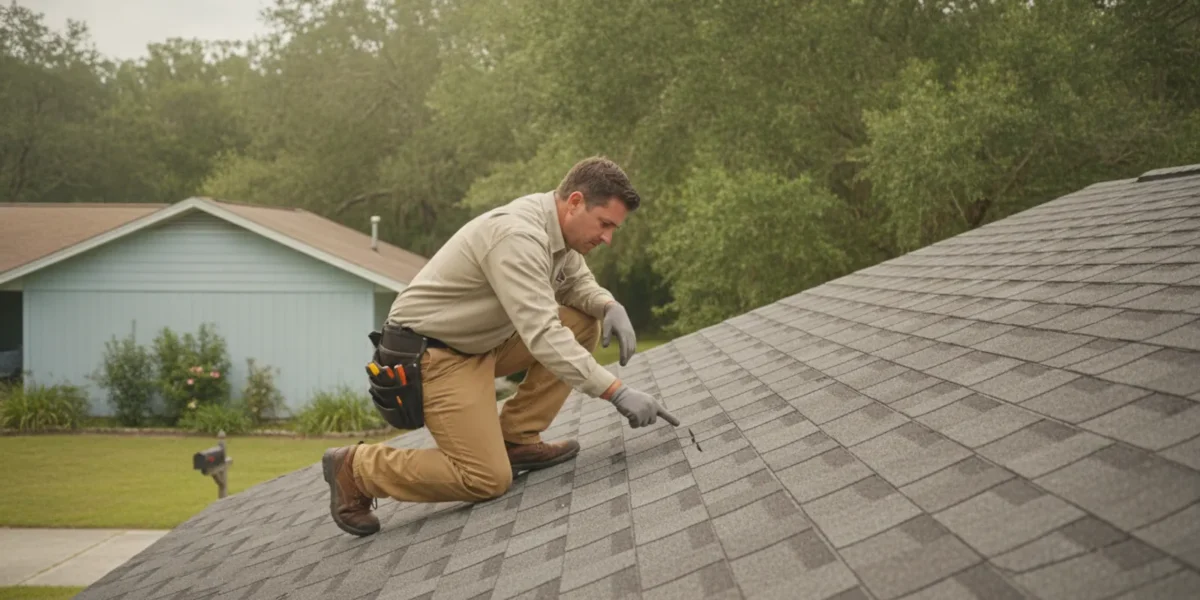
Do not climb onto the roof to assess access or confirm damage yourself. Walking on a roof can be dangerous and may cause additional damage. From the ground, you can note where you see missing material or a leak indoors and share that information with the inspector.

Does the roof need a repair, or a broader solution?

When damage is limited and the surrounding roof is suitable for repair, a targeted fix may be appropriate. If the inspection finds widespread deterioration, repeated failures, or conditions that make a limited repair impractical, the contractor may explain broader options. This does not mean every leak requires replacement. It means the recommended scope should be tied to what the inspection finds.

Compare like with like: a repair estimate and a replacement estimate cover different work. North Wood’s Roofing provides roof repair services and other roofing services. For a larger project, its homeowner guide to planning a roof replacement describes the different decision. Ask why the proposed scope fits your roof’s condition, and what alternatives make sense.

Is the work urgent, and what is the actual scope?

Active water entry may need prompt attention to limit continued exposure, but urgency does not remove the need to understand the proposed work. Ask what can be addressed immediately, what permanent repair is recommended, and whether the estimate includes temporary protection or only the lasting repair. Do not assume temporary measures are a complete repair.

After severe weather, visible damage can be one part of a larger inspection. Avoid signing a rushed agreement based only on a brief look or a verbal price. North Wood’s guide to storm damage roof repair in Florida offers more context for homeowners assessing roof concerns after a storm.

What should a roof repair estimate include?

There is no single format every estimate must use, but a useful written proposal should help you understand what the contractor observed and what the proposed work covers. When you request an estimate, look for clear answers to questions like these:

  • Where is the problem? The estimate should identify the roof area or component being addressed, not just say “repair roof.”
  • What did the inspection find? Ask for photos or a plain-language explanation of visible damage and any related condition that affects the work.
  • What work and materials are included? The description should explain what will be removed, repaired, or replaced and how the area will be finished.
  • What is outside the scope? Clarify how additional damage discovered during work would be handled and whether it requires a revised proposal.
  • What is the total price and payment arrangement? Ask for the cost in writing and confirm any applicable terms before work begins.
  • What warranty applies? Ask which warranty covers the proposed work, what it covers, and where its terms are documented.

Photos can make a roof assessment easier to understand, but they do not replace a clear scope. A dependable explanation connects the observed condition to the work being proposed. If two estimates differ, compare their materials, repair area, and included steps before comparing the totals. Check whether both proposals address the same suspected cause and same portion of the roof. One contractor may have included work at a nearby roof detail while another describes only the damaged covering. Ask each contractor to identify assumptions, exclusions, and the process for approving added work if concealed damage is found after materials are opened. Request revisions in writing so the options remain easy to compare. A lower total may reflect a narrower scope; a higher one may include additional work, but the number alone does not establish which proposal is right for the home. Choose based on a clear explanation of the condition and a scope you understand.

How can you compare repair options?

Use the table below as a discussion guide, not as a price list. It shows why different repair situations can call for different scopes. The contractor must inspect the roof to determine which description, if any, fits your home.

Situation to investigate Possible scope to discuss What to ask
Small, localized covering damage Inspect the affected area and determine whether a limited material repair is suitable. Can the repair be matched and integrated with the surrounding roof? What else was checked?
Leak near a pipe, skylight, or roof transition Assess the covering and the related flashing or component, then define the repair area. Which part allowed water in? Does the proposed work address the cause, not only the interior stain?
Damage in more than one area or beneath the covering Document the extent and explain whether the scope needs to include related materials. What evidence supports the larger scope? What is included, and how will newly found damage be handled?
Widespread wear or repeated repair needs Compare a suitable repair with broader options, including replacement where warranted by inspection findings. Why is one option appropriate? What are the limits and expected scope of each?

How can North Florida homeowners plan for roof repair?

Heat, humidity, heavy rain, and storms are part of the local environment, but no homeowner should assume a particular roof has a specific problem because of the climate alone. Start with what you can safely observe: the location of a ceiling mark, when it appears, whether it changes after rain, or any visible material on the ground. Share those details during an inspection. If possible, write down when the issue first appeared and whether it changes during or after rain. Note which rooms or roof areas seem affected and whether you have seen a drip, damp patch, or damaged material outside. These observations can help the contractor focus the inspection, but they are not a diagnosis. Keep any photos taken from the ground or indoors, and avoid moving wet ceiling material or touching electrical fixtures near a leak. If water is near electrical equipment, prioritize personal safety and contact the appropriate professional.

Keep maintenance and repair decisions separate. North Wood’s offers a $399 roof tune-up for roofs 3–12 years old. It is a maintenance and inspection service, not a substitute for repairs or a promise that defects will be corrected. If an inspection identifies a repair need, ask for that work to be evaluated and estimated separately.

If you have a leak, take sensible steps indoors to protect belongings and note the affected area, but do not climb onto the roof or attempt risky temporary fixes. Contact a qualified contractor for an assessment. In Gainesville, Live Oak, Lake City, and surrounding North Florida communities, North Wood’s Roofing provides free roof inspections with photo documentation and no-pressure options. Learn more about roofing services in the area and the company’s owner-led approach.

Frequently asked questions about roof repair cost in Florida

Can I get an exact repair cost from a photo?

A photo may help identify an area to inspect, but it may not show the full cause or extent of damage. A reliable estimate requires evaluating the roof and defining the work. Ask the contractor to explain what the photos show and whether an on-site inspection is needed.

Does a roof leak always mean I need a new roof?

No. A leak can have a localized cause, but only an inspection can establish whether a repair is suitable or whether broader issues affect the decision. Ask the roofer to explain the observed condition and why the recommended scope fits it.

Will homeowners insurance pay for a roof repair?

Coverage depends on the policy and the facts of the loss. Do not assume a repair is covered or that an insurer will approve a specific scope. Review your policy and contact your insurance company about coverage questions. A roofer can describe observed roof conditions and proposed work, but should not promise an insurance outcome.

Should I choose the lowest estimate?

Not without comparing the work. One proposal may cover a limited patch while another includes additional materials or roof details. Check that each estimate identifies the repair area, materials, exclusions, and applicable warranty terms. Ask questions if the scope or price is unclear.

Schedule a free roof estimate

The right way to understand roof repair cost in Florida is to connect the price to the condition found, the repair scope, and the materials and access involved. A clear inspection and written estimate can help you make that decision without pressure.

Categories
Blog

Roof Waterproofing Florida: What Does It Mean for a Florida Home?

For a North Florida homeowner, roof waterproofing is not simply a coating or a product applied over shingles. A search for roof waterproofing Florida often reflects a practical concern: how to limit water intrusion and protect the home. It means having a roof system that sheds rain through the roof covering, underlayment, flashing, and carefully finished details. Understanding how those parts work can help you decide whether your home needs maintenance, a targeted repair, or a larger roofing project.

Request a free roof inspection

What does roof waterproofing mean for a Florida home?

In everyday conversation, “waterproofing a roof” can refer to several different things. A homeowner may mean stopping an active leak, preventing water from getting under the roof covering, applying a coating, or checking the roof before the next round of heavy rain. These are not interchangeable jobs.

For most homes, water resistance comes from the complete roof assembly rather than a single waterproof layer. The outer material—such as shingles or metal panels—takes the direct exposure and directs most rain toward the eaves. Underlayment below the covering provides another layer of protection. Flashing helps manage water at transitions and penetrations, while roof edges and drainage details help water leave the roof instead of collecting in vulnerable places.

Even a well-built roof is exposed to weather and ages over time. Wind-driven rain, intense sun, humidity, falling branches, and normal material wear can affect different parts of the system. A waterproofing concern therefore needs a diagnosis: where is water entering, what condition is the roof in, and what repair is appropriate? A generic coating or sealant may not address the source.

How does a roof keep rain out?

Each part of the roof has a role. The visible covering sheds water, but it is only one part of the system. A professional inspection looks at how the roofing components meet and whether the details are functioning together.

  • Roof covering: Shingles or metal panels create the exposed surface that directs water down the roof. Their condition, installation, and connection details matter.
  • Underlayment: This layer beneath the roof covering provides additional protection if water gets past the outer surface. It is generally concealed, so its condition may be assessed as part of a roofing project rather than from the ground.
  • Flashing: Metal or other appropriate flashing details help direct water around places where roof planes meet or where features pass through the roof. A small failure at a transition can allow water into the assembly.
  • Roof edges and drainage: The shape and details of eaves, valleys, and connected drainage components affect where water travels. Gutters can collect roof runoff, but they do not correct every roof leak or drainage issue.

These elements should be considered together. For example, an interior ceiling stain does not automatically mean the roof covering directly above it is the only problem. Water can travel along roof framing or other surfaces before it becomes visible indoors. Finding the entry point often requires looking at the roof and the location of the interior evidence.

To understand how these components fit together, see this guide to the layers of a residential roof. If the concern is a transition or penetration, the explanation of what roof flashing does can help you understand why those details deserve attention.

Why is roof waterproofing important in Florida?

Florida roofs face repeated exposure to strong sun, heat, humidity, and periods of heavy rain. North Florida homeowners also need to consider wind and storm events. These conditions make it useful to keep an eye on the roof, but they do not mean every home needs a coating or a full replacement. The right response depends on the roof material, age, installation, visible symptoms, and inspection findings.

Moisture that reaches the roof assembly or interior can lead to damage beyond the visible spot. A ceiling mark, damp attic area, or recurring leak should be taken seriously, but it is not a reliable way to identify the exact source by itself. Delaying an assessment can make it harder to understand how far the issue extends. At the same time, a single stain does not prove that a whole roof needs replacement.

For homeowners in Gainesville, Live Oak, Lake City, and communities in between, a practical first step is to record when the problem appears and where you notice it. If safe, take photographs from inside the home and from the ground outside. Do not climb onto a wet, steep, or damaged roof. A roofer can inspect the roof and explain what is visible, what is uncertain, and what options are appropriate.

Does waterproofing mean applying a roof coating?

Not necessarily. A roof coating is a particular product and application, while “waterproofing” is often used broadly to describe the goal of limiting water intrusion. A coating is not a universal fix for a leak, failed flashing, damaged shingles, or an aging roof. Its suitability depends on the roof type and condition, the product, and the manufacturer’s instructions.

Before considering any coating, ask what problem it is meant to address and whether the roof surface is an approved substrate for that product. Ask how the roof will be prepared, what components will remain unchanged, and whether the approach affects existing product or workmanship warranties. A contractor should explain if a different repair or replacement is more appropriate. Avoid assuming that coating over a problem will resolve the cause underneath it.

North Wood’s Roofing’s verified service information includes shingle and metal roofing, roof repairs, inspections, and maintenance. It does not establish that a coating is the right service for every roof or that a coating should be applied to every roof type. The appropriate recommendation should follow an evaluation of the actual roof.

What does a professional roof inspection look at?

An inspection should connect the visible symptoms to the condition of the roof, rather than jump directly to a product or a broad recommendation. The contractor may examine the roof covering for visible damage or wear, look at flashing and roof penetrations, and consider roof edges and other details where water is directed or changes course. If there is an interior leak, the location and timing of the stain can be compared with the exterior roof layout. The visible stain may not be directly below the entry point.

Ask what areas were accessible and what could not be verified without opening part of the roof. Some components, including underlayment, are hidden beneath the roof covering. A visual inspection from the surface cannot necessarily confirm the condition of concealed materials. A careful explanation should separate what the roofer observed from what is suspected or would require further investigation.

Photos help make the findings easier to review later. Ask the contractor to identify the location in each photo and explain why it matters. If work is recommended, ask whether the proposal addresses the cause of water entry or only a visible symptom. Also ask how the roofer will check the work area after completion and whether the proposal includes related details that could affect water movement. The aim is not to demand certainty where a roof detail is hidden; it is to understand the evidence, scope, and any remaining unknowns.

Should you maintain, repair, or replace the roof?

The best option depends on what an inspection finds. A small, localized issue on an otherwise serviceable roof may call for a repair. A roof with limited maintenance needs may benefit from a scheduled inspection and maintenance visit. Widespread deterioration, recurring problems, or a roof that has reached the end of its useful service may lead to a replacement discussion. No one should promise a specific solution without understanding the roof’s condition.

Option When it may fit What to clarify
Inspection and maintenance The roof is not known to have a major failure, and the homeowner wants its condition checked or routine maintenance considered. What was inspected, what was found, and whether any repair needs separate evaluation.
Targeted repair An inspection identifies a specific repairable problem, such as a localized leak or damaged roof detail. Where the water is entering, what the repair covers, and whether related areas need further attention.
Roof replacement The roof has broader condition concerns or repair is not the appropriate long-term response. Material options, project scope, removal and installation details, warranties, and a written estimate.
Coating or other specialized treatment A qualified assessment determines the roof type and condition are suitable for a specific treatment. Product compatibility, preparation, limitations, warranty effects, and why this is preferable to repair or replacement.

This table is a starting point, not a diagnosis. For example, a roof tune-up is a $399 maintenance service for roofs 3–12 years old. Its scope includes resealing pipe boots, resealing flashing, gutter blowout, a full inspection, and a photo report. It is maintenance and inspection, not a substitute for repairs or a promise that defects will be corrected. Any repair need should be evaluated separately. Learn more about the roof tune-up service.

If an inspection finds a repair need, the roof repair service page offers a relevant next step. If the roof is beyond a suitable repair, compare the available shingle roofing and metal roofing information before discussing a replacement. These pages explain service options; an inspection is still needed to determine what fits a particular home.

What should you do if you see a leak?

Take reasonable steps to protect people and belongings, then arrange an assessment. Do not go onto the roof to apply sealant or inspect a suspected leak, especially during or after rain. A temporary patch applied in the wrong place can obscure the source, and roof surfaces can be hazardous.

  1. Keep people clear of the affected area. If the ceiling is bulging, material is falling, or water is near electrical fixtures, avoid the area and contact the appropriate qualified professional for urgent safety guidance.
  2. Limit interior damage where it is safe. Move belongings, use a container to catch drips, and document visible conditions with photos. Do not touch wet electrical equipment.
  3. Note the timing and location. Record when the water appears, whether it follows rain or wind, and which rooms or surfaces are affected. This information can help guide the inspection.
  4. Arrange a roof assessment. Ask for clear photos and an explanation of the suspected entry point, the proposed work, and any limitations. A free inspection can help establish what is visible and what should happen next.

For more practical steps, read the guide to what to do during a roof leak. If storm conditions are involved, the article on storm damage roof repair in Florida covers another situation that may call for an inspection.

How can you choose a contractor for roof waterproofing?

Start by asking for a clear explanation of the problem, not just a product name or a broad promise that the roof will be “waterproof.” Ask the contractor to show the observed condition in photos, describe how the proposed work addresses it, and identify what is excluded. For a replacement, ask what materials and roof details are included in the scope.

  • Confirm the contractor’s current license and insurance information before work begins.
  • Ask whether the recommendation is for maintenance, repair, replacement, or a specialized treatment, and why.
  • Request a written scope that identifies the work area, materials, and any relevant limitations.
  • Ask what warranties apply, who provides them, and what conditions or exclusions they contain. North Wood’s Roofing describes its workmanship warranty on its warranties page; review the actual terms for the project.
  • Compare estimates by scope and materials, not only by the final number. A lower estimate may cover different work.

The Better Business Bureau’s Florida waterproofing contractor directory is one place to look at listings and BBB information. A directory entry is not a technical assessment or a substitute for checking a contractor’s license, insurance, references, and written proposal.

North Wood’s Roofing is a veteran-owned residential roofing contractor serving Gainesville, Live Oak, Lake City, and North Florida. The company describes its approach as owner-led, with honest pricing, photo-documented inspections, and no-pressure options. You can learn more about the team on the company’s About Us page and review its broader roofing services.

Frequently asked questions about roof waterproofing in Florida

Can waterproofing stop every roof leak?

No single treatment should be assumed to stop every leak. The cause might involve the roof covering, flashing, a penetration, or another part of the assembly. The source needs to be assessed before choosing a repair or treatment.

Is a roof waterproof if it has shingles or metal panels?

The covering is designed to shed water, but it works as part of a larger roof system. Installation details, underlayment, flashing, roof condition, and water pathways all matter. Having shingles or metal panels does not by itself establish that every part of the roof is in good condition.

Does a roof tune-up repair every problem?

No. North Wood’s Roofing describes its $399 tune-up as maintenance and inspection for roofs 3–12 years old. The service includes resealing pipe boots and flashing, gutter blowout, a full inspection, and a photo report. If the inspection identifies a repair need, that work should be evaluated separately.

Should I climb onto the roof to find the leak?

No. Roof surfaces can be slippery or unstable, particularly after rain or a storm. Take photos from a safe location, note where water appears inside, and have a qualified roofer inspect the roof.

What is the first step if I am unsure whether my roof needs work?

Request a professional inspection and ask for clear photos, a plain explanation of the findings, and options that match the roof’s condition. A free estimate can help you understand a proposed project before deciding how to proceed.

Schedule a free roof estimate

Get a clear assessment of your roof

Roof waterproofing in Florida is best approached as a roof-system question, not an automatic call for a coating or replacement. A careful inspection can help you understand whether maintenance, a targeted repair, or a larger project is the practical next step.

Get an Instant Free Roof Estimate!

Instant Free Estimate

Get your price NOW!