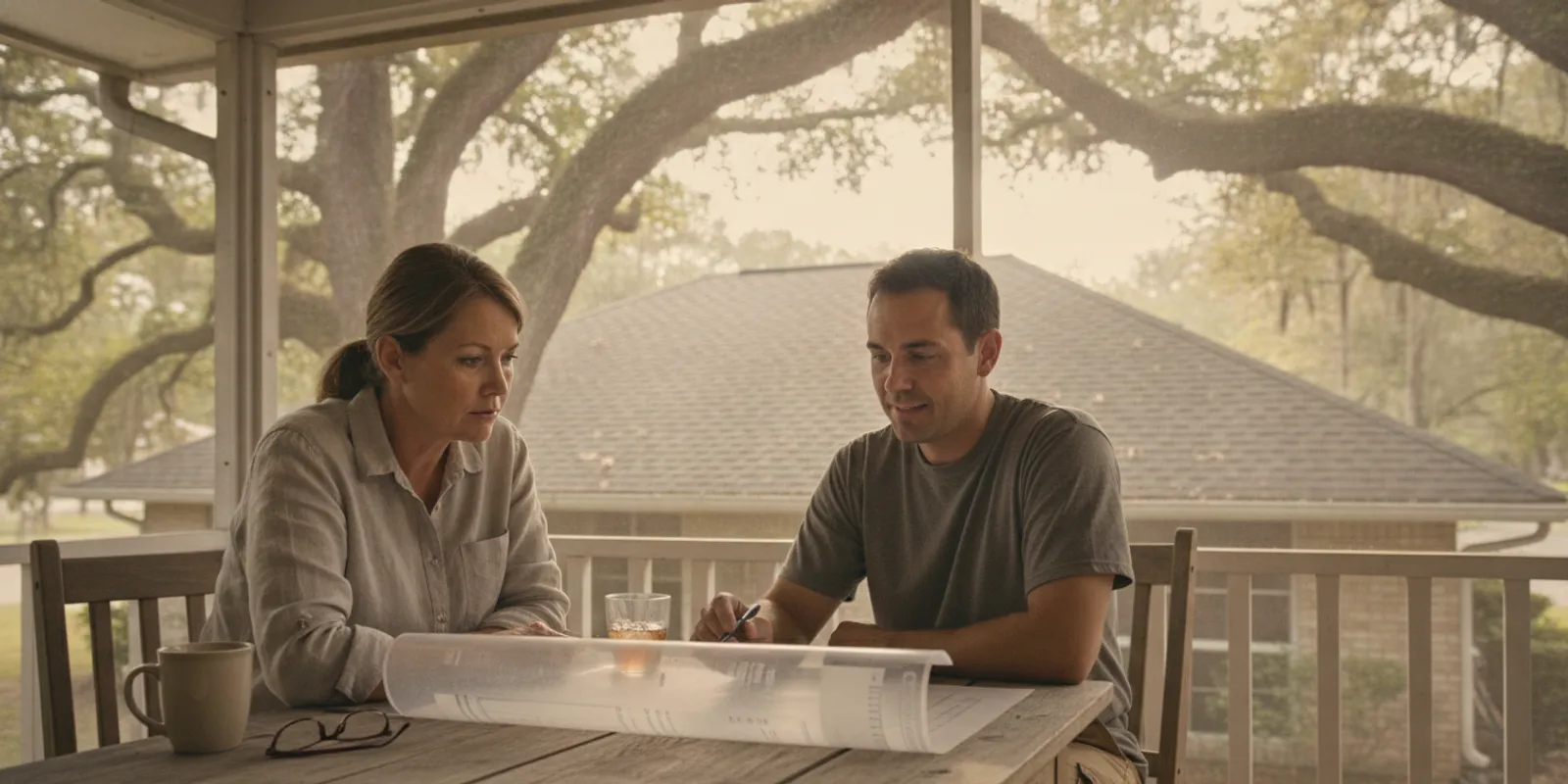
Roofing deposits what homeowners should know begins with a simple point: do not judge a payment request by its size alone. A deposit may be part of a reasonable project schedule, but its purpose, timing, and refund terms should be clear in writing before you pay. For homeowners in Gainesville, Live Oak, Lake City, and nearby North Florida communities, a careful review can help you compare proposals without rushing into a commitment.
Request a no-pressure roof evaluation
What is a roofing deposit?
A roofing deposit is an initial payment requested before or near the start of a project. Depending on the contractor’s written agreement and the work involved, it may be applied toward the overall project price, help reserve a place on the schedule, or cover materials and preparation. The exact purpose should be explained by the contractor rather than left for you to guess.
A deposit is not the same thing as the entire project price, a progress payment, or the final balance. A written payment schedule should show how each amount fits into the total and what project stage it corresponds to. If a proposal only says “deposit due” without defining the amount, due date, and how the payment will be credited, ask for a revised version before you agree.
There is no single deposit amount that applies to every roofing job. Project size, the work being performed, material choices, scheduling, and the contract terms can all differ. Avoid relying on a percentage you heard from a neighbor or found in an online discussion as a universal rule. Instead, compare the written schedule with the scope of work and ask questions about any amount that is unclear.
Why might a roofer request an upfront payment?
Roofing work takes planning. A contractor may need to coordinate materials, labor, delivery, and a start date. An upfront payment can be one part of that arrangement. But the reason should be specific to the project, and the terms should be documented. A verbal explanation is not a substitute for a clear agreement that you can review at home.
Ask whether the deposit is applied to the quoted total, what it is meant to cover, and whether it changes if the project is delayed or the scope changes. For a replacement, confirm how the quote accounts for the roofing materials and installation steps. For a repair, ask how the proposed work relates to the problem observed and what would require a separate approval. North Wood’s Roofing offers roof repairs and replacements; its roofing services overview is a useful place to see the kinds of work a homeowner may be discussing.
Be especially careful not to treat an upfront payment as proof that materials have already been ordered or that a crew is ready to begin. If that timing matters to you, ask when materials are expected and how you will be updated. These details are practical project questions, not assumptions you need to make from the size of the deposit.
What should the written estimate and contract explain?
Before you pay, make sure the written documents tell the same story about the job. The quote should describe the work, and the payment schedule should connect payments to that work. Read the documents together, and ask for corrections if dates, amounts, or descriptions conflict.
- Total price and scope: What work is included, which materials are specified, and what items are excluded?
- Deposit details: How much is due, when is it due, what is it intended to cover, and how will it be credited to the total?
- Later payments: What amounts are due at which stages, and what work or delivery corresponds to each stage?
- Changes: How will additional work or changed material selections be explained and approved before they affect the price?
- Timing: What is the expected start window, and how will the contractor communicate weather or material delays?
- Closeout: When is the final balance due, and what records or project information will be provided at completion?
Do not assume every possible repair is included in a replacement price. Ask how unexpected conditions will be handled and whether the contractor will explain and document additional work before proceeding. The point is not to predict every condition in advance; it is to understand how decisions and costs will be discussed if the scope needs to change.
Homeowners comparing payment plans can also review the contractor’s financing information and ask what options are available for their project. Financing is separate from a deposit, so confirm the terms of each arrangement and the total amount you would be responsible for paying.
What do refund and change terms mean in practice?
Deposit terms are easier to evaluate when you understand what could happen if plans change. Read the agreement for language about cancellation, rescheduling, material orders, and work already performed. Ask whether any amount may be retained if you cancel, and what documentation you would receive for costs incurred. Do not assume that every deposit is refundable or nonrefundable; the answer depends on the agreement and circumstances.
Also ask how the contractor will handle a change that affects the job price. For example, if an inspection during the work identifies an additional issue, find out whether the roofer will stop, explain the concern, and provide a written price or scope change for your approval before proceeding. The contract should make the process understandable. You should be able to distinguish the original agreed work from an additional item and see how any payment relates to each.
Keep a copy of the version you sign and any later written changes. If someone makes a promise about timing, refunds, or what a payment covers, ask for that detail to be included in the documents. Clear records make it easier for both sides to refer to the same terms if a question comes up. If a provision seems unclear, ask for plain-language clarification before you make a payment, and consider professional advice for legal questions.
How can you compare payment schedules?
Compare more than the initial amount. A low deposit could be followed by a large payment due before much work is complete, while a different schedule could spread payments across project stages. Neither pattern alone tells you whether an agreement is suitable. Look at the full schedule, the defined milestones, and the written terms for delays, changes, and cancellation.
| Payment stage | What to check | Question to ask |
|---|---|---|
| Before work begins | Deposit amount, due date, purpose, and credit against the quoted total | What does this payment cover, and what happens if the schedule changes? |
| During the project | Any progress payment and the specific work or delivery tied to it | Which completed or delivered stage makes this amount due? |
| At completion | Final balance, completion conditions, and closeout documents | How will I know the agreed scope is complete and the account is reconciled? |
This table is a comparison checklist, not a required payment formula. A contractor should explain its own schedule in plain language. When reviewing proposals, place the total price and each payment date side by side. Then compare what is included, rather than letting a smaller initial payment obscure differences in the job itself. If you have questions about coverage after the work, review the written terms and the company’s warranty information; do not assume a warranty determines when a deposit is due.
What warning signs deserve a closer look?
A payment request deserves more scrutiny when the explanation is vague, the paperwork is incomplete, or you are pressured to decide immediately. Take time to confirm the contractor’s identity and credentials. Florida homeowners can use the Florida Department of Business and Professional Regulation website as a starting point for checking licensing information. Verify the relevant details for the contractor you are considering, rather than relying only on a business card or online advertisement.
- The contractor will not provide the payment schedule and project scope in writing.
- The requested payment is not clearly credited to the total project price.
- You are told to pay immediately but are discouraged from reviewing the agreement or asking questions.
- The contractor requests payment to a person or entity that does not match the written contract, without a clear explanation.
- The price or scope changes verbally, but no written change is offered for you to review.
- You cannot get a clear answer about what happens if work is delayed or the agreement ends early.
One concern does not automatically prove wrongdoing, and legitimate project arrangements can vary. The practical response is to pause, request clarification in writing, and compare the information with other proposals. Do not hand over money until you understand who is receiving it, what agreement governs it, and how it fits into the job. If you are unsure about legal rights or contract language, consult a qualified professional or the appropriate government office rather than treating a roofer’s explanation as legal advice.
How do roof repairs and replacements affect the questions?
Payment questions are similar for repairs and replacements, but the scope differs. A repair proposal should identify the issue being addressed, the planned work, and the limits of that work. Ask whether the contractor expects to inspect the surrounding roof area and how any separate repair needs will be discussed. North Wood’s Roofing describes its roof repair service for homeowners evaluating repair work.
A replacement proposal generally includes a broader set of decisions, such as the roofing system, removal and installation work, and project logistics. Ask what materials are named in the estimate and whether there are options to compare. The shingle roofing and metal roofing pages can help you identify the systems the company offers, but your written proposal should specify the selections for your home.
For either type of job, ask how the contractor will communicate if weather affects the schedule. North Florida rain and storms can complicate outdoor work, but a weather delay does not by itself tell you what the contract says about payment. Check the actual terms. If your roof has visible damage or an active leak, you can ask about storm-damage roof repair and request an evaluation without assuming that a deposit is due before an inspection.
What steps can you take before paying?
- Collect the documents. Get the estimate, contract, payment schedule, and any financing agreement in writing. Make sure you know which document controls if descriptions differ.
- Check the business details. Confirm the contractor’s legal or business identity and review applicable licensing and insurance information. North Wood’s Roofing shares company background on its About Us page; independently verify credentials relevant to the project.
- Read the scope and exclusions. Confirm the work, material selection, and any items that may be separate. Ask for unclear terms to be defined before signing.
- Trace every payment. Make sure each amount, due date, and stage is written down, with a clear explanation of how each payment is applied to the total.
- Ask about changes and delays. Find out how you will approve extra work and what communication to expect if weather, delivery, or other conditions alter the schedule.
- Keep your records. Save the signed agreement, estimates, payment confirmations, and written messages. Use a payment method that gives you a record of the transaction.
A second estimate can help you see whether the proposed scope and schedule are explained consistently. Make sure each contractor is pricing comparable work and materials. If a quote is much lower, ask what has been left out; if the upfront amount differs, ask how the whole payment schedule compares. Avoid selecting a roofer based on the deposit alone.
How can North Florida homeowners move forward?
A good payment conversation should leave you with a clear picture of the total price, the planned work, and when each payment is due. It should also give you enough time to read the documents and ask questions. A no-pressure inspection can help you understand your roof’s condition before deciding whether the next step is a repair or replacement. North Wood’s Roofing serves Gainesville, Live Oak, Lake City, and North Florida, and provides free inspections and estimates with photo documentation.
Frequently asked questions about roofing deposits
Is a roofing deposit always required?
Payment arrangements depend on the contractor, the project, and the written agreement. Do not assume every roofer requires the same deposit or that an online percentage applies to your job. Ask for the full schedule and its terms in writing.
Should I pay a deposit before an inspection?
Ask what the payment is for and whether it is a project deposit or a separate charge. North Wood’s Roofing offers free roof inspections and estimates, but you should confirm the arrangement directly before agreeing to any service or payment.
Can I get a deposit back if I cancel?
That depends on the written agreement and the circumstances. Read the cancellation, refund, and delay terms before paying. If the contract does not explain them clearly, request clarification in writing and seek qualified guidance if needed.
Is a smaller deposit always the better deal?
No. Compare the full project price, scope, payment milestones, and terms. A smaller initial payment does not necessarily mean a better value if later payments, exclusions, or contract provisions differ.
Take time to understand the agreement before paying, and choose a roofing plan whose scope and payment schedule are clear to you.