
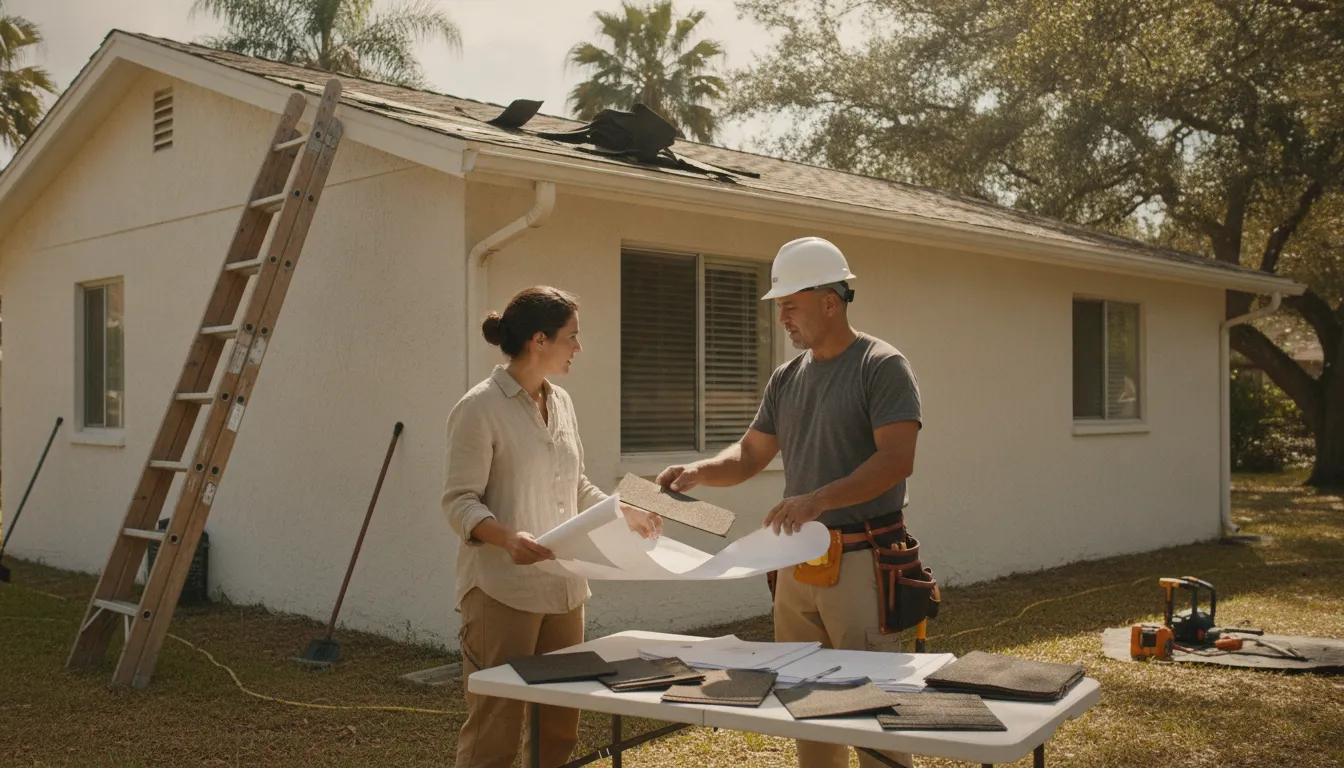
If you are trying to understand how to handle changes to a roofing project scope, start by slowing down, putting the new information in writing, and making sure everyone understands what is being added, removed, or postponed before work continues. A roofing project can look straightforward at first and then change once the existing roof is opened, measurements are confirmed, or weather affects the work.
Contact North Wood’s Roofing for an honest evaluation of your roofing project.
Whether you are planning a repair, replacement, or a related improvement such as gutter work, the original scope should be your reference point. A scope change is not automatically a problem. Sometimes it reflects a legitimate condition that could not be confirmed before work began. The important question is whether the change is clearly explained, fairly priced, and approved by the right people.
What a roofing project scope includes
The project scope is the practical description of the work a roofer has agreed to perform. It should connect the homeowner’s problem or goal to the work plan, materials, responsibilities, and price. A detailed scope may describe the roof areas involved, tear-off and disposal, underlayment, flashing, ventilation, deck repairs, installation, cleanup, permits, warranties, and payment milestones. North Wood’s Roofing’s services page is a useful starting point for seeing the types of roofing work a homeowner may need to discuss.
Scope is different from a sales conversation or a broad promise that a roof will be “fixed.” It should be specific enough that a homeowner can later tell what was included and what was not. If you are comparing proposals, the guide on what should be in a roofing estimate can help you look for those details before signing.
For a repair, the scope might identify a leak area, damaged flashing, or a limited group of shingles. For a replacement, it may cover the roof system as a whole. A roof replacement may also reveal conditions that were hidden under the existing covering. That possibility is one reason to ask how concealed damage, material substitutions, and owner-approved changes will be handled before work starts.
Why a roofing scope may need to change
Some changes are caused by information that was not available during the initial inspection. A roofer may find deteriorated decking, a concealed flashing problem, an unexpected ventilation issue, or a condition around a chimney or skylight after materials are removed. A homeowner may also request a change, such as a different shingle color, an additional roof area, or a decision to postpone a nonessential item.
North Florida weather can add another type of change. Rain, storms, heat, and humidity can affect when work can safely proceed. A schedule adjustment is not necessarily a change in the physical scope, but it should still be communicated so you know what is happening and whether it changes protection, access, or cost.
Some requests that sound like small additions can affect several parts of the roof system. For example, changing a roof material may affect its installation requirements, appearance, ventilation coordination, or warranty terms. If a question involves ventilation, compare the scope with the practical guidance in when a roof may need new ventilation rather than assuming every roof needs the same solution.
First, identify what changed
Before discussing price, describe the change in plain language. Ask the roofer to identify:
- Which roof area, assembly, or service is affected.
- What the original scope said about that area.
- What was discovered, requested, or prevented the original plan from continuing.
- Whether the change is required for the agreed work, recommended for durability, or optional.
- Whether the change affects the schedule, materials, warranty, permits, cleanup, or other trades.
These questions separate a necessary correction from an upgrade or a convenience change. A repair that addresses an active leak is a different decision from an appearance upgrade. A deck replacement needed to support new roofing is different from choosing a premium material. The categories may affect how you compare the proposal and whether you want to proceed now.
Ask for a written change order or revised scope
A verbal explanation at the job site can be useful, but it should not be the only record of a material change. Ask for a written change order, revised estimate, or other document that ties the new work to the original agreement. The document should be understandable without relying on a later memory of the conversation.
At a minimum, look for these items:
| Item | What to confirm |
|---|---|
| Reason | What condition or request caused the change, and where it was found. |
| Work | The exact labor, materials, preparation, and cleanup being added, removed, or changed. |
| Price | The added or reduced amount, including how labor and materials are calculated. |
| Schedule | Whether the completion date, delivery timing, or weather plan will change. |
| Warranty and permits | Whether the change affects coverage, manufacturer requirements, inspections, or approvals. |
| Approval | Who must approve the change and when that approval takes effect. |
Be cautious about signing a document that only says “additional work” without describing what that means. If a line item is unclear, ask for a more specific description. You can also ask whether the roofer will provide photos of concealed conditions when practical. Photos do not replace a written scope, but they can make the explanation easier to evaluate.
Compare the added cost before approving it
When a scope changes, compare the revised total with the original contract rather than looking only at the new total. Ask whether the change is a fixed amount, a unit price, a not-to-exceed amount, or an allowance. Each structure creates a different level of cost certainty.
- Fixed amount: The change has a stated price for a defined piece of work.
- Unit price: The price is based on a measurable quantity, such as a number of sheets or linear feet, with the final amount depending on the quantity used.
- Not-to-exceed amount: The contractor agrees to a maximum for the described work unless another change is approved.
- Allowance: The estimate sets aside an amount for a selection or condition that is not fully known yet. Ask how a difference will be handled.
Ask what is included in the added price and whether any original line item will be credited or removed. For example, if a different material replaces the original material, the revised scope should make the price difference clear rather than charging for both. If a homeowner is considering a broader replacement instead of a limited repair, the educational guide on factors that influence roof repair cost in Florida can provide useful questions, but it should not be treated as a quote for your particular home.
Decide whether the change is necessary now
Not every recommended item has the same urgency. Ask the roofer to distinguish between work that is needed to complete the contracted project safely, work that protects the roof system over time, and optional improvements that can wait. A clear answer helps you make a decision without treating every recommendation as an emergency.
For example, a structural or water-entry issue may need to be addressed before new materials can be installed correctly. A cosmetic preference may be optional. A maintenance service can help with inspection and upkeep, but it should not be presented as a substitute for a repair when a defect needs separate evaluation. North Wood’s Roofing describes its roof tune-up as a maintenance service for eligible roofs, not as a guarantee that all defects will be corrected.
If the proposed change concerns an active leak, use the safety and documentation steps in what to do during an emergency roof repair situation. Protect the interior from additional damage when it is safe to do so, document what you observe, and ask for a prompt evaluation. Do not climb onto a wet or damaged roof to investigate it yourself.
Check permits, code, and manufacturer requirements
A scope change can affect more than the invoice. It may change the permit description, inspection needs, material installation instructions, or warranty conditions. Ask the roofer whether the revised work requires an update to the permit or other documentation. For Florida project questions, the Florida Building Commission is an authoritative starting point for building-code information and resources. Local requirements can still vary, so use the applicable building department or qualified contractor for project-specific guidance.
It is also reasonable to ask whether the proposed materials will be installed according to the manufacturer’s instructions and whether the change affects the warranty. A manufacturer’s product page or warranty document may describe requirements that are not obvious from a short estimate. If the scope changes from one shingle system to another, ask for the exact product and color rather than relying on a general phrase such as “architectural shingles.”
Know when to pause and ask questions
You do not have to approve a material change immediately just because the conversation happens at the job site. If the change is not an emergency, ask for time to review the written scope. A short pause is especially reasonable when the price is substantial, the explanation is unclear, or the proposed work is outside the original problem.
Consider getting another qualified opinion when:
- The condition is described vaguely and you cannot tell where it was found.
- The change combines required work with upgrades but does not separate the prices.
- The contractor will not provide a written description or refuses to explain the cost.
- The new total is substantially different from the agreed amount without a clear reason.
- You are asked to pay for work that you did not authorize or cannot identify.
The Florida Attorney General’s consumer guidance on contractors also recommends practical steps such as checking licensing and references, getting a written contract, and understanding payment terms. It is general consumer information, not legal advice for a specific dispute. If you believe a contract has been breached or you face a serious disagreement, consider speaking with a qualified attorney or the appropriate consumer-protection agency.
Keep a simple project record
Save the original estimate, every approved change, photos, invoices, receipts, inspection records, and messages about the project in one folder. Note the date of each conversation and who approved a change. If the scope changes more than once, keep the documents in order so you can see which version is current.
At the end of the work, compare the completed project with the latest approved scope. Confirm that removed work was credited when applicable, that the agreed materials were used, and that you received the promised warranty or closeout information. If the project involved a permit or inspection, ask how you can access the final record.
A practical checklist for roofing scope changes
Before you approve a change, ask yourself:
- Can I explain exactly what changed and why?
- Is the change required, recommended, or optional?
- Do I have the revised work and price in writing?
- Does the revised price show credits, allowances, quantities, or limits clearly?
- Will the change affect the schedule, permit, warranty, materials, or cleanup?
- Do I know who is authorized to approve it?
- Have I had enough time to ask questions and compare options?
- Do I know what happens if the condition is different from the estimate?
When the answers are clear, a scope change becomes a documented project decision instead of a surprise. When they are not clear, pause and ask for the missing information before work proceeds, unless an immediate safety or water-entry issue requires prompt action.
Get a clear roofing plan for your North Florida home
North Wood’s Roofing serves homeowners in Gainesville, Live Oak, Lake City, and nearby North Florida communities with roofing services including repairs, replacement, inspections, gutters, skylights, and related work. The company’s approach is centered on clear explanations, honest evaluations, and no-pressure options. If you are unsure whether a proposed change belongs in your project, start with a documented conversation and an evaluation of the roof’s actual condition.
You can also review the company’s roofing warranty information and request an honest evaluation through the Contact Us page.
Request a free roof inspection and discuss your project scope with North Wood’s Roofing.