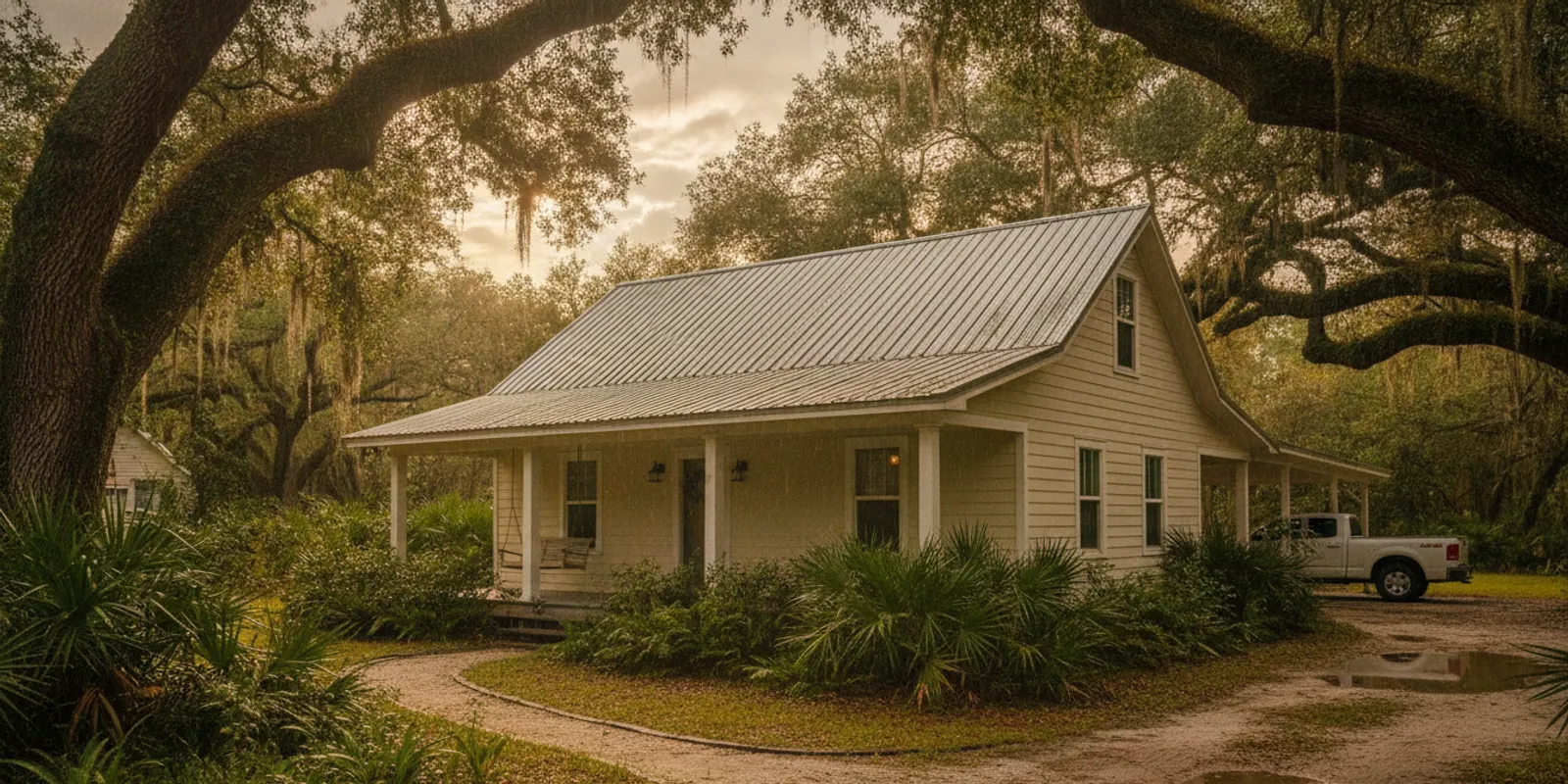
Is metal roofing a practical choice for a Live Oak home? It can be, but the right answer depends on the roof’s condition, design, budget, and the homeowner’s priorities. Metal is one of the roofing options North Florida homeowners can consider, alongside shingles. Compare the whole roofing system and installation plan, not just the material name.
What makes metal roofing worth considering in Live Oak?
Start by separating general material descriptions from the details of the product proposed for your house. Ask whether the system uses panels or another metal format, how the pieces connect, and how the roof’s edges and transitions are finished. These details matter because a roof has interruptions around vents, plumbing penetrations, valleys, and walls. The written scope should identify how those areas will be addressed, rather than treating them as minor details to work out later.
Also consider how long you expect to stay in the home and what you value most in a replacement. Some homeowners prioritize appearance, while others focus on project disruption, future upkeep, or the ability to compare a defined scope and warranty paperwork. None of those priorities settles the choice on its own, but stating them clearly helps a contractor explain the tradeoffs relevant to your roof.
Live Oak homes face heat, humidity, and periods of heavy rain and storms. Those conditions make sound installation, appropriate materials, and regular observation important for any roof. A metal roof may appeal to homeowners who want a different material from asphalt shingles, but “metal” covers more than one product and roof design. Ask what system is proposed and how it fits your home.
Think about the roof as a system: the roof deck, underlayment, flashing, ventilation, and the visible covering all have roles. A material choice alone does not tell you whether the full assembly is appropriate or whether a roof needs replacement now. If you are comparing options, review the contractor’s metal roofing service information and ask for a roof-specific evaluation.
How should you compare metal and shingle roofing?
Neither option is automatically right for every Live Oak home. Compare the project scope, system details, expected care, and written terms. A roofer should explain the recommendation in relation to your roof, rather than relying on broad claims about one material being best for every house.
| Question | Metal roofing | Shingle roofing |
|---|---|---|
| What is being installed? | Ask for the specific metal system, panels or components, and installation details. | Ask for the shingle product and the full assembly details. |
| What will the project involve? | Confirm removal or preparation, flashing, underlayment, ventilation, and cleanup. | Confirm removal or preparation, flashing, underlayment, ventilation, and cleanup. |
| How should upkeep be handled? | Ask which components need periodic visual checks and what should prompt a professional inspection. | Ask how to spot changes in shingles, flashing, or other roof components and when to arrange an inspection. |
| What affects the estimate? | Roof size and shape, access, existing conditions, selected system, and project scope. | Roof size and shape, access, existing conditions, selected product, and project scope. |
| What written information should you get? | Itemized scope, product details, installation terms, and applicable warranty documents. | Itemized scope, product details, installation terms, and applicable warranty documents. |
For another perspective on the choice, see the guide to metal versus shingle roofs in Florida. The comparison should still end with an assessment of your own roof, since roof shape, existing layers, and details around penetrations can change the work involved.
What should you ask before choosing a metal roof?
Use the estimate conversation to make the proposal understandable. A clear written scope helps you compare contractors and reduces the risk of overlooking important work. Ask for the recommendation in plain terms and make sure you understand what is included before approving the project.
- Which metal roofing system and components are included?
- Will the existing roof be removed, and what happens if hidden damage is found?
- How will valleys, edges, vents, skylights, and other roof transitions be handled?
- What ventilation or underlayment work is included, and why?
- What cleanup and property protection should I expect?
- Which workmanship and manufacturer documents apply, and what do they cover or exclude?
- How will changes to scope or cost be communicated before additional work?
Ask for photos of relevant roof conditions and a plain explanation of options. North Wood’s Roofing describes its approach as free inspections with clear photos and no-pressure options. Review its warranty information and ask how any written terms apply to the proposed work.
Does a metal roof suit every Live Oak roof?
No. Roof condition, slope and geometry, existing materials, drainage details, and the homeowner’s plans all matter. A contractor needs to inspect the property to determine whether the existing roof can be repaired, whether replacement is appropriate, and what installation details the home needs. In some cases, a shingle system may be a more suitable choice for the project.
Do not decide from appearance alone or assume a roof is ready for replacement because it is aging. If you have a leak or visible damage, first establish what is causing it. The roof repair service page explains the repair option, while an inspection can help clarify whether repair or replacement should be considered. Learn about the roof’s layers and components to understand why a visible covering is only part of the assembly.
What affects the cost of metal roofing?
Before comparing totals, make sure each contractor evaluated the same basic conditions. One proposal may assume the old roof remains in place, while another may include removal and disposal. A quote may also differ in the product selected, flashing work, ventilation changes, or the amount of decking repair included. If the estimate uses allowances or excludes concealed conditions, ask how those items will be priced and approved if they arise. A clear process for written change approvals helps you make decisions without guessing about the final scope.
Ask each contractor to describe the expected sequence: site preparation, removal if applicable, inspection of the exposed deck, installation of the specified components, and cleanup. Request clarification about what happens if rain or an unexpected condition affects the schedule. These are planning questions, not a prediction that a problem will occur. They help you compare the work being offered, not just the bottom-line number.
There is no responsible one-size-fits-all price for a metal roof. The estimate depends on the roof’s dimensions and complexity, access, existing roof conditions, the chosen materials, and the work needed around edges and penetrations. Removal, deck repairs, ventilation changes, or other discoveries may also affect the scope. Ask for an itemized proposal so you can see what is included and what would require approval as additional work.
Compare estimates on equal terms. A lower total may reflect a different product, narrower scope, or omitted work. Confirm whether each proposal includes removal, disposal, flashing, underlayment, ventilation, cleanup, and written warranty terms. If payment options are part of your planning, review the company’s financing information and discuss current terms directly with the provider.
How can you maintain a metal roof?
Keep a simple record of observations without trying to diagnose a roof from the ground. Note when a stain appears indoors, whether it follows rainfall, and which room or ceiling area is affected. If you can do so safely, take a picture from inside and record the date. Share that information with the inspector. Water can travel before becoming visible, so the spot on a ceiling does not necessarily identify the entry point.
After a storm, check the property from a safe location for fallen branches, debris, or new signs of moisture. Avoid touching loose material on the roof or climbing a ladder to investigate. If water is actively entering the home, protect belongings and seek professional guidance about next steps. A prompt assessment can help distinguish a repair issue from broader replacement planning.
Maintenance begins with observation from a safe place on the ground. After significant weather, look for visible changes such as displaced components, debris, or signs of water inside the home. Do not climb onto a roof to inspect it; wet or sloped surfaces can be hazardous. Keep trees and drainage paths in mind, and arrange a professional evaluation if something looks different or a leak appears.
Maintenance is not a substitute for repairs. A roof tune-up is a defined inspection and maintenance service, not a promise that every defect will be corrected. North Wood’s Roofing offers a roof tune-up for roofs 3–12 years old; ask whether the service fits your roof and have any repair needs evaluated separately. For metal-specific upkeep, see metal roof maintenance guidance for Florida.
How do you choose a roofing contractor?
Confirm that the contractor is appropriately licensed and insured, and ask for a written scope, product identification, and project timeline. Check that the estimate describes the work rather than simply naming a material. Ask who will answer questions, how changes are approved, and what documentation you will receive when the work is complete. Florida’s official licensing resources provide a way to check contractor credentials; begin with the Florida Department of Business and Professional Regulation’s official website and look for current contractor-license verification resources.
More usefully, request the license information directly and verify it with the relevant state authority. North Wood’s Roofing is a veteran-owned residential roofing contractor serving Gainesville, Live Oak, Lake City, and North Florida. The company states that it is licensed and insured and offers free inspections and estimates. Learn more about North Wood’s Roofing, then request an assessment for your home rather than relying on a general recommendation.
Frequently asked questions about metal roofing in Live Oak
Is metal roofing a practical choice for a Live Oak home?
It can be, depending on the home, roof design, selected system, and installation scope. An inspection and detailed estimate are the best way to understand whether it fits your situation.
Is metal always better than shingles in North Florida?
No roofing material is best for every home. Compare specific products, installation details, project costs, written terms, and maintenance expectations.
Can I tell from the outside whether I need a new roof?
Not always. Visible signs can justify an inspection, but a professional evaluation is needed to understand the roof’s condition and whether repair or replacement is appropriate.
What should a metal roof estimate include?
It should identify the proposed system, project scope, included components, cleanup, price, and applicable written terms. Ask how hidden conditions or scope changes will be handled.
Metal roofing can be a practical option for some Live Oak homes, but the right choice depends on the roof itself and the quality and scope of the proposed work. Get a clear inspection and compare written options before deciding.