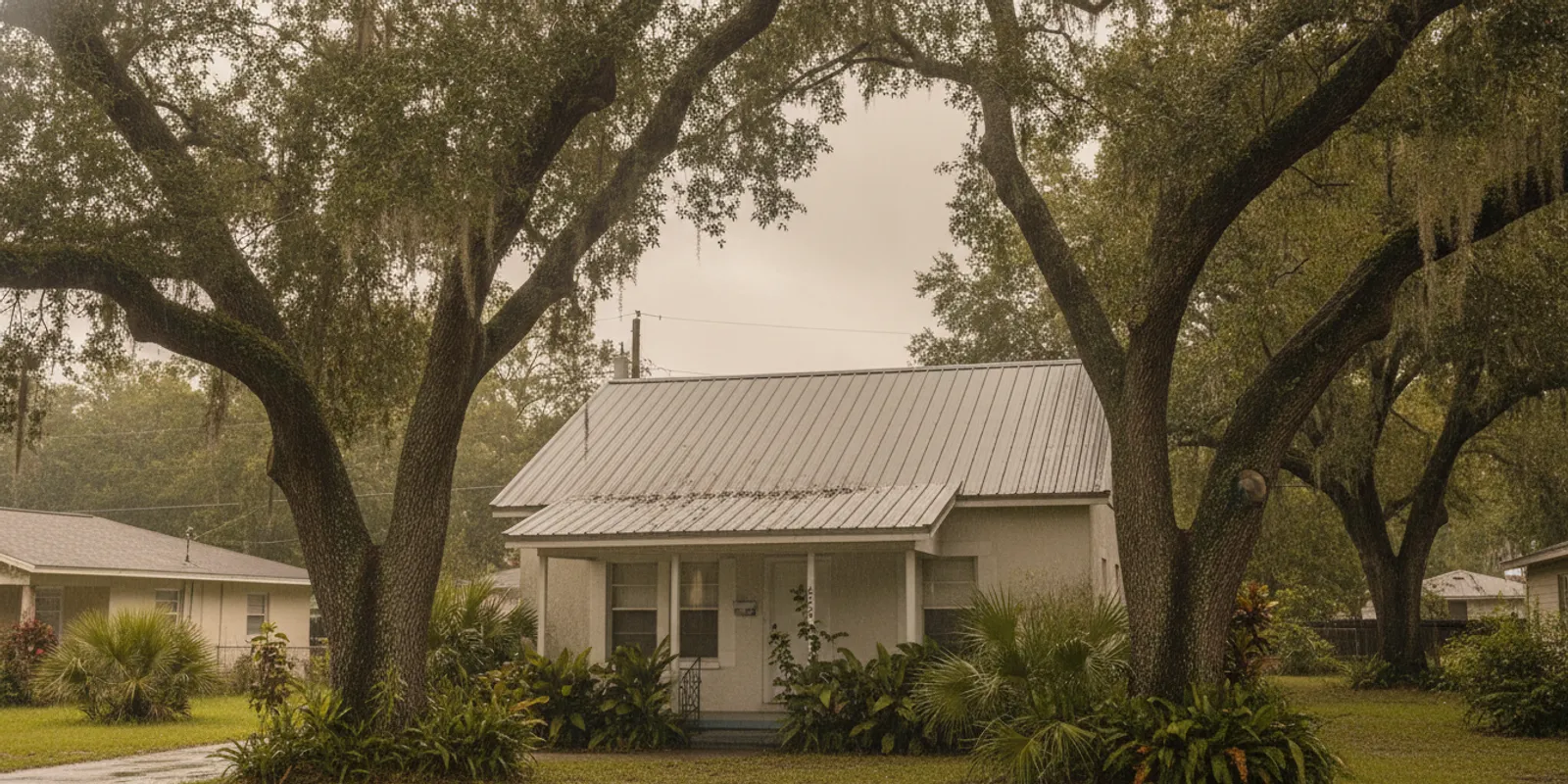
When comparing metal roofing in Lake City, FL, start with the condition of your current roof and the specific work each estimate includes. A metal roof is a major home project, so compare the full system, installation scope, details around roof openings, and the contractor’s explanation—not just the material name.
What should you compare before choosing a metal roof?
First, confirm that you are comparing the same kind of project. One proposal may cover a complete roof replacement, while another may address a smaller repair or a limited section. Ask each contractor to describe the existing roof’s condition, the recommended work, and why that scope makes sense for your home.
A professional assessment should consider the roof surface and the areas where water can enter, such as edges, valleys, penetrations, and transitions. Ask for clear photos when possible. They can help you understand the observed conditions and compare recommendations without relying on vague descriptions.
- Is the proposal for a full replacement, a repair, or another defined scope?
- What roof conditions support the recommendation?
- Are photos or notes provided to explain those conditions?
- What parts of the work are included, and what would be handled separately?
It is also useful to separate urgent observations from longer-term preferences. A leak, exposed underlayment, or damaged flashing may need prompt attention, while a finish color or panel profile can usually be considered more deliberately. Ask the contractor to identify which decisions affect water-shedding and installation, and which are primarily appearance choices.
How do metal roof options differ?
“Metal roof” describes a broad category rather than a single system. Ask what specific material and roof profile are proposed, how the panels or components will be installed, and what finish and color choices are available. The right comparison is between clearly described systems suited to the home, not an undefined label.
Also ask how the proposed system works with the roof’s shape and existing features. Valleys, eaves, ridges, wall intersections, and penetrations need appropriate detailing. Skylights and other openings may require particular attention. North Florida’s heat, storms, and humidity make it useful to discuss how the complete assembly and its details are planned for local conditions, without treating any material as immune to weather or maintenance.
| What to compare | Questions to ask | Why it matters |
|---|---|---|
| Project scope | Is this a replacement, repair, or partial project? | Estimates are meaningful only when they describe comparable work. |
| System description | What metal roofing system, profile, and finish are specified? | A specific description lets you understand what is being proposed. |
| Roof details | How will edges, valleys, penetrations, and transitions be handled? | These areas require deliberate planning as part of the roof assembly. |
| Included work | What removal, preparation, installation, and cleanup are included? | Clarifies the scope and helps identify exclusions or separate decisions. |
| Documentation | Are observations, options, and terms provided in writing? | Written details make estimates easier to review side by side. |
What should a metal roof estimate explain?
A useful estimate should make the work understandable. Look for a description of the proposed roofing system and the areas covered, along with any stated assumptions, exclusions, or items that may require a separate decision. If the document uses broad phrases such as “metal roof installation” without explaining the scope, ask for clarification before comparing it with another proposal.
Price is one part of the decision, but the lowest number alone does not show whether two estimates include the same work. Compare the proposed materials, preparation, detail work, and written terms. Ask whether the estimate includes removal of existing materials, disposal, and the planned treatment of roof openings and edges, if those items apply to your project.
Ask how changes discovered after work begins will be documented. For example, if concealed damage is found during removal, the estimate should explain how the contractor will communicate the condition, describe any additional work, and obtain your decision. A clear process does not eliminate every possible change, but it gives you a way to evaluate one without guessing.
Financing may be relevant for some homeowners. North Wood’s Roofing offers financing; review the available terms directly and consider them separately from the roofing scope. You can learn more on the financing information page.
How can you compare installation planning and workmanship?
Ask how the contractor plans to protect the home and property during the work, coordinate removal and installation, and address weather interruptions. Have the contractor explain the sequence in plain language. The aim is not to predict every condition in advance, but to understand how the project will be organized and how questions will be handled.
Discuss material delivery, driveway or landscaping protection, cleanup, and the point at which the roof will be protected if rain arrives between workdays. These details are part of a practical project plan. They also help you compare proposals that may use similar words but provide different levels of explanation.
Confirm the contractor’s license and insurance status, and ask who will communicate with you during the project. North Wood’s Roofing is a Florida licensed and insured residential roofing contractor serving North Florida. The company describes its approach as owner-led, with honest pricing and no-pressure options. Read more about the company on the About Us page.
Workmanship and manufacturer coverage are not interchangeable. Ask what written workmanship terms apply to the proposed project and what manufacturer documentation, if any, comes with the selected materials. Review the limits, exclusions, and maintenance obligations in the actual documents. Details may depend on the system and project; do not assume that every metal roof has the same coverage. See the warranty information and ask for the terms that apply to your estimate.
What questions should Lake City homeowners ask?
- What did you observe during the roof assessment, and can I see photos?
- Why is a metal roof being recommended for this roof rather than another option?
- What system and finish are included in the proposal?
- How will the estimate address edges, valleys, penetrations, and transitions?
- Which items are included, excluded, or subject to a separate decision?
- What written workmanship and manufacturer terms apply?
- Who should I contact if a question comes up during installation?
- How will concealed conditions or scope changes be explained and approved?
Answers should be specific to your roof. If you are also weighing metal against shingles, compare the systems and their project requirements rather than assuming one is best for every home. North Wood’s Roofing installs metal and shingle roofs; the metal roofing service page and shingle roofing information can help you frame questions for an inspection.
How do local weather and maintenance fit into the decision?
Heat, heavy rain, humidity, and storms are relevant conditions for North Florida homes. Ask how the proposed system’s installation details account for the roof design and local exposure. A material choice alone does not determine how a roof will perform; installation, detailing, and ongoing care also matter.
Maintenance conversations should be practical rather than absolute. Ask what visual checks are appropriate, whether fasteners, sealants, or exposed details need periodic attention, and what signs should prompt a professional assessment. Do not walk on a roof or attempt work at height. Keep records of installation documents and any inspections. For more on ongoing care, see the guide to metal roof maintenance in Florida.
Weather exposure can also affect broader homeownership planning. A 2025 Brookings discussion of homeowners insurance in an era of climate change describes how changing risk can affect insurance conditions, so homeowners should review coverage questions with their own insurer rather than assume a roof material guarantees a particular result: homeowners insurance and climate-related risk. Use local alerts and official guidance during storms; a roofing estimate is not a substitute for emergency instructions.
How can you compare estimates without rushing?
Put proposals side by side and mark where they differ. For each, record the proposed system, the scope, included and excluded work, detail treatment, written terms, and any unanswered questions. Follow up on vague items before making a decision. If a contractor identifies damage or recommends a scope you do not understand, ask for the reasoning and supporting documentation.
Consider making a short comparison sheet with one row for each decision: roof condition, system, finish, preparation, flashing and penetrations, cleanup, schedule, payment terms, and coverage documents. Write “included,” “excluded,” or “needs clarification” instead of relying on memory. This makes a follow-up conversation more productive and can reveal when two estimates are not actually offering the same project.
You can also read North Wood’s overview of what a roof replacement involves and its guide to roof replacement costs in Florida. These resources can help you prepare questions, but your home’s estimate should be based on its observed conditions and the specific work proposed.
What steps help you get comparable estimates?
Before contacting contractors, prepare a short, factual description of the roof and the reason you are considering a change. Note whether you are planning ahead, responding to a leak, or replacing a roof after an assessment. If you know when the current roof was installed, include that information, but do not guess at its age. A few clear notes can help keep each estimate conversation focused on the same concern.
- Gather context. Collect past repair records, any roof paperwork, and photos of interior stains or visible concerns taken safely from the ground. Do not climb onto the roof to take pictures.
- Request the same kind of evaluation. Tell each contractor you want an assessment of the roof and a written recommendation for the same overall goal. Ask whether the proposal assumes repair, replacement, or further inspection.
- Ask for the system details. Request the material and profile, finish options, installation approach, and any relevant preparation. If terminology is unfamiliar, ask for a plain-language explanation rather than accepting a label alone.
- Review the project sequence. Ask how removal, protection, installation, cleanup, and weather delays will be handled. Confirm who will update you and how you will be asked to approve changes.
- Compare written terms. Read the scope, exclusions, payment schedule, and applicable warranty documents. Mark every item that is missing or unclear, then ask for an answer in writing.
For example, imagine one estimate lists panels and installation while another separately identifies removal, underlayment, edge details, disposal, and cleanup. The second proposal may be easier to understand, but the labels alone do not establish which is the better value. Ask the first contractor whether those tasks are included, and ask the second what assumptions or extra work could change its scope. Then compare matching line items, not the document’s length.
Use a simple decision matrix to track what you learn. Give each contractor a column and each project component a row. For every cell, record the exact written answer or mark it “not specified.” A blank is not proof that a task is excluded, but it is a prompt to ask. This approach also makes it easier to revisit the decision with another household member without relying on memory.
What details deserve special attention on a metal roof?
Focus on the transitions where roof planes meet other surfaces or features. Ask how the estimate treats ridges, eaves, valleys, sidewalls, chimneys, vents, and skylights that are present on your home. Not every roof includes every feature, and not every detail calls for the same component. The point is to see that each applicable location has been considered in the proposed scope.
If the home has skylights or other penetrations, ask whether existing components will remain, be replaced, or need separate evaluation. Clarify what the contractor has observed and what cannot be confirmed until work proceeds. For background, North Wood’s guide to roof flashing explains why transitions and joints deserve attention, while its skylight service information can help you prepare questions about those openings.
Ventilation and roof layers may also affect planning. Ask what existing conditions were observed and whether any related work is included, excluded, or outside the estimate. Do not assume that a metal roof proposal automatically includes changes to ventilation or other parts of the assembly. If a recommendation is made, request its reasoning and ask how it relates to the roof you have.
How should you weigh appearance, upkeep, and long-term fit?
Appearance is a valid part of the decision, but it should follow the basic scope discussion. Ask which finishes and profiles are available for the system being proposed, whether samples or product information can be reviewed, and whether the selected finish affects any written product terms. Compare the appearance in daylight and consider how it will look beside the home’s exterior materials. Avoid assuming that a color choice predicts roof performance.
For upkeep, ask the contractor what routine observation is appropriate and what actions should be left to a qualified professional. Keep product information, installation records, and warranty documents together. If you see a change such as loose-looking components, damaged flashing, or water stains indoors, make a note of when it appeared and arrange an assessment rather than attempting to inspect a steep or wet roof yourself.
Long-term fit depends on your priorities as well as the system. One household may value a particular appearance; another may focus on the scope, disruption, or budget. Instead of relying on broad claims about lifespan or savings, ask for documentation specific to the proposed materials and discuss the assumptions behind any performance statement. You can then judge whether the proposal matches your plans without treating a general product description as a promise about every home.
Financing, if considered, should be evaluated separately from whether the scope is complete. Review applicable terms directly, ask what payment milestones apply to the project, and make sure you understand the written estimate before agreeing to work. The financing page provides information about the company’s available option; confirm current terms with the provider and contractor.
What should you do after receiving an estimate?
Take time to read the proposal from beginning to end. Circle unfamiliar terms, list the unresolved questions, and request clarification before signing. Ask for revisions if a discussed item is not reflected in the written scope. A verbal explanation can be helpful, but the final document should clearly describe the agreed work and any stated exclusions.
Keep copies of the estimate, photos, product details, and correspondence in one place. If the contractor explains that a condition may only be visible after removal, ask what documentation you will receive and how you will approve any changed work. This creates a useful record of what was observed, what was proposed, and what decision you made.
Once the scope is clear, consider schedule and household logistics. Ask when materials are expected, where they may be staged, what areas need to remain accessible, and how the crew will handle cleanup. If rain or another delay changes the schedule, ask how updates will be shared. These practical details help you prepare without assuming an exact start or completion date before the contractor confirms it.
Frequently asked questions about metal roofing in Lake City
Is metal roofing the right choice for every Lake City home?
No single roof system is right for every home. The roof’s condition, design, project scope, homeowner priorities, and estimate details all matter. Ask a qualified contractor to explain options for your specific roof.
Should I compare metal roofing estimates by total price?
Compare total price alongside the system and scope. Confirm whether proposals include similar materials, preparation, detail work, removal, and written terms. A lower total may reflect a different scope, so ask questions where the documents differ.
Can I tell from an inspection whether I need a new roof?
An inspection can document observed conditions and help a contractor explain whether repair or replacement is recommended. Request photos and a clear explanation. The decision should reflect your roof’s actual condition rather than a general rule.
What should I bring to an estimate appointment?
Share any known leak history, prior repair records, storm concerns, and questions about material or finish. If you have photos of interior water marks or past roof work, those may help provide context. A contractor can then assess the roof and explain the next steps.
With a clear inspection and comparable written scopes, Lake City homeowners can make a more informed decision about whether a metal roof fits their home and project needs.