
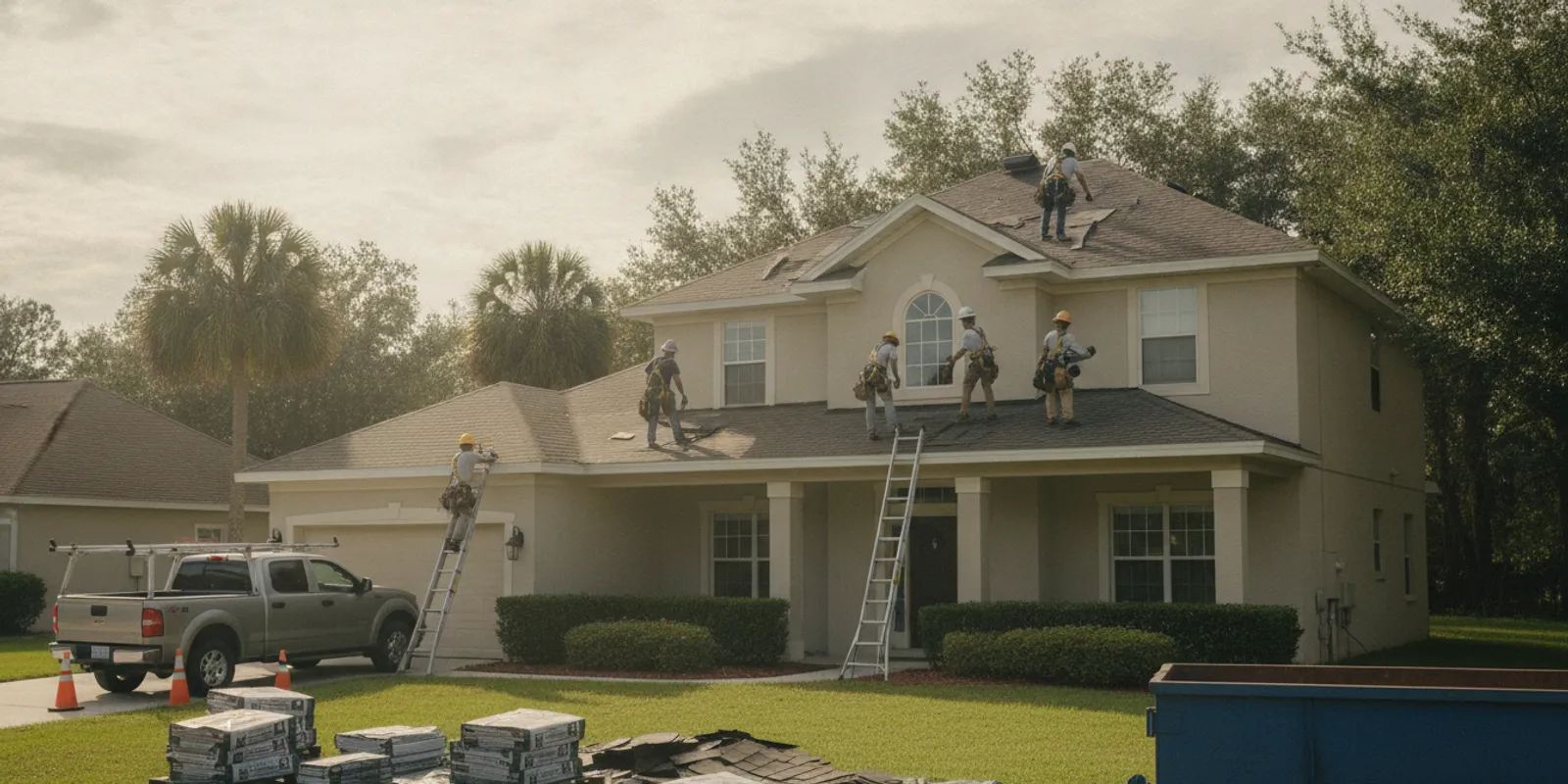
Roofing project timelines depend on more than the hours a crew spends on the roof. For North Florida homeowners, the schedule can include an inspection, planning, material availability, weather, installation, and a final review. Understanding those stages helps you plan and ask clear questions before work begins.
Request a free roof evaluation
What are the stages of a residential roofing project?
A replacement usually moves through several stages, but not every home follows the same timetable. Roof size and shape, the selected roofing system, the written scope, material availability, weather, and conditions found during work can all affect the schedule. A repair may require fewer steps, while a larger or more complex project may need extra coordination. Ask for a schedule that explains both the work itself and the time before and after installation.
- Inspection and discussion: A contractor evaluates visible roof conditions, documents concerns, and discusses whether repair or replacement may be appropriate. Photos can help you understand what was observed.
- Estimate and project decisions: You review the scope, materials, planned work, and relevant options. Before agreeing, ask what is included and what conditions could change the work.
- Scheduling and preparation: The contractor coordinates a start window and materials. You prepare the property according to the project-specific instructions.
- Roofing work: The crew completes the specified removal, repairs, and installation. Any newly discovered condition should be explained before work changes beyond the agreed scope.
- Cleanup and final review: The work area is cleaned and the completed project is reviewed. Confirm how follow-up questions or remaining items will be handled.
For a more detailed overview of planning a replacement, review this homeowner guide to roof replacement. You can also compare the company’s roofing services to understand the types of work that may be relevant to your home.
How long does installation take?
There is no dependable single duration for every residential roof. A straightforward roof with a clearly defined scope may take a different amount of time than a larger home with multiple sections, complex details, or repairs that become apparent after removal. Weather and safe working conditions also matter. A contractor who has inspected the roof can give a more useful project-specific estimate than a general rule of thumb.
It helps to distinguish three time measures when you discuss roofing project timelines:
- Work time: The expected time the crew will be actively completing the roofing work.
- Project window: The calendar period reserved for the job, which may include weather flexibility or work split across days.
- Overall lead time: The period from inspection and decisions through scheduling, installation, and closeout.
These measures are not interchangeable. A project might require a limited amount of on-site work but still take longer to reach the start date if materials, approvals, or scheduling need coordination. Ask which estimate the contractor is giving you. Also ask whether the stated duration assumes uninterrupted work and what happens if a pause is needed.
Instead of treating a projected finish date as a promise, ask for the assumptions behind it. For example: Is the estimate based on the roof being ready for installation? Are selected materials confirmed? Does the schedule include time for an inspection or other required approval? What would cause the crew to stop and resume later? Specific answers make the schedule easier to use for arranging work, parking, pets, and other household needs.
Which factors can change roofing project timelines?
Roof size, shape, and access
A larger roof generally involves more surface area to remove or cover. Multiple roof sections, steep or complicated geometry, limited access, and details around vents or other penetrations can add work and coordination. The initial evaluation can identify visible features that affect the planned scope, but some conditions may remain concealed until work begins. Ask whether the estimate reflects the visible complexity of your roof and which discoveries could alter the plan.
Existing roof condition and hidden work
Damage or deterioration can change what a project requires. If removal reveals an issue that could not be seen during the initial inspection, ask the contractor to explain what was found, what action is proposed, and whether the change affects timing or cost. Agree on how additional work will be documented and approved before proceeding beyond the original scope. This keeps a schedule change tied to a specific reason rather than leaving you to guess why the plan moved.
It is also useful to ask how the home will be protected while a condition is evaluated. The contractor should explain the immediate next step, how the exposed area will be secured if work pauses, and when you will receive an update. The exact approach depends on the roof and conditions on site.
Roofing material, selection, and availability
Material choices and product availability can affect planning as well as installation. North Wood’s Roofing installs shingle and metal roofing. Review its information about shingle roofing and metal roofing, then confirm the selected product, relevant details, and expected availability with the contractor. The schedule should reflect the material you actually choose, not an assumed alternative.
Before setting a firm start window, confirm that decisions that affect the work have been made. Ask whether any color, profile, flashing detail, or other selection remains open, and whether a change after ordering could move the start date. If a product is not available when expected, ask what options are acceptable and whether you need to approve a substitution. Do not assume that a substitute is equivalent without reviewing what would change.
North Florida weather
Rain, storms, high winds, and wet conditions can make roof work unsafe or unsuitable and may require a schedule adjustment. A responsible plan accounts for local weather and protection of the home during active work. Ask who will contact you if the forecast changes, how the roof will be protected if the crew must stop, and when you can expect the next update. It is reasonable to ask how a delayed day affects the next planned work date.
Make a simple household plan for a possible change. Keep the contractor’s contact information available, leave the work area accessible when the crew is expected, and avoid scheduling a critical delivery or event around an unconfirmed finish time. Weather can shift a work window; communication about the revised plan is more useful than relying on a fixed date that cannot account for conditions.
Permits, inspections, and other coordination
Project requirements vary with the work and local rules. Ask who is responsible for identifying and arranging any required permits or inspections, and whether those steps affect the start or completion date. For information about Florida building requirements, consult the Florida Building Commission and confirm local requirements with the appropriate building department. The contractor should explain which approvals apply to your specific project rather than assuming every job follows the same process.
If your project includes gutters, skylights, or other connected work, clarify whether those tasks are included in the same scope or scheduled separately. North Wood’s Roofing provides gutter services and skylight installation and repair. Ask whether the sequence depends on the roof work being complete first, and who will coordinate any separate visit.
What should you expect at each stage?
This comparison can help you turn a broad estimate into practical questions. It is a planning aid, not a promise that every roof will follow an identical sequence.
| Stage | What happens | What can affect timing | Question to ask |
|---|---|---|---|
| Inspection | Visible roof conditions and details are evaluated. | Access, roof complexity, and weather. | What did the photos show, and what needs attention? |
| Planning | Scope and materials are selected and the estimate is reviewed. | Product availability and decisions still pending. | What is included, and what could change the scope? |
| Scheduling | Start window, preparation, and coordination are confirmed. | Weather, approvals, and other trades. | How will I receive schedule updates? |
| Installation | The specified roofing work is completed. | Roof size, details, weather, and concealed conditions. | How will the home be protected if work pauses? |
| Closeout | Cleanup and review of completed work take place. | Final checks or agreed follow-up items. | Who should I contact with a post-project question? |
How can you prepare your home?
Follow the contractor’s instructions for your specific job. A little preparation can reduce disruption and help the crew work safely. Before the start date, confirm which areas need to remain clear and where materials or equipment may be placed.
- Move vehicles away from the work area and keep access routes clear.
- Relocate fragile items from shelves or walls if advised, since roofing work can cause vibration.
- Keep children and pets away from the work zone.
- Ask whether outdoor furniture, grills, planters, or other items need to be moved.
- Confirm where materials will be staged and how the crew will access the property.
- Ask whether gates should be unlocked and whether the crew needs access to a particular area.
- Make sure you know whom to contact on the workday and how schedule changes will be shared.
Before work starts, review the written scope and raise questions about protection, cleanup, and communication. The company’s roof replacement preparation checklist can help you organize those discussions. If someone in the household works from home, ask about the expected work window and likely periods of noise, while recognizing that exact timing can change.
Questions to ask a roofer about your project timeline
When comparing roofing schedules, ask the same questions of each contractor rather than comparing finish dates alone. A shorter schedule is not automatically better if the scope, materials, or protection plan is unclear. Use these questions to understand what each estimate includes and what could change the timeline:
- What work is included, and what is excluded?
- What materials and installation details are specified?
- What is the expected start window, on-site work duration, and overall calendar window?
- Which conditions could change the plan, and how will the contractor communicate a delay?
- How will concealed conditions and changes be explained, approved, and recorded?
- Who is responsible for permits, approvals, and any required inspections?
- What cleanup and final review are included?
- What warranty information applies to the proposed work, and where can I review it?
Use a simple written comparison rather than relying on memory. Record each contractor’s expected start window, assumptions, included work, materials, and process for handling changes. If one schedule seems much shorter, ask what it assumes about weather, scope, and material availability. The goal is not to choose the earliest date at any cost; it is to understand what each proposed schedule actually covers.
North Wood’s Roofing describes its approach as owner-led and no-pressure, with free inspections that include clear photos. Learn more on the company’s about page, and review its information about roofing warranties. An inspection can help establish a realistic scope, but it cannot rule out concealed conditions or future weather changes.
What should you do if a delay occurs?
Ask for a clear update rather than relying on an assumed finish date. Find out what caused the delay, whether the roof is currently protected, what work remains, and when the next update will come. If the delay involves a changed scope, request an explanation and written documentation before approving additional work. If it is weather-related, ask what conditions must improve before the crew can safely resume.
Keep a short record of the update, the revised plan, and any decision you need to make. This helps everyone stay aligned if a material change, approval, or return visit is needed. If there is an active leak or another urgent concern during a pause, tell the contractor promptly and ask what safe next step is appropriate. North Wood’s Roofing also handles roof repair services; the right response depends on the roof’s condition and should be determined by an evaluation.
How might a project schedule change in practice?
Consider two planning examples. They are illustrations of how the stages interact, not estimates of how long a particular North Wood’s Roofing project will take. In a straightforward replacement, the homeowner completes the material decisions, the work scope is clear, and the materials are available. The contractor and homeowner can then coordinate the start window, property preparation, installation, cleanup, and review. The main remaining schedule uncertainty may be a change in weather or an unexpected condition.
In a more complex example, a roof has several sections and the homeowner is also planning a skylight-related task. During planning, the homeowner asks whether the work is included in one scope, whether the sequence matters, and whether another visit is needed. If removal then reveals a condition not visible during inspection, the contractor explains the finding and any proposed change before proceeding. Each decision affects what work remains and when it can be completed. Asking about these dependencies early makes the schedule more understandable, even though it cannot eliminate uncertainty.
For either situation, keep the schedule useful by writing down the next milestone, the person responsible for it, and any decision needed from you. Instead of asking only, “When will it be done?” ask, “What is the next step, what could hold it up, and when will we check in again?” That question encourages a practical update at every stage.
Frequently asked questions about roofing project timelines
Does a roof replacement always finish in one day?
No. The schedule depends on the home, scope, materials, weather, and conditions found during work. Ask for the expected on-site work duration and the larger calendar window rather than assuming every project follows the same timetable.
Can rain delay a roofing project?
Yes. Rain and other unsuitable or unsafe conditions may require work to pause or move. Ask how the contractor will protect the home, communicate the change, and confirm a revised plan.
Does choosing metal or shingles change the timeline?
Material and project details can affect planning and installation, but there is no universal rule that one choice always takes longer. Confirm the selected product’s availability and the expected schedule for your specific roof and scope.
When should I contact a contractor?
Contact a contractor when you notice signs of a problem or are considering replacement, so an inspection can clarify the roof’s condition and possible next steps. North Wood’s Roofing serves homeowners in Gainesville, Live Oak, Lake City, and North Florida.
A clear scope, realistic schedule, and steady communication make it easier to plan a roofing project, even when North Florida weather or newly discovered conditions call for an adjustment.