If you are planning roof work, knowing what to expect during a roofing project can make decisions easier. A clear process helps you understand the inspection, the written scope, what the crew may need, and what to review afterward. Details differ by home, roof, and work involved, so use the steps below as a guide and ask the contractor to explain anything specific to your property.
Request a free roof inspection
What happens before a roofing project begins?
Start with a conversation about what prompted the project. You may have noticed a leak, storm damage, aging shingles, or a need to plan a replacement. Tell the contractor when the issue began, which rooms show signs of moisture, and whether the symptoms changed after rain or wind. Photos taken safely from the ground can help communicate what you observed. Do not climb onto the roof to investigate.
An inspection should help establish what is visible and what remains uncertain. Ask the contractor to show photos, explain the condition in plain language, and distinguish observed damage from possible causes that need further evaluation. The purpose is to understand the roof and options, not to rush into a decision. North Wood’s Roofing offers free inspections and estimates with photo documentation and no-pressure options. Learn about its owner-led local approach or review its roofing services in Gainesville, Live Oak, and Lake City.
What should the written estimate explain?
Before agreeing to work, ask for a written scope that fits the project. A repair description should identify the area and components involved. A replacement plan should explain the work and materials included, as well as exclusions or items that may require a separate decision. Clear language now makes it easier to compare proposals and discuss changes later.
- Work included: Which roof areas and components are part of the job?
- Materials: What roofing product and system are proposed? What alternatives are available?
- Price and payment: What is the quoted amount, when are payments due, and what circumstances could change the price?
- Schedule: What affects the planned start date and expected duration?
- Property protection: How will landscaping, access areas, and outdoor belongings be protected?
- Cleanup: What debris handling and cleanup are included?
- Warranty: What workmanship and manufacturer coverage applies, and what terms govern it?
Compare scope, not only the bottom-line price. Two proposals can differ in materials, included details, or assumptions about hidden conditions. If a line is unclear, ask for an explanation before accepting. You can review warranty information, along with the relevant shingle roofing options or metal roofing systems.
How do repair and replacement projects differ?
A repair focuses on a specific concern, such as a leak or damaged roofing component. Ask what the inspection indicates about the likely source, what work is proposed, and whether other visible conditions need attention. A localized repair may not address wear elsewhere. Confirm what the assessment covered and what it did not establish.
A replacement has a broader scope. The proposal should describe removal and installation work, the selected roofing system, and the details relevant to the home’s layout. Ask how concealed conditions will be documented and discussed, and how any change in scope will be approved. A useful plan identifies who will contact you if the work uncovers something that was not visible during the initial inspection.
| Project stage | Repair | Replacement | Question to ask |
|---|---|---|---|
| Assessment | Focus on the reported leak or damage and nearby components | Review the roof as a whole and define the proposed system | What was inspected, and what remains uncertain? |
| Written scope | Identify the repair area and proposed work | Describe removal, installation, materials, and included details | What is included, excluded, or conditional? |
| Work activity | May be concentrated around the work area | Usually involves broader activity around the home | Who shares updates and discusses changes? |
| Closeout | Review the completed repair and any next steps | Review cleanup, project records, and warranty details | What documentation will I receive? |
When the work is related to a leak or damaged area, see the company’s information about roof repair services. For upkeep rather than a major project, its roof tune-up is a maintenance and inspection service; it is not a substitute for repairs when a defect is found.
How can you prepare your home?
Preparation depends on the job and property. Before the crew arrives, confirm the access plan, expected start time, and where materials or equipment may be placed. Ask whether vehicles need to be moved or whether a gate should be left accessible. Keep children and pets away from work areas. Roof work can create noise and vibration, so consider securing delicate items on shelves or walls.
- Clear the driveway or agreed access area if requested.
- Move patio furniture, potted plants, and fragile belongings away from the immediate work zone when practical.
- Close windows and let household members know that work may be noisy.
- Tell the contractor about gates, access restrictions, or areas needing special care.
- Ask who to contact if weather or another issue changes the plan.
Make a short list of questions before the start date. For example, if you work from home, ask which parts of the day may be noisiest and whether the crew needs access to a particular area. If you have a driveway or garden close to the eaves, ask what should be moved and what protection is planned. Specific questions help turn a general preparation conversation into a workable plan.
What should you expect while the crew is working?
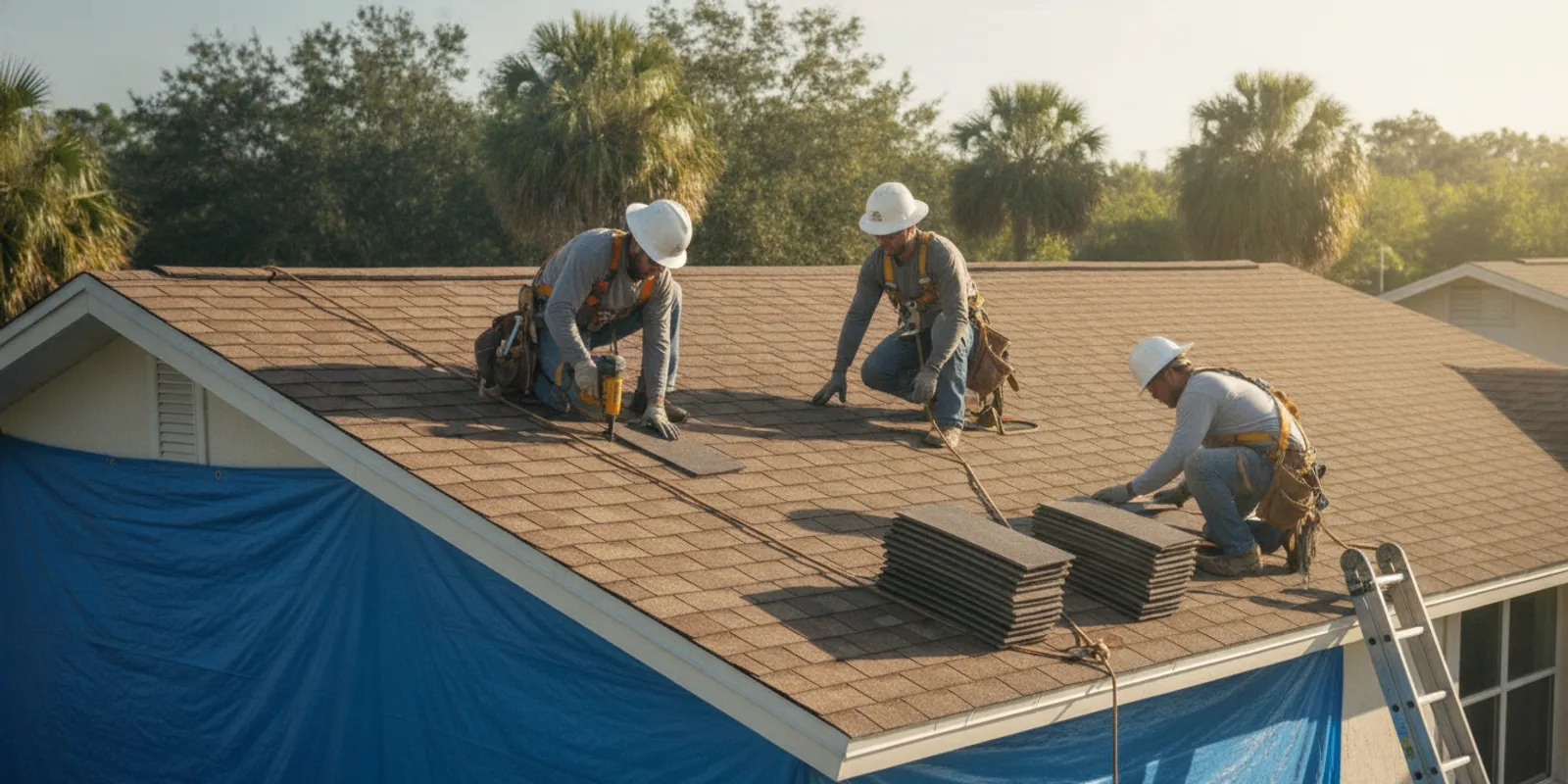
Roof work may involve noise, workers moving around the property, deliveries, and debris handling. The exact sequence depends on the scope, roof design, selected materials, and weather. A planned start date or expected duration is a working estimate, not a promise that conditions will remain unchanged. Rain, wind, deliveries, or concealed conditions may affect progress.
Agree in advance on how updates will be shared and who can answer questions. Keep the estimate and project messages together so you can refer to the agreed scope. If new information changes the proposed work, ask what was found, why it matters, what options are available, and whether the change affects price or schedule. Request a written description of any revised work and make sure you understand it before approving it.
Do not walk onto the roof or adjust materials while work is underway. If you see a concern, contact the project representative rather than approaching an active work area. A clear communication path is useful even when everything is going to plan: it tells you whom to ask about deliveries, access, weather delays, or the next stage.
What should happen during cleanup and closeout?
Ask what cleanup is included and whether a final check or walkthrough is offered. Review the completed work with the contractor or project contact. From a safe location on the ground, note questions about visible areas. Ask for project photos or other records, confirmation of installed materials, the final invoice, and applicable warranty documents. Keep them with the written estimate and messages.
If you notice debris, an unfinished item, or a new sign of moisture, report it promptly and describe what you observed. Do not climb onto the roof to check. Ask what follow-up is appropriate and keep the response with your project records. Good closeout gives you a clear account of what was done and whom to contact if a question comes up later.
North Wood’s Roofing provides information about its warranty coverage. If you are still comparing next steps, you can review the company’s roofing services or learn about financing options and ask what applies to your project.
What records and questions are useful?
Keep a simple project file. It can be a folder or a set of digital documents, as long as you can find the information when needed. Save the inspection photos, estimate, signed scope, written approvals for changes, schedule updates, invoices, and warranty documents. Note the date and person you spoke with when an important decision is made. This record is practical if you need to clarify what was agreed or ask about a completed item.
Before work starts, use questions like these to make the conversation concrete:
- What did the inspection find, and can you show me the photos?
- Which work is recommended now, and what is outside this proposal?
- What materials and components are included?
- How will hidden conditions and changes be explained and documented?
- Who is my contact, and how will updates be shared?
- What cleanup and closeout records should I expect?
For a replacement, you may also want to check whether local permit requirements apply to the planned work. Requirements can vary by jurisdiction and project, so consult your local building department rather than relying on a general assumption. The Florida Building Commission website provides statewide building-code information; it is a starting point, not a substitute for confirming the requirements that apply to your address.
How can North Florida homeowners move forward?
Whether you live in Gainesville, Live Oak, Lake City, or a nearby North Florida community, start by gathering your observations and deciding what you need to learn: whether a repair is appropriate, what a replacement would include, or how to plan around the work. North Wood’s Roofing is a veteran-owned residential roofing contractor serving these communities. Its stated approach includes free inspections and estimates with photos and no-pressure options.
For a project involving shingles or metal, ask how the proposed system fits your home and the work being considered. North Wood’s Roofing offers shingle roofing and metal roofing, as well as repair and maintenance services. You can also review the company’s service-area information before reaching out.
Frequently asked questions about roofing projects
Will I need to leave my home?
Some homeowners stay home during roof work, but noise and activity can be disruptive. Ask the contractor what to expect for your particular project and make arrangements that suit your household.
Can the schedule change after work starts?
Yes. Weather, deliveries, or conditions revealed during the work can affect timing or scope. Ask how you will be notified and how any change will be explained and recorded.
Should I choose the lowest estimate?
Not on price alone. Compare the written scope, materials, exclusions, communication plan, and warranty terms so you understand what each proposal covers.
What if I notice a problem after the crew leaves?
Contact the contractor promptly, describe what you noticed, and share photos taken safely from the ground if useful. Ask what follow-up is appropriate and keep the response with your project records.
Talk with North Wood’s Roofing about your project
A clear scope, practical preparation, regular communication, and organized records can make roof work easier to understand from the first inspection through closeout.