Choosing a roofing company is easier when you know what to verify before you request an estimate. If you are starting with a roof maintenance checklist for Florida homeowners, use it to identify questions for a contractor, not to diagnose a roof from the ground. North Florida heat, humidity, heavy rain, and storms make careful inspection and clear communication especially important.
See the North Florida roof tune-up service
Roof Maintenance Checklist for Florida Homeowners: Choose With Confidence
The best roofing company for your home is not necessarily the one with the lowest first estimate or the biggest advertisement. Look for a contractor who can explain what they found, show you clear photos when appropriate, describe the proposed work in writing, and answer questions without pressure.
A sound decision usually starts with seven checks:
- Confirm that the company serves your area and has relevant residential experience.
- Verify licensing information and ask for current proof of insurance.
- Request an inspection that looks beyond the most obvious symptom.
- Compare written estimates line by line rather than comparing only totals.
- Ask how the recommended materials and installation details fit your roof.
- Read the workmanship and manufacturer warranty terms before signing.
- Pay attention to how the company communicates before you become a customer.
1. Check local experience and service area
A contractor who works regularly in North Florida should be familiar with the practical conditions that affect residential roofs here. Heat, humidity, fast-moving rain, wind events, shaded roof sections, algae growth, and repeated wet-dry cycles can all matter when a contractor evaluates maintenance, repair, or replacement.
Ask whether the company works in your community and whether it has experience with homes similar to yours. North Wood’s Roofing serves homeowners in Gainesville, Live Oak, Lake City, and nearby North Florida communities. A focused service area can make follow-up communication more practical, but you should still confirm that the company is available for the type of work your home needs.
Local experience is not a substitute for credentials or a written scope. It is one part of a broader check that helps you understand whether the contractor is familiar with the homes, weather, and project decisions in your area. You can learn more about North Wood’s Roofing’s local, owner-led approach on the About Us page.
2. Verify licensing, insurance, and business information
Before accepting an estimate, ask for the contractor’s legal business name, license information, and current insurance details. You can use the Florida Department of Business and Professional Regulation as a starting point for checking license information. Ask the company to explain what its insurance covers and whether the policy is current for the work being proposed.
Do not treat a license number, logo, or certification badge as the whole decision. Check that the name on the paperwork matches the company you are hiring, and ask who will be responsible for the work. A trustworthy contractor should be willing to answer these questions before asking for a commitment.
North Wood’s Roofing is a licensed and insured, veteran-owned residential roofing contractor. The company’s stated experience and credentials can be part of your comparison, but you should still read the actual estimate and warranty terms for your project.
3. Expect a real inspection, not a rushed sales visit
A roof problem is not always located where you first notice it. A ceiling stain, missing shingle, or loose flashing detail can be a symptom rather than the complete cause. A useful inspection should consider the roof surface, penetrations, flashing, visible drainage details, soffit and fascia where relevant, and the interior symptom you reported.
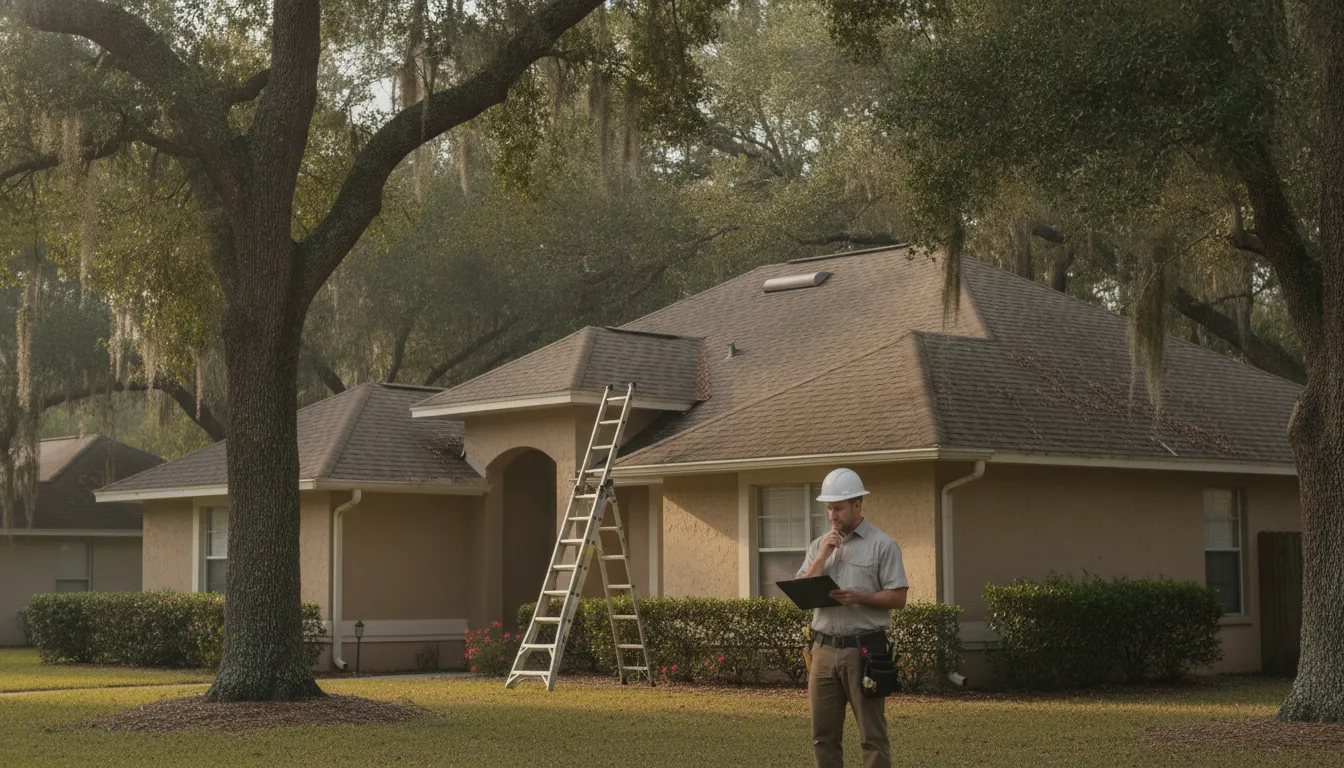
Ask what the contractor inspected, what they could not inspect safely, and what evidence supports the recommendation. You should not have to climb onto a wet, steep, or damaged roof to prove a problem. Share photos of interior staining, the date you noticed it, and what happened before it appeared, such as heavy rain or a storm.
North Wood’s Roofing describes its inspections as honest and photo-supported, with no-pressure options. Whether you choose this company or another, look for an inspection process that distinguishes maintenance from repair and repair from replacement. A roof repair evaluation may be the appropriate next step when damage is localized, while broader replacement decisions require a different scope.
4. Compare written estimates, not just prices
Two estimates can have very different totals because they describe different work. Before comparing prices, check whether each proposal identifies the same roof areas, tear-off or preparation assumptions, materials, flashing work, ventilation details, cleanup, permits or code-related items, payment schedule, and warranty coverage.
Use this comparison table as a starting point. Ask the contractor to explain any row that is unclear or missing.
| What to compare | Question to ask | Why it matters |
|---|---|---|
| Scope | What exact roof sections and details are included? | Prevents an inexpensive estimate from leaving out necessary work. |
| Materials | Which product, grade, color, and accessories are proposed? | “Shingles” or “metal” alone does not describe a complete roof system. |
| Installation | How will flashing, valleys, penetrations, and ventilation be handled? | Details at transitions and openings can affect performance and leak risk. |
| Protection and cleanup | How will landscaping, vehicles, and job-site debris be handled? | Sets expectations for the work area and final cleanup. |
| Timeline | What could change the schedule because of weather or materials? | Helps you plan without treating a weather-dependent date as a guarantee. |
| Warranty | What does the contractor cover, for how long, and how do I make a claim? | Separates material coverage from workmanship responsibilities. |
A detailed estimate is useful even when you decide not to hire that contractor. It gives you a common basis for comparing proposals and helps you identify questions before work begins.
5. Ask how the materials fit your roof and priorities
Material selection should follow the roof design, budget, appearance, maintenance expectations, and installation plan. Asphalt shingles are a common residential choice, while metal roofing may fit a different set of priorities. The right answer depends on your home and the complete system, not on a single claim about one material.
Ask the contractor to explain why the proposed product fits your roof and what alternatives would change. If you are comparing options, review North Wood’s shingle roofing information and metal roofing information alongside the estimate. You can also ask how the proposed installation addresses roof openings, flashing, ventilation, and drainage.
For code and permitting questions, ask the contractor which requirements apply to your project and how they will be handled. The Florida Building Commission is an authoritative resource for Florida building-code information, but a contractor should still explain the project-specific process rather than telling you to research it alone.
6. Read warranties before you sign
A warranty is only helpful when you understand who provides it and what it covers. Ask for the written terms for both workmanship and roofing materials. Clarify the length of coverage, exclusions, maintenance expectations, transfer rules, and the process for reporting a problem.
Do not assume that a manufacturer’s limited warranty covers installation errors, or that a workmanship warranty covers every material defect. Ask the contractor to explain the difference in plain language. North Wood’s Roofing publishes information about its roofing warranties; review that information with the proposal for your specific project.
Also ask what happens if a repair reveals additional damage. A responsible contractor should describe how unexpected conditions will be documented and approved instead of treating an open-ended change as an automatic charge.
7. Use communication and reviews as evidence
Reviews can help you identify patterns in communication, scheduling, cleanup, and follow-through, but they should not replace your own questions. Look for consistent, specific feedback rather than relying on a star rating alone. If a company provides references or examples of completed work, ask whether those projects are comparable to yours.
Notice how the contractor handles uncertainty. Roof inspections do not always produce a simple yes-or-no answer, and a company that explains what needs more investigation may be more useful than one that promises a quick conclusion. Be cautious when someone pressures you to sign immediately, demands a large payment before a clear scope is provided, or refuses to put important promises in writing.
For a second source of information, compare the proposal with the company’s public service information and contact details. North Wood’s services page outlines its residential offerings, including repairs, roof work, gutters, skylights, and maintenance-related help.
Roof maintenance checklist for Florida homeowners
Maintenance is not a promise that a roof will never need repairs. It is a way to notice changes earlier and give a contractor better information. Use this checklist from the ground or from safe, accessible areas. Do not walk on a wet, steep, or damaged roof.
- After heavy rain, look for new interior stains, damp areas, or active dripping.
- From the ground, note missing, lifted, cracked, or visibly displaced shingles or panels.
- Look for damaged or loose flashing around visible roof transitions and openings.
- Keep records of storm dates, leaks, photos, and prior repairs.
- Keep gutters and visible drainage paths clear when it is safe to do so.
- Trim branches that rub against the roof or create persistent shade, using appropriate safety precautions.
- Ask a qualified professional to evaluate roof areas you cannot safely see.
- Schedule a professional inspection when you notice a change, after significant weather, or before a planned sale or major project.
North Wood’s Roofing offers a $399 roof tune-up service for roofs 3–12 years old. The service is intended as maintenance and inspection, not as a substitute for repairs or a guarantee that every defect will be corrected. If an inspection identifies repair needs, ask for a separate explanation and scope.
Questions to ask before hiring a roofing company
- What did you find, and which photos or observations support the recommendation?
- Is the proposed work maintenance, a repair, a replacement, or a combination?
- What is included in the estimate, and what is specifically excluded?
- Which materials and installation details are you recommending, and why?
- How will flashing, roof openings, ventilation, drainage, and cleanup be handled?
- What license and insurance information can you provide?
- Which warranty covers workmanship, and which warranty comes from the manufacturer?
- How will changes or concealed damage be documented and approved?
- Who should I contact if I have a question during or after the work?
When should you request an estimate or inspection?
Ask for an evaluation when you see a new leak, missing material, damaged flashing, recurring ceiling staining, or storm-related change. You can also request an inspection when you are planning a sale, comparing repair and replacement, or trying to build a maintenance record for an aging roof.
Bring your observations and questions to the appointment. A clear conversation helps the contractor separate an urgent safety issue from a project that can be planned. If you are ready to discuss the condition of your roof, use North Wood’s Contact Us page or schedule a free estimate to request the next step.
Frequently asked questions
Should I choose the roofing company with the lowest estimate?
Not automatically. First confirm that the estimates describe comparable scope, materials, installation details, cleanup, timeline assumptions, and warranty coverage. A lower total may reflect omitted work rather than better value.
How many roofing estimates should I get?
There is no universal number. Get enough information to compare the scope and the contractor’s explanations without turning the decision into a race to collect quotes. Two or more detailed, comparable proposals can be more useful than several vague totals.
Can a maintenance checklist tell me whether I need a new roof?
No. A checklist can help you record visible changes and prepare questions, but it cannot determine the cause or extent of a roof problem. A qualified inspection is the safer way to evaluate repair, maintenance, or replacement options.
What makes a roofing estimate trustworthy?
A trustworthy estimate identifies the work, materials, assumptions, exclusions, payment terms, timing considerations, and warranty responsibilities. The contractor should also be willing to explain the proposal and revise it when new information changes the scope.
Choose clarity before you choose a contractor
The right roofing company should make your decision more informed, not more pressured. Verify credentials, ask for a complete inspection, compare written scopes, and keep maintenance observations for your records. For North Florida homeowners, a local contractor who communicates clearly can help you decide whether the next step is maintenance, repair, or replacement.