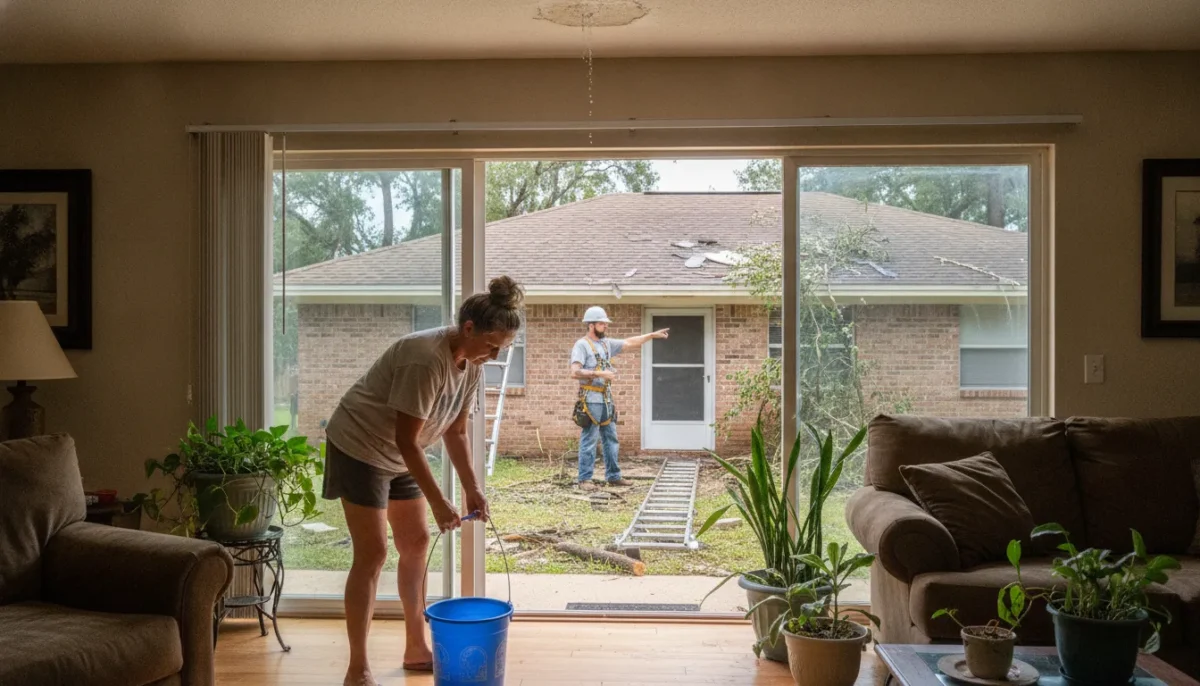
A roof leak after a Gainesville storm can feel urgent, but the safest first move is to protect people and belongings rather than climb onto the roof. Move valuables away from the drip, place containers under active leaks, and take photos from the ground when conditions are safe. If wind, downed lines, structural damage, or standing water creates a hazard, stay clear and follow official safety guidance.
Request a free honest inspection or emergency roof repair evaluation.
Emergency roof repair in Gainesville FL starts with safe indoor leak control, temporary protection, and a professional evaluation of the roof covering, structure, and connections. Acting promptly can limit additional water damage while you determine whether the problem needs immediate stabilization or a scheduled repair.
Florida’s wind and wind-driven rain can expose weaknesses that are not obvious from inside the home. The Florida Hurricane Retrofit Guide explains how roof components work together, while our guide to storm-damage roof-repair steps offers broader context. Start with the practical actions to take when water first appears.
How Emergency Roof Repair in Gainesville FL Stops an Active Leak
When water is coming through the ceiling, focus first on protecting people and limiting interior damage. Do not climb onto the roof to look for the entry point, especially after wind or storm damage. A roof can have concealed damage to its covering, sheathing, framing, or connections, even when the visible problem looks small.
Contain the water and protect the room
Place buckets or clean containers under active drips, and move furniture, electronics, clothing, and other belongings away from the wet area. If water is collecting in a ceiling bulge, keep people out from underneath it and do not puncture it. Wet drywall and insulation can become heavier as they absorb water, so a sagging ceiling deserves caution rather than a hands-on fix.
Use towels or plastic sheeting on the floor to reduce spreading water, but avoid creating a slipping hazard. If water is near a light fixture, outlet, appliance, or other electrical equipment, do not touch the wet items. Turn off power to the affected area only if you can reach the breaker from a dry, safe location without stepping through water. Otherwise, leave the area and contact a qualified professional or the appropriate emergency service.
Document the leak without taking risks
From a safe position, take photos or video of the dripping water, stains, damaged ceiling, and affected belongings. Note when you first noticed the leak and whether it changes during rain or wind. These details can help a roofer distinguish active water intrusion from older staining and plan a more useful inspection. For additional indicators to watch from ground level, review these signs of a roof leak.
Florida roofs take the brunt of wind forces and wind-driven rain. The Florida Hurricane Retrofit Guide explains that roof covering is the home’s first defense against wind and water, and that covering damage can allow substantial water damage during later rainstorms. It also notes that initial intrusion and later leakage can contribute to mold problems. Keep the area as dry as practical and arrange an evaluation rather than assuming the leak has stopped permanently.
If you see a downed power line, smell gas, notice major structural movement, or cannot safely remain in the affected area, leave and follow local emergency guidance. The National Weather Service warns that fallen power lines may still be live and should not be approached. Once conditions are safe, a local, photo-documented inspection can identify the next repair step without asking you to guess from the ground.
How to Temporarily Protect Your Home Until Help Arrives
- Get everyone to a safe area first. If high winds or severe weather are still happening, do not inspect the roof or go outside to place a tarp. Move into a sturdy building and, during a high wind warning, use an interior room or basement. If you are in a mobile home, move to a sturdy building before conditions worsen. Follow updates from local officials, local news, or NOAA Weather Radio. See the National Weather Service wind safety guidance.
- Keep away from electrical and structural hazards. Do not approach a downed power line, even if it appears inactive. Power lines on the ground may still be live. Stay away from damaged trees, sagging ceilings, shifted walls, standing water near electrical equipment, and any area that seems unstable. If you smell gas, see major structural damage, or authorities have not declared the building safe, leave and follow emergency instructions. The National Weather Service post-storm guidance covers these hazards.
- Control interior water without climbing. Place buckets or containers under active drips, move furniture and valuables away from the leak, and use plastic sheeting indoors to protect belongings if it can be done safely. Do not cut into a ceiling that is bulging or heavily saturated. Take photographs from a safe location for your records, but never walk on a damaged roof or enter an unsafe attic.
- Use safe lighting and backup power. Use battery-powered flashlights rather than candles. Never operate a portable generator inside a home, garage, porch, or other enclosed area. Keep generators away from doors and windows according to the manufacturer’s instructions, and follow local emergency guidance.
- Dry wet materials promptly. Once the area is safe, remove standing water and begin drying water-damaged surfaces and belongings. The EPA identifies moisture control as the key to mold control and recommends drying wet areas and items within 24 to 48 hours when possible. Read the EPA guide to mold, moisture, and your home. If water continues entering, focus on keeping people safe and arrange a professional evaluation rather than attempting an exterior patch during unsafe weather.
Common Causes of Emergency Roof Leaks in Florida
Florida roofs regularly face strong winds and wind-driven rain, so a small weakness can become an active leak during or after a storm. The Florida Hurricane Retrofit Guide explains that a roof includes more than its visible covering. The covering, supporting structure, and connections between the roof and walls all help keep water out. Damage in any of these areas can contribute to water intrusion.
Wind-driven rain
Rain pushed by wind can reach vulnerable edges, seams, valleys, and other areas that may handle ordinary rainfall without a problem. If roof covering or flashing has already loosened, wind can force water beneath the surface. Roof-cover damage may also allow more water into the home during later rainstorms, not just during the original weather event. Florida’s roof and wind guidance explains this connection.
Lifted or missing roof covering
Shingles, panels, or other roof-covering materials can lift, crack, break, or go missing. That exposed area may let rain reach the underlayment, sheathing, or attic. A roof can look mostly intact from the ground while still having a small damaged area that leaks when rain returns. Do not climb up to check it yourself, especially after high winds.
Flashing and penetration failures
Flashing helps direct water around roof transitions, walls, chimneys, vents, and other penetrations. Seal failures, loose flashing, or damage around a penetration can create a path for water. These leaks may appear far from the original entry point, because water can travel along the underside of the roof or through framing before reaching a ceiling.
Debris, tree impact, and aging materials
Branches and storm debris can puncture or displace roof materials. Older materials may also have less remaining resistance to repeated heat, humidity, rain, and wind. The cause is not always visible from indoors, so a careful inspection is important before choosing a repair.
Acting on active water intrusion matters even after the rain stops. The Florida guide notes that initial intrusion and later leakage can contribute to mold problems. The EPA’s moisture guidance identifies moisture control as the key to mold control and recommends drying water-damaged areas and items within 24 to 48 hours when possible.
When to Call for Emergency Repair vs. Scheduling a Standard Inspection
How urgent is the problem? Use the condition of the home, not the label on a storm, to decide what happens next. Ongoing water intrusion can worsen with the next rain, while a small stain from an old, dry leak may call for a prompt inspection rather than immediate emergency work. Do not climb onto a damaged roof to investigate.
Roof problem triage guide
| What you notice | Best next step | Why it matters |
|---|---|---|
| Water is actively entering, ceilings are bulging, or rain is reaching walls, wiring, or insulation. | Move people and valuables away from the area, contain water from the ground, and seek emergency roof repair guidance. | Roof-cover damage can allow substantial water damage during later rainstorms, and initial or later leakage can contribute to mold. Florida’s Hurricane Retrofit Guide explains this risk. |
| You see a downed power line, smell gas, see major structural movement, or the home may be flooded or unsafe. | Leave the unsafe area and contact the appropriate emergency authority or utility. Do not approach wires or re-enter until officials say it is safe. | The National Weather Service warns that lines on the ground may still be live and advises checking for gas leaks and structural damage after a storm. Review its high-wind safety guidance. |
| A storm has removed or lifted roof materials, dropped a branch, or exposed part of the roof, but there is no active indoor leak. | Arrange a professional storm-damage evaluation as soon as conditions are safe. Read about storm damage roof repair steps. | Damage that is not leaking yet can still admit water during the next storm. Avoid walking the roof or attempting a temporary repair yourself. |
| You notice an old ceiling mark, missing-looking material from the ground, granule buildup, or a recurring concern with no active water. | Schedule a standard inspection and document what you have seen. A photo-documented evaluation can help clarify whether repair or further monitoring is appropriate. | Use this guide to review common signs of a roof leak. North Wood’s Roofing provides Gainesville roof repair services with owner-led, no-pressure recommendations. |
If you are unsure which category fits, describe what you can safely see from inside or at ground level, including whether water is still entering. A professional can help determine the next step without asking you to diagnose structural damage yourself.
What Emergency Roof Repair Costs in North Florida
There is no useful one-size-fits-all price for emergency roof repair in North Florida. The cost depends on what is happening at the home and what it takes to make the property safe and dry. A small, accessible leak may call for a different response than storm damage that has affected the roof covering, underlying materials, or interior.
Several factors commonly shape the scope of the work:
- Location and extent of the intrusion: Water entering near a simple roof penetration can require a different repair than widespread wind or tree damage. The visible drip may not be directly below the roof opening, so the source needs to be evaluated rather than assumed.
- Accessibility and materials: Steep or difficult-to-reach areas can require additional safety planning. The type and condition of the existing roofing, flashing, decking, and related materials also affect the repair approach.
- Temporary stabilization: If permanent work cannot happen immediately because of weather, safety conditions, or material needs, temporary protection may be part of the initial response. That work addresses immediate exposure, but it does not necessarily resolve the underlying roof problem.
- Interior damage: Wet insulation, ceilings, walls, flooring, or personal belongings may require attention separate from the roof repair itself. The EPA identifies moisture control as central to mold control and recommends drying water-damaged areas and items within 24 to 48 hours when possible.
- Repair versus replacement: An inspection may show that a localized repair is appropriate, or that the roof’s age, condition, and damage make broader replacement worth discussing. These are different projects with different scopes.
For more context, review these roof replacement cost factors and Gainesville roof replacement estimates. A careful evaluation should identify the source of the intrusion, document visible conditions, and explain practical options without pressure. Avoid choosing a contractor based only on a quick number before the damage and needed scope are understood.
Why Fast Access Matters During Storm-Season Roofing
Storm damage can change quickly. A small opening may allow more wind-driven rain into the attic or living space during the next weather event, while wet materials and belongings become harder to protect over time. Fast access does not mean taking unnecessary risks. During lightning, high winds, flooding, or other unsafe conditions, stay inside and wait for a safe window rather than asking anyone to work on an exposed roof.
Questions to ask an emergency roofer
When you call, ask what the initial visit includes and whether the goal is inspection, temporary stabilization, permanent repair, or some combination. Ask how weather and site conditions affect when someone can safely evaluate the roof. You can also ask what information the contractor needs, such as photos taken from the ground, the location of visible water, and when the damage occurred. A clear answer helps you distinguish practical next steps from a rushed sales pitch.
Keep safety concerns in the conversation. The National Weather Service warns that downed power lines may still be live and should not be approached. After a storm, avoid entering a building that may be structurally unsafe, has a gas odor, or has not been cleared by authorities. These conditions need attention before roofing work begins.
A careful inspection supports better decisions
North Wood’s Roofing provides residential roof repairs for homeowners in Gainesville, Live Oak, and Lake City. Its owner-led approach includes photo-documented inspections and transparent, no-pressure recommendations, giving homeowners a clearer view of what was found and which options may make sense. That is useful during storm season, when urgency should not replace careful evaluation. Learn more about the company’s roof repair services in Gainesville and nearby North Florida communities.
If a leak is active or storm damage has left your home exposed, a professional evaluation can help clarify the safest next step. North Wood’s Roofing can review the situation and explain practical repair options without pressure. To request an evaluation, contact us online.
Frequently Asked Questions
How urgent is roof repair after a leak?
Treat an active leak, spreading ceiling stain, sagging drywall, or water near electrical fixtures as a prompt safety issue. Move people and valuables away from the area, place a container under the drip if it is safe, and avoid climbing onto the roof. If water is near electrical equipment, turn off power to the affected area only when you can do so safely, or contact an electrician or emergency service for guidance.
What should I do if I cannot afford to fix my roof right away?
Start with a professional evaluation so you understand the immediate risk and which work is truly necessary. Ask for the condition to be documented with photos and for the options to be explained in order of urgency. Temporary protection may help limit additional interior damage, but it should not be treated as a permanent repair. Avoid committing to work you do not understand.
How much does emergency roof repair cost?
There is no reliable flat price for emergency repair. The cost can depend on where the damage is, how much water is entering, roof access, materials, temporary stabilization, interior damage, and whether the lasting solution is a repair or replacement. A site evaluation and clear written scope can help you compare the immediate work with longer-term recommendations.
Can I get my roof replaced for free in Florida?
Free roof replacement should not be assumed. Be cautious of advertisements that promise a no-cost replacement without clearly explaining eligibility, funding, insurance requirements, or the work agreement. A reputable contractor can inspect the roof, document its condition, and explain practical repair or replacement options without pressure.
Schedule an Emergency Roof Evaluation
If a leak is active or storm damage has left your home exposed, a professional evaluation can help clarify the safest next step. North Wood’s Roofing can review the situation and explain practical repair options without pressure. To request an evaluation, contact us online.