Hurricane roof damage is any wind, rain, hail, debris, or fallen-limb damage that changes how your roof sheds water or protects your home. You can spot warning signs from the ground and inside a safe attic, but a ground check cannot rule out hidden damage.
Request a free, photo-documented roof inspection from North Wood’s Roofing for an honest evaluation and clear next-step options.
After a storm, the roof may look mostly normal from the street even when a shingle edge, flashing joint, vent, or roof penetration has been disturbed. Start with safety, observe what you can without climbing, record the condition before cleanup, and get professional help when the signs point to a problem. For the broader repair process, see North Wood’s Roofing’s storm damage roof repair guide.
Safe Ways to Inspect Your Roof After a Storm Without Climbing Up
A safe post-hurricane roof inspection begins at ground level. Wet surfaces, loose materials, hidden structural damage, downed wires, and unstable trees can turn a quick look into a serious hazard. Your goal is not to diagnose the roof from a ladder. Your goal is to decide whether the roof needs a professional inspection and to preserve useful evidence.
Start with the property, not the roof
- Wait until high winds, lightning, flooding, and nearby hazards have passed.
- Stay away from downed power lines, damaged utility equipment, unstable trees, and standing water near electrical systems.
- Do not walk beneath a visibly sagging roof edge, leaning tree, or loose section of siding.
- Keep children and pets away from roofing pieces, broken glass, nails, and storm debris.
Use a ground-level view
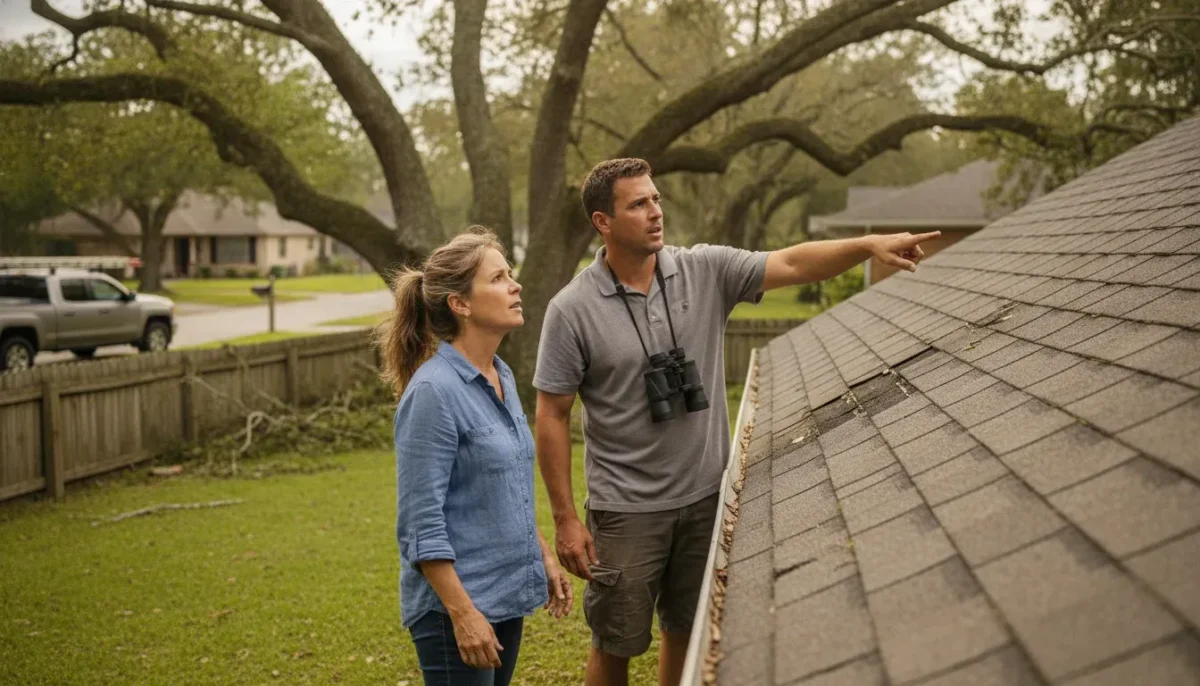
Walk the perimeter only when the yard is safe. Use binoculars or your phone camera zoom instead of a ladder. Look at the roofline from several angles and compare it with older photos if you have them. Note changes around valleys, eaves, vents, skylights, chimneys, wall intersections, gutters, and downspouts.
Check the interior only when it is safe
If there are no electrical or structural hazards, look for new water stains, damp insulation, musty odors, dripping, or daylight in the attic. Do not enter an attic with a sagging ceiling, active electrical concern, standing water, or signs that the structure is unstable. Never climb onto a wet or damaged roof to confirm what you see from below.
Signs of Storm Damage You Can See from the Ground
Visible hurricane roof damage often appears as a change in the roof’s pattern, edge, or surrounding drainage system. A single sign may justify an inspection, especially when it appeared after the storm. The table below is a screening guide, not a repair diagnosis.
| What you may notice | What it may indicate | Next step |
|---|---|---|
| Missing, lifted, curled, cracked, or creased shingles | Wind movement, impact, or a disturbed seal | Photograph the area from the ground and schedule an inspection |
| Shingle pieces, metal, or fasteners in the yard | Roof covering or flashing may have separated | Keep people away from debris and save it if safe |
| Uneven roofline or loose edge | Damage to roof covering, edge metal, decking, or supporting materials | Do not approach the area; request professional assessment |
| Bent vents, flashing, gutters, fascia, or downspouts | Impact or wind damage around the roof system | Photograph the whole elevation and the close detail |
| New granules gathered in gutters or at downspouts | Possible surface loss from shingle impact or abrasion | Record where the material collected and ask for an inspection |
| Branches resting on the roof or puncture marks | Impact damage that may allow water into the roof assembly | Stay clear and arrange safe debris removal and roof review |
Do not assume a roof is undamaged because no shingles are visible on the ground. Wind can disturb a fastening point or flashing transition without removing a large piece. A small opening can also stay dry until the next rain arrives from the right direction.
Look for changes around roof penetrations
Roof vents, pipe boots, skylights, chimneys, and wall intersections are places where separate materials meet. From the ground, look for a tilted vent, missing cap, displaced flashing, lifted sealant, or a gap that was not present before the hurricane. Do not touch loose components or place a ladder against the roof to get closer.
Inspect the drainage path
Gutters and downspouts are not the roof covering, but storm damage can affect the complete water-shedding path. Look for a detached gutter, bent downspout, damaged fascia, unusual sagging, or roof material blocking an outlet. Keep performance claims qualified: a clean, connected drainage system helps direct water away from the roof edge, but it cannot correct damage higher on the roof.
What Hidden Storm Damage Looks Like Inside Your Attic
Hidden hurricane roof damage may show up indoors before it is visible outside. Water stains, damp insulation, musty odors, drips, or daylight through the roof deck can point to a breach or failed transition. Interior signs can also have other causes, so use them to trigger a professional assessment rather than attempting a roof repair yourself.
Signs to record
- New brown or discolored ceiling and wall marks after the storm.
- Wet insulation, damp roof decking, or a musty smell in the attic.
- Drips or fresh moisture around vents, skylights, chimneys, or exterior walls.
- Daylight visible through a location that should be covered.
- Ceiling material that is sagging, bulging, or separating.
- Water that appears far from the visible exterior roof sign.
Water can travel along framing or insulation before it becomes visible. That is why the location of an indoor stain may not identify the source. Do not cut into a ceiling, move unstable materials, or enter a risky area to trace a leak. If water is near an electrical fixture, keep clear and contact the appropriate emergency professional.
Have a new leak or visible roof concern? North Wood’s Roofing can help evaluate the condition and explain repair options without pressure.
Which Roof Damage Requires Professional Assessment?
Professional assessment is the right next step when storm damage affects the roof covering, edge, flashing, drainage, attic, or interior ceiling, or when you cannot inspect safely. A roofer can review areas that are not visible from the ground and document findings with clear photos. If you are unsure, treat the question as a reason to schedule an inspection rather than a reason to climb.
Call for an inspection when you see
- Missing, lifted, creased, cracked, or visibly displaced roofing materials.
- New leaks, damp insulation, water stains, or daylight in the attic.
- A sagging ceiling, uneven roofline, or suspected roof-deck damage.
- Damage around a skylight, chimney, vent, pipe boot, or wall intersection.
- Branches, metal, or other debris that struck or remains on the roof.
- Loose gutters, fascia, soffit, or edge materials after the storm.
- Any condition you cannot reach or evaluate without a ladder or roof access.
For urgent life-safety hazards, use emergency services first. For a roof concern that is not an immediate emergency, choose a licensed and insured contractor who will explain what the photos show, separate temporary protection from permanent work, and provide clear next-step options. North Wood’s Roofing serves homeowners in Gainesville, Live Oak, Lake City, and nearby North Florida communities.
How to Document Damage for an Insurance Claim
Good documentation creates a clear record of what changed and when. It does not decide whether a claim is covered. Coverage, deductibles, exclusions, notice requirements, and claim decisions depend on your policy and insurer, so review your policy and contact the carrier for claim instructions.
Record the condition before cleanup
- Take wide photos showing each affected side of the home and the surrounding yard.
- Take closer photos of missing materials, lifted edges, debris, stains, gutters, and interior damage.
- Capture short videos when they show movement, dripping, or the location of a problem better than a still image.
- Write down the date of the storm, when you noticed the change, and which rooms or roof areas are affected.
- Keep a simple list of damaged or missing property, and save receipts for reasonable emergency steps.
- Keep copies of inspection reports, estimates, invoices, correspondence, and photos in one folder.
Do not make a permanent repair solely to improve a claim or remove evidence that an inspector needs to see. Take reasonable steps to reduce additional damage only when they are safe and permitted by your insurer. Moving belongings away from a leak may be reasonable; climbing onto the roof to apply a tarp is not a safe do-it-yourself shortcut.
Use older photos as a comparison
Photos taken before the storm can help show whether a shingle, vent, gutter, or roof edge changed. Use them as context, not as proof of a coverage decision. A qualified roofing professional can compare the visible condition with the roof system and provide photo documentation for your records.
What to Do in the First 24 Hours After a Major Storm
The first day is about safety, observation, documentation, and preventing avoidable additional damage. Move through these steps in order:
- Confirm that people are safe. Leave areas with downed wires, unstable trees, a sagging ceiling, flooding, or other immediate hazards.
- Wait for safe conditions. Do not inspect during lightning, high winds, or active flooding.
- Observe from the ground. Use zoom or binoculars and avoid ladders, roof access, and loose debris.
- Check safe interior areas. Look for new moisture or stains without entering unstable spaces.
- Document before cleanup. Photograph the roofline, yard, gutters, attic signs, ceilings, and damaged belongings.
- Contact your insurer if you plan to file. Ask what notice, documentation, and temporary protection steps your policy requires.
- Arrange a professional roof inspection. Ask for clear photos, a written explanation, and options that distinguish urgent protection from permanent repair.
For future preparedness, NOAA recommends keeping a home in good repair and strengthening vulnerable areas before a hurricane. Read the NOAA hurricane home-preparedness guidance for planning information. Preparation does not replace a post-storm inspection when the roof shows new warning signs.
Contact North Wood’s Roofing for a free roof inspection with clear photos and honest next-step options after a hurricane.
Frequently Asked Questions About Hurricane Roof Damage
How can I tell if my roof has storm damage after a hurricane?
Look from the ground for missing or lifted shingles, exposed areas, bent flashing or vents, damaged gutters, debris impact, an uneven roofline, or new granules in drainage areas. Then check safe interior spaces for new stains, damp insulation, drips, musty odors, or daylight. These signs justify a professional inspection, even if the roof looks mostly intact.
Should I climb on my roof to look for hurricane damage?
No. A wet, damaged, or debris-covered roof can be unsafe, and climbing can worsen damage. Use a ground-level view, binoculars, or camera zoom. Have a qualified professional inspect roof surfaces, flashing, penetrations, and areas that cannot be evaluated safely from the ground.
Can a roof leak after a hurricane even if I do not see missing shingles?
Yes. Water can enter through disturbed seals, flashing, vents, fasteners, or small openings that are hard to see from the street. Check safe attic and living-space areas for new moisture, but do not cut into ceilings or enter an unstable area to trace a leak.
What should I photograph after hurricane roof damage?
Photograph wide views of each side of the home, close views of visible roof and gutter changes, debris, interior stains, attic moisture, and damaged belongings. Record when you noticed the problem, and save inspection reports, estimates, receipts, and insurer communications.
Does a professional inspection guarantee that insurance will pay for repairs?
No. A roofing inspection can document observed conditions and explain repair needs, but coverage depends on your policy, the cause of loss, exclusions, deductibles, notice requirements, and your insurer’s claim decision. Ask your insurer for claim instructions and keep your roofing documentation with your records.
Get a Clear Next Step After the Storm
A ground-level check can help you recognize hurricane roof damage, but it cannot confirm that a roof is safe or watertight. If you see new warning signs, document them without taking risks and arrange a professional evaluation. North Wood’s Roofing provides free, photo-documented inspections for homeowners who want an honest assessment and no-pressure options. Visit the North Wood’s Roofing team page to learn more about the local, owner-led approach, or request an inspection.