If you are researching “roof shingle colors florida homes,” start by comparing actual samples rather than choosing from a shade name alone. The roof covers a large part of the exterior, so its color affects the home’s overall appearance, how well the roof works with fixed features, and how the house looks in North Florida’s bright sun and changing weather. Compare samples with your siding, trim, and surroundings before making a final choice.
Request a free roof inspection or estimate
What should you consider before choosing a shingle color?
Start with the parts of the home that are expensive or difficult to change. Roof color should make sense beside the exterior features that will remain in place, not only look attractive on a small sample card.
- Exterior walls: Compare the sample directly with the siding, brick, stucco, or other wall finish. A roof may look balanced beside one wall color and too stark beside another.
- Trim and accents: Check fascia, shutters, doors, and other prominent details. A roof can connect contrasting colors or make them feel more pronounced.
- Permanent surroundings: Consider mature trees, nearby homes, and the general character of the street. The roof does not need to match a neighbor, but its color should feel intentional in context.
- Future exterior plans: If painting or changing the trim is already planned, decide which work will happen first. Choosing a roof around a color that will soon change can create avoidable mismatches.
- Personal preference: Narrow the choices to colors you would be comfortable seeing every day. Trends can be a useful source of ideas, but a roof is a long-term visual element.
Color names are not standardized across manufacturers or product lines. “Weathered gray,” “charcoal,” or “brown” can look different from one shingle collection to another. Compare the actual options available for the roofing product being considered, rather than assuming a name describes a universal shade.
How do shingle colors work with your home’s exterior?
Look at the home as a group of large color areas: roof, walls, trim, and any visible masonry. A useful first step is deciding whether you want the roof to blend with those elements or create a clear contrast. Neither approach is automatically right; the best choice depends on the home’s proportions, existing colors, and your taste.
Choose a coordinated look
A coordinated palette uses related tones without making every surface identical. For example, a roof with a mix of warm gray and brown notes may sit comfortably beside warm-toned siding or brick. A cooler gray blend may feel more at home next to white, blue, or cool gray exterior colors. Treat these as starting points, not fixed rules: the color in the sample and the color on the whole house may read differently.
When the exterior already has several strong colors or textures, a quieter roof can help the overall design feel settled. If the siding is plain and the trim is restrained, a shingle blend with more visible variation may add interest. The goal is a balanced exterior, not a roof that competes with every other feature.
Use contrast with care
A dark roof beside light walls creates a distinct outline. A lighter roof may make the top of the home feel less visually heavy. But contrast depends on more than light versus dark: undertones matter too. A brown roof can clash with cool-toned gray siding even when each color looks appealing on its own.
Before settling on a strong contrast, view samples from the street as well as close up. The roof occupies a broad area, and the overall effect may be more pronounced at a distance. Consider the shape of the home, the amount of roof visible from the front, and whether the trim already provides a strong contrast.
Does Florida’s climate affect the color decision?
Florida’s sun, heat, humidity, and storms make it sensible to think about practical roofing performance alongside appearance. A color choice does not replace sound roof design, proper installation, or regular attention to the roof’s condition. Nor should a homeowner assume that color alone will solve a comfort or energy problem. Roof construction, attic conditions, ventilation, insulation, and other parts of the home all matter.
Light and dark surfaces can absorb and reflect different amounts of sunlight, but the real effect on a particular home depends on the whole roofing assembly and house. If reducing heat gain is a priority, ask the contractor what options are available for the specific shingle product and what factors beyond color should be evaluated. Avoid choosing based only on a broad promise that a certain shade will make the home cooler.
Storm readiness is a separate question from appearance. A Connecticut government guide describes ways to retrofit one- and two-family homes to reduce losses from hurricane winds; it is general homeowner guidance, not Florida-specific code advice or a shingle-color recommendation. For Florida requirements and the right roof assembly for your home, ask a qualified local roofing professional and consult applicable local authorities. Read the guide to hurricane wind protection for homes.
For a replacement, compare color only among products and systems that meet the project’s needs. If you are reviewing asphalt options, explore the available shingle roofing choices and discuss product details with the contractor. Homeowners considering a different roof type can also review metal roofing options; the right material decision involves more than color alone.
How do light and dark shingles compare?
Light and dark colors each have visual strengths and tradeoffs. A comparison table can help you decide what to check, but it cannot predict how a particular roof will look or perform without considering the product, home, and installation.
| Choice | How it may look | What to consider | Sample-checking tip |
|---|---|---|---|
| Light or pale blend | May create a softer, less pronounced roofline beside some exterior palettes. | Look at the shade against trim and wall colors; a pale sample may appear brighter across a large roof. | View it in direct sun and shade, then from the street. |
| Medium gray or brown blend | Often offers a middle-ground appearance that can coordinate with varied exterior tones. | Undertones and shingle color variation can change the overall impression. | Compare the actual product sample beside masonry, siding, and trim. |
| Dark gray, brown, or near-black blend | Can provide a strong outline and a more pronounced contrast with light walls. | Make sure the contrast suits the house and ask about the full roof system if heat is a concern. | Judge the sample at a distance as well as up close. |
| Multitone or varied blend | May add texture and connect several exterior colors. | Check that the color variation does not compete with patterned siding or masonry. | Use a larger sample or several shingles when possible. |
These descriptions are visual tendencies, not guarantees. Product names and available blends vary. Ask to see the actual color range offered for your roof, and confirm that the chosen product is appropriate for the planned installation.
How can you judge a sample accurately?
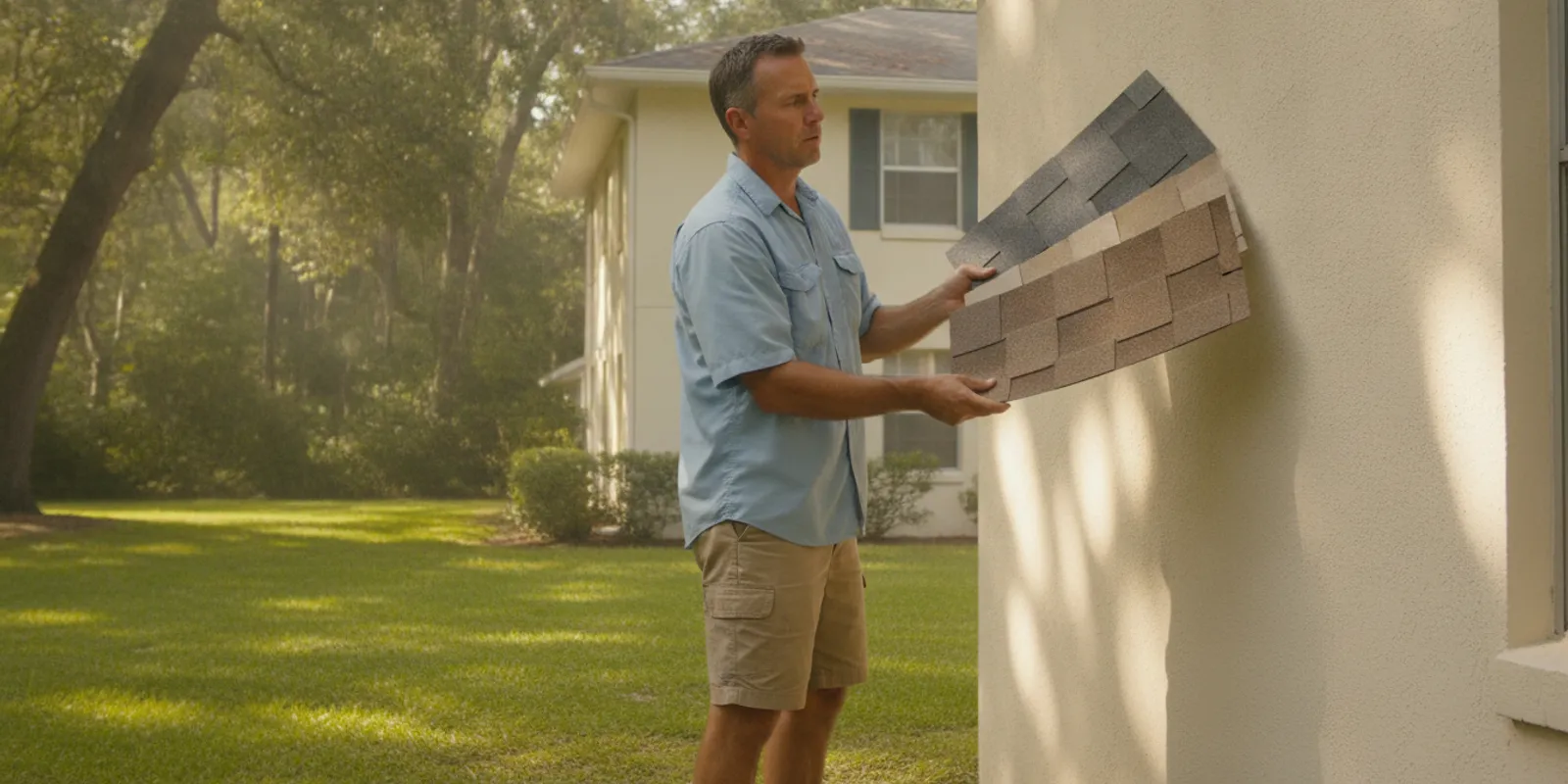
A small printed swatch is useful for making an initial shortlist, but it is a poor substitute for seeing the roofing material outdoors. A roof is a large surface, and the color can appear different under changing light. Use this process before approving the final selection:
- Shortlist a few options. Begin with colors that fit the exterior and your preference. Too many choices make meaningful comparison harder.
- Get samples of the specific product. Confirm the product line and color name. Do not assume a similar name in another collection will look the same.
- Place samples by the home. Hold or lay them near the siding, trim, brick, or stone they will sit beside. Compare them in more than one location if the exterior has different finishes.
- Check different light. Look at the samples on a bright day and in shade. If practical, check them at more than one time of day. A color that seems subtle under cloud cover may read differently in strong sun.
- Step back. Look from the curb or another normal viewing point. Close-up details can disappear at a distance, while a strong light-dark contrast becomes more obvious.
- Review the complete selection. Confirm the color, product, and scope of work in the estimate or project documents before work begins.
If you cannot obtain a large sample, ask the contractor what product samples or recently completed examples are available to view. Photos can help with a shortlist, but camera settings, screen displays, and lighting can all affect how a color appears. Use photos as a reference rather than the final test.
What should you check beyond color?
Color is visible, so it can dominate the decision. Still, a roof replacement is a system and a construction project. Ask clear questions about the material, installation plan, and documentation before treating the color as the only choice to resolve.
- Product and scope: Make sure you understand which shingle product and color are included, along with the work covered by the estimate.
- Roof condition: Ask what the inspection found and whether repair or replacement is being recommended. Photos can help you understand the condition rather than relying on a color discussion alone.
- Installation details: Ask how the proposed work addresses the roof’s specific needs and applicable requirements. Do not infer installation quality from the color or appearance of a sample.
- Warranty documents: Read the written terms and learn what applies to the product and workmanship. You can review North Wood’s information about roofing warranties and ask how the terms relate to the proposed project.
- Options without pressure: You should have time to compare options and ask questions. A clear estimate helps you understand what is included without making a rushed color decision.
North Wood’s Roofing provides free roof inspections with clear photos and no-pressure options. The company is a veteran-owned residential roofing contractor serving Gainesville, Live Oak, Lake City, and North Florida. Learn more about the company’s owner-led local approach or review its roofing services before arranging an evaluation.
Should you follow neighborhood or association color rules?
Before ordering materials, check whether a homeowners’ association, community, or other applicable property rules place limits on roof colors or exterior changes. Requirements vary, so do not assume a color is allowed simply because another nearby home has it. Ask the relevant association or authority for its current written guidance and approval process, if one applies.
It can also help to consider the character of the street without treating neighborhood convention as a strict design rule. A color that coordinates with nearby homes may feel at ease in the setting, while a more distinct choice can still work if it suits the house and is permitted. Make sure the decision is based on your home and any actual requirements, not a guess about what others might prefer.
When is it time to ask a roofer for help?
Talk with a roofing contractor when you are planning a replacement, cannot tell whether the roof needs repair or replacement, or want to compare color choices for a specific shingle product. A roof evaluation can establish what work is appropriate before you spend time choosing among colors. For a leak or visible damage, focus first on the condition of the roof; color selection can wait until the repair or replacement plan is clear. See the company’s information on roof repair if you are dealing with a roofing issue.
If the roof is not ready for replacement, routine attention may still be useful. North Wood’s offers roof tune-ups; you can review the roof tune-up service to understand that option. An inspection can help distinguish a color-planning question from a maintenance or repair need.
Frequently asked questions about Florida shingle colors
Are light-colored shingles always better for a Florida home?
No. Light colors may reflect more sunlight than dark surfaces, but a home’s temperature depends on more than shingle color. The roof assembly and other parts of the home matter. Compare the appearance you want and ask a contractor about the specific product and broader roof system.
Do dark shingles make a roof unsuitable for North Florida?
Not automatically. A dark color may create the contrast you want, but color alone does not determine whether a roof is appropriate. Review the product, installation plan, and home’s needs. If heat is a concern, ask for a product-specific explanation rather than relying on a general rule.
Can I choose a roof color from an online photo?
Use online photos to narrow your choices, not to make the final selection. Screens can show colors differently, and outdoor light changes how a sample reads. Confirm the actual product color and view a physical sample beside the home when possible.
Should my roof match my siding?
It does not have to match exactly. Many homeowners choose a coordinated color or a deliberate contrast. Compare the roof with the full exterior palette, including trim and masonry, and check the result from the street.
What if I am unsure whether I need a repair or replacement?
Arrange an inspection before making a replacement color decision. A clear evaluation and photos can help you understand the roof’s condition and discuss appropriate next steps. Request an honest assessment rather than assuming a color change requires a full replacement.
Get a clear next step for your roof
Choosing the right shingle color starts with your home’s fixed exterior features, a real sample, and a view in different light. Then confirm any community requirements and make sure the product and roof work fit the home’s actual needs. A thoughtful comparison gives you a better basis for choosing than a name on a color card alone.
North Wood’s Roofing can inspect your roof, provide clear photos, and discuss options without pressure so you can make an informed decision.