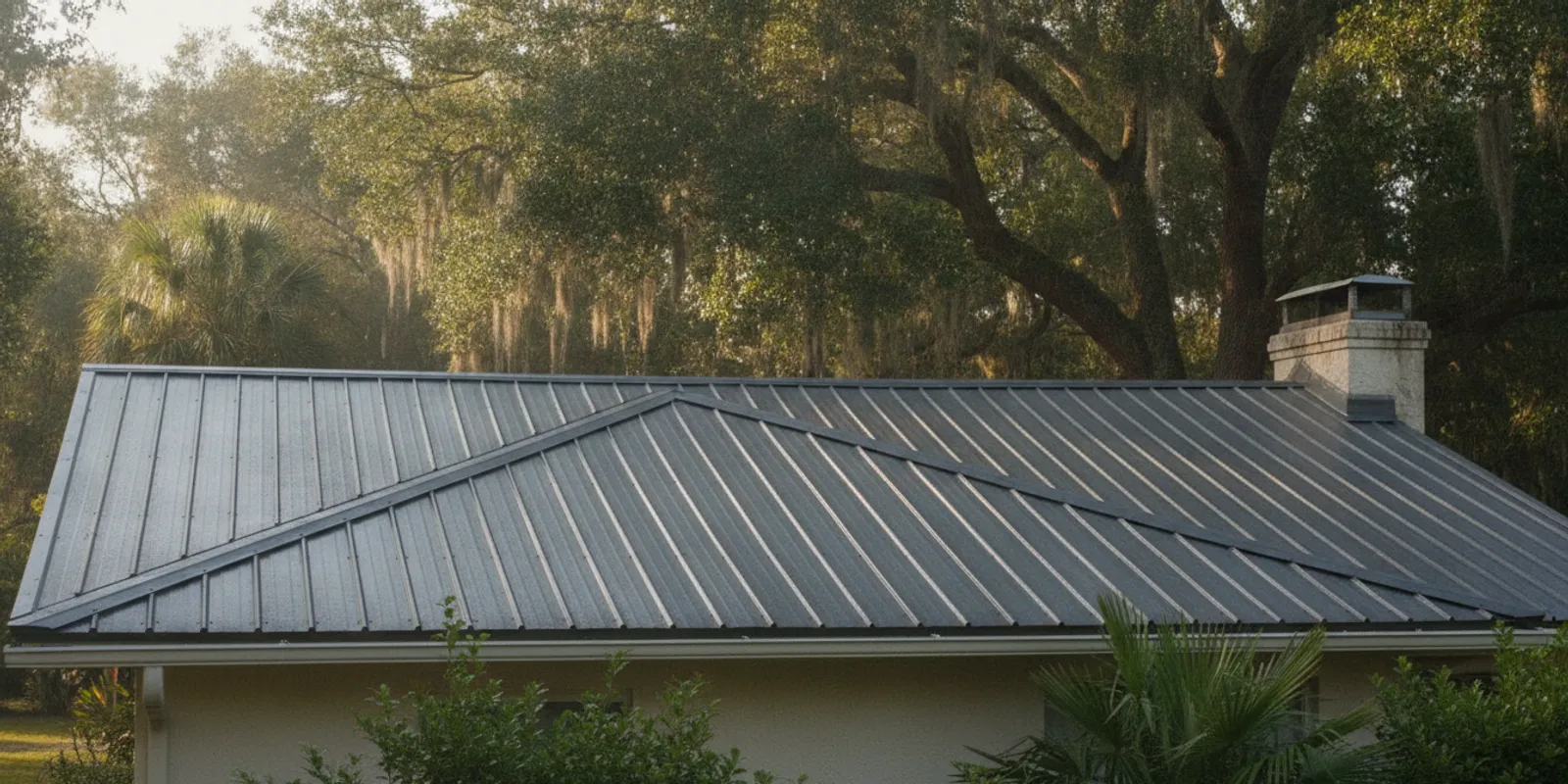
Metal roof maintenance Florida homeowners plan should focus on keeping drainage paths clear, checking visible roof details, and catching small changes before they turn into leaks. A metal roof does not need the same care as every other roof, and routine maintenance does not mean applying a coating or sealant on a schedule. In North Florida, heat, humidity, storms, trees, and wind-blown debris make a careful, ground-based check useful after severe weather and as part of regular home upkeep.
Request a free roof inspection
What maintenance does a metal roof need in Florida?
Most metal roofs benefit from simple, condition-based maintenance: keep gutters and drainage areas clear, look for visible damage or changes, and have roof details checked when there is a reason for concern. The exact needs depend on the roof system, its age, the surrounding trees, past repairs, and the manufacturer’s instructions. A homeowner can observe from the ground, but should leave roof access and repairs to a qualified professional.
Metal panels are only one part of a roof system. Flashing, fasteners or clips, penetrations, valleys, edges, and the layers beneath the panels all contribute to keeping water out. A roof can look fine from the driveway while a detail needs attention, so a visual check is not a substitute for an inspection when there are signs of water entry or storm damage. For background on metal roof components and installation, see the U.S. Department of Energy’s Building America Solution Center Metal Roof Installation Manual.
Why does North Florida weather affect maintenance?
Florida’s sun and heat expose a roof to repeated temperature changes. Humidity and rain make drainage important, while strong storms can move branches and other debris onto the roof or affect exposed edges and roof details. Homes near trees may need more frequent attention to gutters and valleys than homes with fewer overhanging limbs. Conditions vary from one property to another, including between Gainesville, Live Oak, Lake City, and communities in between.
That does not mean every metal roof needs frequent repairs or a special treatment. It means homeowners should base maintenance on what is actually happening at the home. A small amount of debris after a storm may be a simple cleanup issue; a panel that appears lifted, a new ceiling stain, or recurring water intrusion calls for a professional evaluation. Do not assume that a roof is safe or undamaged just because the metal surface is visible and intact from the ground.
What should you check from the ground?
Use a safe vantage point, such as the yard or a window, and binoculars if helpful. Do not climb onto a metal roof to inspect it. Metal surfaces can be slippery, especially when wet, and roof edges and ladders create fall hazards. Look for changes rather than trying to diagnose a roof system from a distance.
- Panels and edges: Notice any panel that appears bent, lifted, displaced, or visibly different from neighboring panels. Do not press it or try to push it back into place.
- Roof openings and transitions: Look around vents, skylights, chimneys, and places where roof planes meet for visible gaps, unusual staining, or loose-looking material. The roof detail itself may need closer assessment.
- Gutters and downspouts: Check whether they appear blocked, sagging, or overflowing during rain. Leaves and other debris can restrict drainage, so clean gutters safely from the ground where possible or arrange suitable help.
- Interior ceilings and attic, if safely accessible: Watch for new water stains, damp or musty areas, or signs that water has entered. Do not enter an unsafe attic or disturb wiring, insulation, or other hazards.
- Nearby trees: Look for branches resting on or hanging close to the roof. Ask a qualified tree professional to address unsafe limbs rather than reaching from a ladder or roof.
These observations help you describe a concern; they do not confirm its cause. Water can travel before it becomes visible inside, and a stain may not be directly below the entry point. If you see a change, take a photo from a safe location and note when it appeared, especially if it followed a storm.
How often should you maintain a metal roof?
There is no one inspection calendar that fits every home. Follow the roof manufacturer’s care instructions and any guidance provided for the specific installed system. As a practical habit, look over the roof and drainage from the ground during ordinary home upkeep, and check again after a significant storm when it is safe to do so. Homes beneath trees or with recurring gutter clogs may need more frequent gutter attention.
A practical routine can be simple. When you are already doing seasonal home checks, scan the roof from a few safe viewpoints and see whether gutters are clear and firmly attached. After a storm, wait until conditions are safe before looking for changes; do not inspect during lightning, high winds, or while branches are unstable. If you notice something new, take a dated photo from the ground and compare it with an earlier one. If nothing has changed and there are no signs of water entry, continue following the roof system’s care guidance rather than adding unnecessary work.
Pay attention to recurring patterns. If one gutter section repeatedly overflows, note whether it happens during heavy rain or ordinary showers and whether debris is visible. If a ceiling mark returns after a repair, record the timing and location. These details can help a roofer understand the issue, though they do not identify the source on their own. A pattern of repeated concerns deserves a closer assessment instead of another round of guesswork.
Arrange a closer professional review if you observe damage, suspect a leak, have a repair completed, or are unsure about the condition of a roof detail. Do not wait for a scheduled annual date when water is coming in or a panel appears displaced. A professional can assess whether the concern is limited to a small repair or whether a broader evaluation is warranted. A roof repair evaluation can help determine the next step for a specific concern.
Which maintenance tasks can a homeowner handle?
Homeowners can do useful maintenance without stepping onto the roof. Keep an eye on gutters from the ground, remove loose debris from safe areas such as a porch or yard, trim vegetation only from a safe position, and keep records of visible changes. If gutter cleaning requires ladder work or access near a roof edge, hire someone equipped to do it safely.
Do not pressure-wash panels, scrape the finish, or apply paint, caulk, sealant, or a roof coating as a routine fix. A material that is appropriate for one system may be unsuitable for another, and covering a symptom can complicate diagnosis. Do not tighten or replace fasteners yourself: the right repair depends on the roof’s construction and the specific part that has changed. A roofer should identify the source of a problem before recommending a repair.
Gutters and downspouts are part of roof drainage, but they do not guarantee that every water or foundation concern will be prevented. Their condition and the way water flows away from the home matter. For more on keeping drainage components in view, see the company’s gutter services page. The City of St. Charles’ roof maintenance guidance also recommends attention to gutters, downspouts, flashing, and roof sheathing; follow the instructions for your own roof system and local conditions.
What does a professional metal roof inspection look at?
A useful inspection considers more than the broad visible surface of the panels. A roofing professional can look at the roof’s accessible details and assess whether there are signs of movement, damage, failed sealant, or water entry. Depending on the system and the concern, the review may include:
- Panel alignment and visible damage, including areas affected by a branch or other impact.
- Roof edges, valleys, transitions, and flashing around penetrations.
- Exposed fasteners or other attachment details where the roof system uses them.
- Gutters and drainage details that may be contributing to water backup or overflow.
- Interior evidence or other clues that help locate a suspected leak.
- Any previous repair area and whether the observed issue appears limited or more extensive.
The Building America Solution Center’s metal-roof technical guidance calls for roof-system flashings and accessories suited to the installation, underscoring why details around openings and transitions should not be ignored. An inspection should result in a clear explanation of observed conditions and practical options, not an automatic recommendation to replace a roof.
North Wood’s Roofing offers free inspections with clear photos and no-pressure options. The company serves homeowners in North Florida, including Gainesville, Live Oak, and Lake City. If you need a broader overview of available roof work, see metal roofing services and the roofing services page.
Maintenance, repair, or replacement: how do you decide?
A maintenance task addresses routine care, such as keeping drainage clear. A repair addresses a particular damaged or malfunctioning part. Replacement is a larger decision that depends on the overall condition of the roof, the extent of damage, repair history, and the homeowner’s plans. A single symptom does not by itself prove that a full replacement is necessary.
| Situation | Reasonable next step | What to avoid |
|---|---|---|
| Gutters look clogged, but there is no sign of roof damage | Arrange safe gutter cleaning and check drainage again during rain. | Climbing onto the roof or assuming a gutter issue explains every water problem. |
| A new stain or drip appears indoors | Document it and request a professional roof evaluation promptly. | Applying sealant to a guessed location without finding the source. |
| A panel or roof edge looks displaced after a storm | Keep away from the area and have the roof assessed safely. | Walking on or trying to reattach the panel yourself. |
| There are several concerns or repeat leaks | Ask for an assessment of the roof system and a written explanation of options. | Assuming either that a patch will solve everything or that replacement is automatic. |
| No visible concern, but you want a condition check | Follow the system’s care guidance and consider a professional inspection if uncertain. | Adding coatings or treatments without a roof-specific reason. |
For a repair or replacement decision, request an explanation of what was observed, what work is proposed, and why. Ask whether the concern relates to a particular roof detail or to broader conditions. Compare the scope of work, materials, and applicable warranty information rather than relying only on a brief verbal recommendation. North Wood’s Roofing also provides information about its roofing warranties; ask which terms apply to the particular project.
What should you do after a storm?
First, stay clear of downed power lines, unstable trees, and any visibly unsafe area. Do not climb onto a wet or damaged roof. From a safe location, take photos of visible debris or changes, note when the storm occurred, and check the interior for new water marks. If water is entering, protect belongings only when it is safe to do so and contact a roofing professional about the roof condition. Emergency measures should not create another hazard or conceal damage that needs assessment.
Do not assume that every storm requires a repair, but do not dismiss an apparent change because the roof is metal. If the roof is leaking or a panel looks out of place, ask for a prompt evaluation. For general warning signs, the guide to roof leaks in Florida can help you recognize when to investigate further. For a roof with no visible problem, record what you observed and continue with the roof system’s recommended care.
How can you keep useful maintenance records?
A simple record makes it easier to spot changes over time and explain a concern. Keep the installation and product documents if available, along with inspection notes, invoices, and information about previous repairs. Save dated photos taken from the same safe locations, and record the date of any notable storm or the first appearance of a leak. Note whether the issue recurred after a repair.
Use those records to ask specific questions: What area was inspected? What condition was found? Does the suggested work address the cause or only a visible symptom? Which product or repair method is appropriate for this particular roof? If you do not have documentation for the existing roof, say so rather than guessing about its materials or history. A contractor can base recommendations on what can be verified on site.
Frequently Asked Questions
Does a metal roof need to be resealed every year?
Not as a universal rule. Sealants and roof details vary by system and location, so follow the roof manufacturer’s instructions and have a qualified roofer assess a suspected failure. Applying sealant on a calendar without identifying a need can be inappropriate.
Can I walk on my metal roof to remove leaves?
It is safer not to. Metal roofs can be slippery, and the appropriate walking path, if any, depends on the roof design and system. Observe from the ground and arrange professional help for debris or access that cannot be handled safely without climbing.
Should I pressure-wash my metal roof?
Do not assume pressure-washing is suitable. It can create risks for the roof finish, details, or water entry, depending on the system and method. Check the manufacturer’s care instructions and ask a roofing professional before using a cleaning method on the roof.
Does a small ceiling stain always mean the metal panels are damaged?
No. A stain is evidence that needs investigation, not a diagnosis of the source. Water may enter at a roof detail or another location and travel before appearing indoors. Document the stain and request an evaluation rather than guessing at the repair point.
When should I request a metal roof inspection?
Request one if you notice a new leak, visible panel or edge movement, storm-related damage, recurring water problems, or an area you cannot assess safely. You can also ask for a condition review when you are unsure what maintenance the roof needs.
Get a clear assessment of your metal roof
Metal roof maintenance in Florida is mainly about safe observation, clear drainage, and timely attention to changes—not applying a one-size-fits-all treatment. Because roof systems and home conditions differ, an inspection can help distinguish routine upkeep from a repair that needs professional work. North Wood’s Roofing provides honest evaluations with clear photos and no-pressure options for North Florida homeowners.
Keep the roof manufacturer’s care information with your home records, and get a qualified evaluation if you see damage or signs of water entry.