
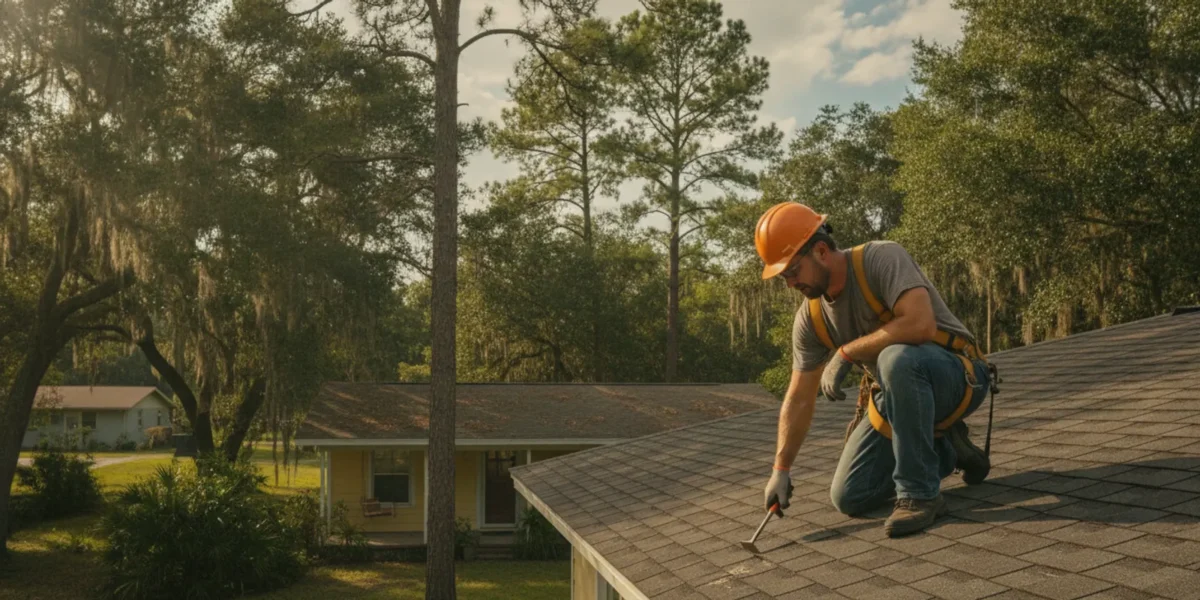
If you are searching for roof repair Live Oak FL, start by protecting people and belongings, then gather clear information about what is happening. A leak or missing shingle does not automatically mean you need a full replacement. The right next step depends on the location, extent, and cause of the damage, so avoid guessing from the ground or climbing onto the roof.
Request a free roof inspection
What should you do first when you notice a roof problem?
Look for immediate safety concerns before thinking about the repair itself. If water is entering the home, move people and valuable items away from the affected area. Put a container under a drip if it is safe to do so, and keep clear of sagging ceilings, wet electrical fixtures, or water near outlets. Do not touch electrical equipment that may be wet. If you believe there is an immediate danger, contact the appropriate emergency service.
Do not climb onto a wet, steep, or damaged roof. A roof can be slippery even when the damage looks small, and wind or loose materials can make conditions less predictable. Avoid walking through standing water or entering an area where the ceiling appears unstable. A professional can inspect the roof surface and document the condition more safely.
When conditions are safe, take photos from inside and from the ground. Photograph water stains, active drips, damaged ceilings, visible debris, and any roof area you can see without climbing. Note when you first noticed the issue and whether it followed heavy rain or wind. These details help explain the problem during an inspection. They do not replace one.
How urgent is the repair?
Not every roof concern calls for the same response. Active water entering the home, a large opening, or visibly loose material after a storm deserves prompt attention. A small stain with no active leak may still need assessment, but the immediate steps can differ. When you call a contractor, describe what you see, whether water is coming in now, and whether conditions have changed.
| What you notice | What to do now | What an inspection can clarify |
|---|---|---|
| Active leak or water collecting indoors | Move belongings, contain drips if safe, and keep away from electrical hazards or a sagging ceiling. | Where water may be entering and whether temporary protection or a repair should be considered. |
| Missing or displaced shingles after wind | Photograph the visible area from the ground; do not climb up to examine it. | Whether the exposed area is localized and what repair work is appropriate. |
| Ceiling stain with no current drip | Record the location and watch for changes without disturbing the ceiling. | Whether the stain relates to a roof opening, flashing, or another source that needs further evaluation. |
| Loose debris or possible damage after a storm | Stay clear of unstable areas and note what you can safely see. | The condition of roof materials and whether additional damage is present. |
| Old roof with no visible leak | Plan a condition check rather than waiting for a problem to worsen. | Whether maintenance, repair, or replacement planning makes sense. |
This table is a starting point, not a diagnosis. A stain can appear away from the point where water entered, and a roof issue may not be visible from the ground. If you are uncertain about the urgency, explain the symptoms when requesting an inspection.
What information should you collect before calling?
A few simple details can make the conversation more useful. Write down the approximate age of the roof if you know it, the roof type, the rooms affected, when you noticed the issue, and whether it appears during or after rain. Share whether there has been recent wind or fallen debris. You do not need to identify the exact cause or use roofing terms.
- Take clear photos from safe locations, including indoor damage and visible exterior concerns.
- Make a brief timeline of when the issue began and whether it has changed.
- List previous repairs or recurring leaks if you know about them.
- Keep receipts, inspection notes, and any relevant project or warranty paperwork together.
- Tell the contractor about access concerns, such as gates, pets, or areas that should be avoided.
Keep original photos and notes rather than editing out details. If you contact your insurer, follow its instructions for documenting a possible claim and keep copies of the communications. Do not assume that a roof repair will be covered; insurance decisions depend on the policy and the circumstances. A roofing contractor can assess roof conditions, but the insurer determines coverage under the policy.
What happens during a professional roof inspection?
A useful inspection is more than a quick glance at the visible leak. The contractor should evaluate accessible roof areas and the reported symptoms, then explain what was observed. North Wood’s Roofing offers free inspections with clear photos and no-pressure options. Photo documentation can help you understand the condition and compare the recommended work with what you can see from the ground.
Ask the inspector to distinguish confirmed damage from areas that need monitoring or further investigation. Request an explanation of how the observed condition relates to the proposed repair. If there is more than one reasonable option, ask what each option addresses, what it does not address, and whether any related work may be needed. You can review the company’s roof repair information for Live Oak and its overview of roofing services as you consider next steps.
Florida homeowners can also look up contractor licensing information through the Florida Department of Business and Professional Regulation. Ask for the contractor’s license details and verify them through the state’s official resource. A license check is one part of choosing a contractor; it does not substitute for a clear written scope and communication about the work.
How can you compare repair recommendations?
When you receive a recommendation, make sure you understand the actual scope. A written estimate should identify the area to be repaired, the work proposed, materials or components involved, and any limits or exclusions. It should also explain whether the recommendation is for a localized repair, temporary protection, or a larger project. If a contractor says replacement is necessary, ask what conditions support that conclusion and whether repair is a reasonable alternative.
Compare the same details across estimates rather than looking only at the total. Two proposals may describe different amounts of work, materials, or follow-up. If an estimate leaves you uncertain, ask for clarification before approving it. A straightforward contractor should be willing to explain the findings without pressuring you to decide on the spot.
It can help to separate three questions when reviewing a recommendation: What is damaged? What work is proposed to address that condition? What could remain unresolved after the work? For example, a localized repair may address a specific opening, while a broader inspection could identify other areas that need attention. Ask the contractor to identify what was directly observed and what is an informed assessment based on those observations. If the repair depends on access or on conditions revealed during the work, ask how that possibility will be handled and whether you will be contacted before the scope changes. Clear answers let you compare proposals on the work itself, not just on the wording or bottom-line amount. Keep a copy of the estimate and any photos with your home maintenance records so you can refer back to the condition and scope later.
- What specific condition is the work intended to address?
- Which roof area and components are included?
- Are there conditions that could change the scope once work begins?
- What is excluded, and how will additional work be discussed?
- What materials will be used, and what warranty information applies?
- How will the contractor document completion and communicate if conditions differ from the inspection?
Be cautious about agreeing to a broad scope you cannot connect to the inspection findings. Likewise, do not assume that a low quote includes all necessary work. The goal is a clear explanation of the condition, a suitable scope, and terms you understand before work starts. For more context, see this guide to roof repair options and the company’s information about roofing warranties.
Can a roof be repaired, or does it need replacement?
A repair may be suitable when the issue is limited and the surrounding roof remains in serviceable condition. Replacement may deserve consideration when problems are widespread, recurring, or tied to broader deterioration. Age alone does not establish the answer. Neither does a single leak. An inspection should consider the roof’s overall condition, the extent of damage, past repairs, and the homeowner’s plans for the property.
Ask the contractor to explain the practical difference between repairing the affected area and replacing the roof. Find out what risk remains if you choose the smaller scope, and what signs might prompt another evaluation. If the roof is generally sound but needs upkeep, maintenance may be worth discussing. North Wood’s offers a roof tune-up for eligible roofs; it is a maintenance and inspection service, not a substitute for repairs or a promise that defects will be corrected. Any repair needs should be evaluated separately.
If replacement is under consideration, compare the options that fit the home and the roof structure. North Wood’s provides shingle roofing and metal roofing. Material selection should follow the property’s needs and the project scope, rather than an assumption that one roof type is right for every homeowner.
How should you think about storms, humidity, and ongoing maintenance?
North Florida roofs face heat, humidity, heavy rain, and periods of strong wind. Those conditions make it sensible to respond to visible changes and keep records of repairs. After a storm, look from the ground for debris, displaced materials, or new signs of water inside. Do not inspect by climbing on the roof. If damage is suspected, arrange an evaluation and explain what happened.
Between problems, note recurring stains or leaks and keep track of work that has been done. Gutters, skylights, roof penetrations, and flashing can be relevant to water entry, but the source should be assessed rather than guessed. If you have questions about related parts of the home’s exterior, you can review the company’s pages about gutters and skylights.
Routine attention does not mean every roof needs the same service schedule. A professional can explain what was observed and whether maintenance or repair is appropriate for your roof’s condition. If you want to understand who will be evaluating the work, learn more about North Wood’s Roofing and its local, owner-led approach.
What should you do if you suspect storm damage?
Take reasonable steps to prevent further interior damage, as long as they are safe, and document what you can. Avoid making permanent repairs yourself if the roof is unsafe or if you need an assessment first. Contact your insurer directly for instructions about a possible claim, deadlines, and documentation. Do not sign over rights or agree to a scope you do not understand. You can read more about storm damage roof repair in Florida and request a professional assessment to understand the roof condition.
Keep repair decisions separate from coverage decisions. A contractor can describe visible roof conditions and provide an estimate. Your insurer can explain how your policy applies. If the contractor identifies an urgent condition, ask what temporary steps are appropriate and what permanent work is proposed.
Frequently asked questions about roof repair in Live Oak
Should I wait to see whether a leak happens again?
A recurring or newly visible stain deserves attention even if it is dry when you notice it. Photograph it, record when it appeared, and arrange an evaluation if you suspect water entry. Waiting for another leak may allow the condition to continue unnoticed.
Can I inspect the roof myself from a ladder?
It is safer not to climb onto a roof, especially after rain or a storm. Take pictures from the ground where possible and leave close roof-surface inspection to a qualified professional with appropriate safety practices.
Does a roof tune-up fix a leak?
Not necessarily. A tune-up is a maintenance and inspection service, not a replacement for evaluating or completing needed repairs. Have a suspected leak assessed separately so the recommended work addresses the specific condition.
What should I have ready when I request an estimate?
Share the address, the roof concern, when it began, and any photos or prior repair information you have. Explain whether water is actively entering the home. You do not need to diagnose the cause before requesting help.
How do I know whether repair or replacement makes sense?
Ask for an inspection-based explanation of the roof’s overall condition, the location and extent of the problem, and the tradeoffs between repair and replacement. A written scope can help you compare options and decide without relying on age or a single symptom alone.
Get a clear assessment before deciding
For a roof problem in Live Oak, begin with safe documentation and a clear account of what you have noticed. A professional inspection can help distinguish a localized repair from a broader concern and explain the options without pressure. Request an evaluation when you are ready to understand the condition and plan the next step.