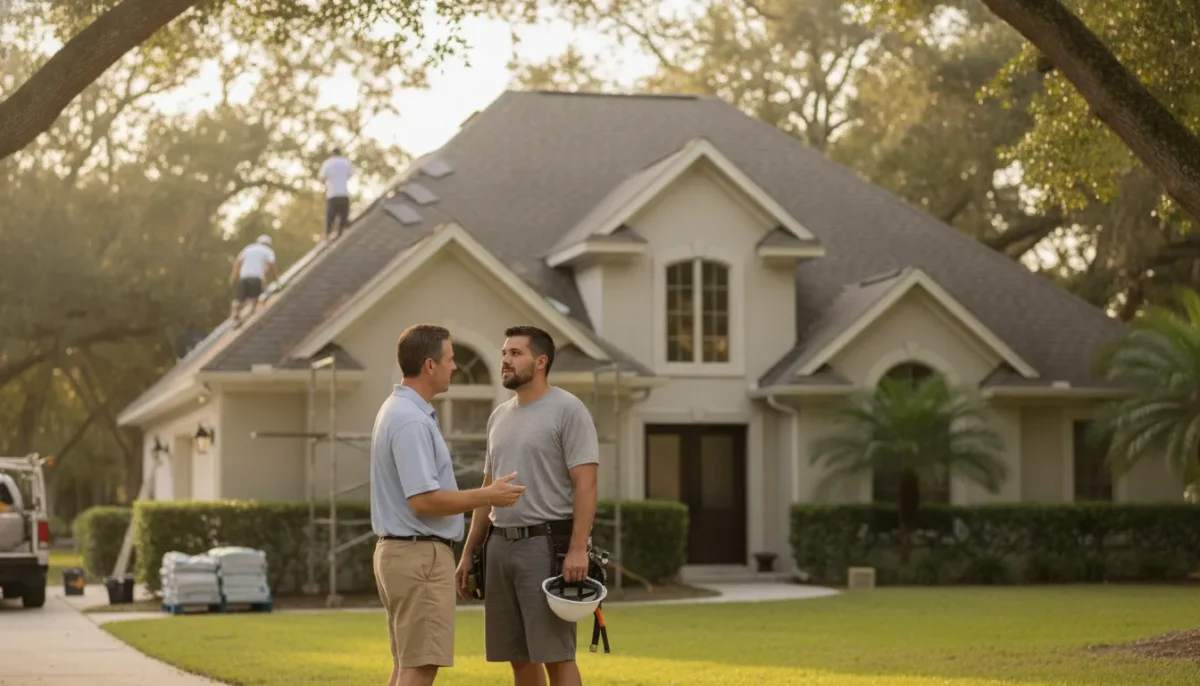
A roof problem rarely arrives at a convenient time. In North Florida, heat, storms, and humidity can turn a small concern into a larger roofing project. So homeowners often need to weigh both urgency and budget before deciding how to move forward.
Need a clearer starting point? Request a free, honest roof inspection or estimate and ask about available third-party financing options for your project.
Roof financing can help spread the cost of a necessary repair or replacement. But the right choice depends on the project scope, your available cash, the lender’s terms, and your long-term plans. Cash may be the least expensive way to fund improvements, while a bank, other lender, or third-party contractor financing may help preserve emergency reserves. The U.S. Department of Housing and Urban Development recommends understanding all project costs before work begins.
That does not make borrowing automatically better than paying cash, and it does not mean every offer fits every homeowner. Start by understanding what the roof actually needs, then compare how each payment approach could affect your household finances. The complete roof replacement guide can help you understand the work before you compare payment paths. The first step is seeing why a manageable funding plan may matter when a major roofing project cannot wait.
Why Roof Financing Can Help With a Major Roofing Project
A roof problem rarely arrives at a convenient time. If inspections show that replacement or substantial repair is needed, delaying the work can leave your home exposed to additional weather damage. The first step is to understand the roof’s condition and the full project scope, then decide how to pay for work that your household needs. The complete roof replacement guide can help you understand the work before you compare payment paths.
Paying with cash is generally the thriftiest way to fund a home improvement, according to the U.S. Department of Housing and Urban Development. Cash avoids borrowing costs, but using your available reserves may leave less room for other essential expenses, emergencies, or planned repairs. Before committing funds, review the materials, labor, disposal, related repairs, and other project costs so the decision is based on the complete scope. You can review the Florida roof replacement estimate factors that may affect a roofing project in this market.
Roof financing may help when the work is important but paying the entire cost at once would place too much strain on your reserves. HUD notes that homeowners who do not have enough cash may apply through a bank or another lender. That does not make financing automatically better than cash. It means you can compare the cost of borrowing with the value of keeping more money available for household needs.
Contractor-connected financing can also be convenient, but it should be compared with other available options before you decide. NerdWallet recommends reviewing rates and terms across choices. North Wood’s Roofing can explain the roofing scope and available third-party financing options for homeowners in Gainesville, Live Oak, Lake City, and nearby North Florida communities. The lender, not the roofing contractor, determines the financing terms and approval.
Which Roof Financing Options Can Florida Homeowners Compare?
The right choice depends on the amount you need to borrow, your available reserves, and the terms you can manage. HUD notes that the best loan type depends primarily on the amount borrowed. So compare the funding method with the actual roofing scope rather than choosing a product based only on a contractor’s recommendation.
| Option | How it generally works | Questions to consider |
|---|---|---|
| Cash | Use savings to pay for the work without borrowing. | Will paying cash leave enough reserve for other home, storm, or household needs? |
| Personal loan | Borrow through a bank or other lender, with structures that vary by lender. Some loans use fixed rates, while others may be variable. | What are the repayment terms, fees, rate structure, and total cost? |
| Home equity loan or HELOC | A home equity loan may provide a set amount. A HELOC is a credit line you draw from as needed and repay with interest. | How could using home equity affect your property, repayment obligations, and future plans? |
| FHA-related option | FHA Title I may be a possible option when equity is limited. FHA 203(k) insures certain mortgages that combine purchase or refinancing with rehabilitation. | Does the specific program apply to your situation, home, and project? Confirm current requirements with an eligible lender. |
| Contractor-connected financing | A roofing contractor may connect homeowners with third-party financing providers. North Wood’s Roofing is not the lender, and availability or qualification varies. | Can you compare the offer with independent options, including its complete repayment terms and fees? |
Material selection affects project scope, but it should not be confused with the financing decision. If you are comparing shingle roof options or metal roofing options, ask for a clear estimate that explains the proposed work and materials before discussing how to pay for it. HUD also recommends understanding all project costs before beginning improvements.
Approval, availability, qualification, and repayment requirements vary. Read each offer carefully and compare the full terms, not just the convenience of applying through a roofing company. HUD’s guidance on home improvement financing provides additional context for evaluating loan types and project costs.
What a GAF-Certified Installer Means for Roof Financing
GAF certification and roof financing answer two different questions. Certification relates to the roofing work: the contractor’s familiarity with approved GAF products and the installation context for those materials. North Wood’s Roofing is GAF-certified for approved Timberline products, including the products discussed in its GAF Timberline HDZ shingles guide. That information can help you ask better questions about material selection, installation, and the scope of the work.
It does not mean GAF has approved your application for roof financing. Certification is not a credit decision, a lender relationship, or a promise that you will receive a particular rate, term, payment, or approval. North Wood’s Roofing offers financing through third-party providers, but those providers, not the roofing certification, determine whether an applicant qualifies and what terms may be available.
Keep the roofing scope and financing offer separate
Start by making sure the roofing proposal clearly explains the work being considered. Ask which materials are included, what preparation or repairs may be needed, and what warranties or installation commitments apply. Then review the financing documents separately. Confirm who the lender is, who receives your application, and which document states the amount financed, APR, fees, repayment schedule, and other terms.
When comparing offers, look at APR rather than an interest rate alone. APR can include the interest rate plus lender fees, so it may provide a broader view of borrowing cost. Borrowing also creates an interest expense that should be included in your project planning. Contractor-connected financing may be convenient, but consumer guidance recommends comparing its rates and terms with other options before deciding.
A certified installer can help explain the roofing side of the decision. The lender must explain the financial side. Keeping those roles distinct makes it easier to choose materials and payment arrangements based on clear information, without treating a roofing credential as a financing guarantee.
What Should You Check Before Accepting a Roof Financing Offer?
Before accepting roof financing, read beyond the advertised payment. The offer should make clear what you will repay, when payments begin. What happens if circumstances change, and whether your home is part of the security for the debt. HUD recommends understanding loan terms and repayment requirements before signing, and accounting for interest, payments, and service charges in the job cost. Read the guidance from HUD.
What is the difference between the interest rate and APR?
The interest rate describes the cost of borrowing the principal. APR is a broader comparison figure because it includes the interest rate plus lender fees. An offer with a lower advertised interest rate is not automatically the less expensive choice if it carries larger upfront charges. Compare the APR, the amount financed, and the total repayment rather than focusing on one line.
Which fees should you look for?
Review every upfront and ongoing charge. Look for origination fees, application or service fees, documentation charges, and any fee tied to a payment method or late payment. The Consumer Financial Protection Bureau specifically recommends examining upfront loan costs, especially origination charges, when comparing Loan Estimates. Its comparison guidance explains that origination charges are upfront fees charged by the lender. See the CFPB comparison guidance.
How do the rate, term, and total repayment fit your budget?
Ask whether the rate is fixed or variable. A fixed rate stays the same under the agreement, while a variable rate can change according to its terms. Confirm the length of the loan, the scheduled payment, and the total amount repaid over the full term. A longer term may change the payment structure, but it can also affect the total borrowing cost. Ask the lender to show these figures in writing.
What happens if you pay late or pay early?
Find the late-payment grace period, penalty fees, reporting practices, and any provision that could change the APR or other terms. Missed payments may lead to penalty fees or higher APRs, according to GAF’s homeowner financing guidance. Also ask whether there is a prepayment penalty, whether extra payments reduce principal, and how the lender applies them.
Is your property securing the roof financing?
Ask directly whether the agreement is secured by your home or other property. If it is, read the default and enforcement language carefully and understand the potential consequences before signing. Do not rely on a verbal explanation. Read and understand the complete documents, including disclosures, repayment requirements, fees, and cancellation language.
How Does the Roof Financing Application Process Work?
A clear application process starts with the roofing project, not the loan form. Understanding the roof’s condition and the work it may need helps you seek financing for a defined scope rather than an uncertain amount. Use this sequence to keep the roofing decision and the financing decision organized.
- Inspect the roof and define the scope. Begin with a professional inspection that documents the roof’s condition, including any visible damage and areas that may need repair or replacement. Ask questions about what is urgent, what can wait, and which recommendations are optional. A clear scope gives you a better basis for evaluating any financing amount.
- Get a clear, written estimate. Request an itemized estimate that explains the proposed work, materials, labor, warranties, and any exclusions. HUD recommends getting more than one contractor estimate and notes that the cheapest option is not always the best fit. Before moving forward, make sure you understand the project costs, as well as what is and is not included. HUD’s home improvement guidance offers related planning advice.
- Compare available financing choices. Once you know the project scope, compare the options available to you. Look at the loan cost, fees, repayment terms, service, and whether the lender can meet your needed project timeframe. If you receive Loan Estimates, CFPB guidance says comparing multiple estimates can help you evaluate offers and may support negotiation. Origination charges are upfront fees charged by the lender, so include them in your comparison.
- Submit information only through the lender’s secure process. North Wood’s Roofing can discuss available third-party financing options, but it is not the lender. Use the lender’s official, secure application process and provide only the information requested there. Do not send sensitive financial information through an informal message or to an unverified contact.
- Review approval documents before signing. Read the final documents carefully. Confirm the amount, interest or APR, fees, payment schedule, term, and repayment requirements. Ask the lender to explain anything unclear, and do not treat approval as a reason to skip the review.
- Coordinate the roofing work. After you understand and accept the financing documents, confirm the work scope, materials, scheduling, and payment process with the roofing contractor. Keep your estimate and financing paperwork together so the project and repayment obligations remain easy to track.
Is Roof Financing Right for Your Situation in Florida?
The right payment approach depends on more than whether a lender says yes. Start with the roof’s urgency, your available cash reserves, credit profile, home equity, and how long you expect to remain in the home. A small repair may call for a different plan than a full replacement, while delaying active leaks can allow damage to grow. A clear inspection and written scope can help you separate immediate needs from improvements that can wait.
Cash is generally the thriftiest way to fund home improvements, according to the U.S. Department of Housing and Urban Development. However, using every reserve may leave you less prepared for another home emergency. If you do not have enough cash, compare available options carefully. Credit and equity can affect what you qualify for, and a loan secured by the property can carry different consequences from an unsecured option. Consider whether the expected repayment fits your budget through the full term, not just during the first few months.
Your timeline and long-term plans matter, too. If you may sell or refinance soon, understand whether the financing must be settled before that transaction. If you plan to stay for years, focus on the total repayment requirements and whether the roof work addresses the problem you actually have. HUD advises homeowners to understand loan terms and repayment requirements before proceeding.
Florida homeowners may also encounter PACE, a specialized property-assessment arrangement. The Consumer Financial Protection Bureau explains that PACE finances qualifying improvements through an assessment on the property. Florida authorized PACE programs for certain energy, renewable-energy, and wind-resistance improvements. Depending on the agreement, the assessment may need to be paid off when you sell or refinance. Florida protections also include a three-day right to cancel, but read the current official terms carefully and confirm that the proposed work and arrangement apply to your situation.
For homeowners in Gainesville, Live Oak, Lake City, and nearby communities, reviewing the scope with a local contractor can clarify whether you need North Florida roofing services or targeted roof repair options. The FAQ below addresses common questions homeowners ask before choosing a path.
Frequently Asked Questions
Is financing a roof a good idea?
It can be, especially when a roof needs attention and paying cash would leave too little emergency savings. Compare the total borrowing cost with your budget, project urgency, and repayment ability. Cash is generally the thriftiest option for home improvements, according to HUD guidance, but the right choice depends on your circumstances.
Is it hard to get approved for roof financing?
Approval depends on the lender’s requirements and your financial profile, so no contractor can promise an outcome. Ask what information is needed, whether the offer is secured or unsecured, and which terms apply before submitting an application. North Wood’s Roofing can discuss project scope, but financing is provided through third parties.
Can you pay monthly for a new roof?
Some financing arrangements use scheduled payments, but the amount, frequency, term, and total cost depend on the lender and product. Review the repayment schedule, interest, fees, and any late-payment consequences in the documents before signing. A roofing estimate and a financing approval are separate decisions.
What should you compare in a roof financing offer?
Compare the annual percentage rate, interest rate, upfront fees, repayment term, total repayment, payment schedule, and prepayment language. APR can include the interest rate plus lender fees, according to GAF’s financing guidance. Also ask whether missed payments can trigger fees or a higher APR.
Are government programs available for roof replacement in Florida?
Some federal or state-related programs may apply only to specific homes, borrowers, or improvement types. For example, the CFPB describes Florida PACE as financing that creates a property tax assessment. And that assessment may need to be paid when a property is sold or refinanced. Read current official program terms carefully before choosing this route.
Get Started With a Clear Roofing Plan
If you are weighing a roof project and want to understand the scope before discussing payment options, a clear inspection can help you make an informed decision. North Wood’s Roofing can review your roof, provide an honest estimate, and explain available third-party financing options without promising approval or specific terms. Contact North Wood’s Roofing to request a free, honest roof inspection or estimate for your North Florida home.