
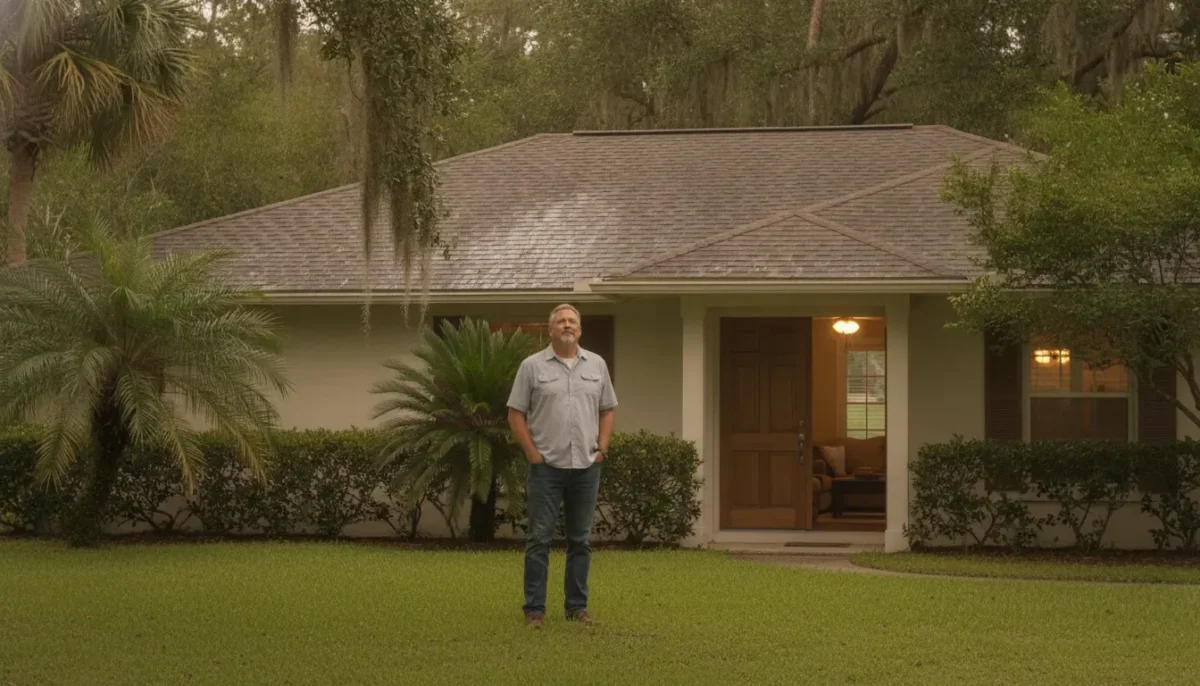
A roof leak in Florida does not always begin with a dramatic drip. The signs of roof leak Florida homeowners notice first may be a faint ceiling mark, damp insulation, loose shingle, or water that appears only after a storm. These clues do not prove the roof is leaking, but they are worth taking seriously. This checklist explains what you can observe without climbing onto the roof, which symptoms may have another cause, and when a photo-based inspection can help identify practical next steps.
Request an honest roof assessment from North Wood’s Roofing if you are unsure what a new stain, drip, or exterior roof change means.
What are the most common signs of a roof leak in Florida?
Common warning signs include ceiling or wall stains, active drips, peeling paint, musty odors, damp attic materials, daylight through the roof deck, missing or lifted shingles, damaged flashing, and unusual water after heavy rain. A single symptom can have another explanation, so the pattern, timing, and location all matter.
- Brown or yellow ceiling and wall stains. A new discolored patch, bubbling paint, or a ring-shaped mark may mean water has reached drywall or plaster. Photograph the area and note whether it grows after rain.
- Drips, dampness, or a musty smell. Water may show up as an active drip, wet insulation, or a persistent musty odor. Condensation and plumbing problems can cause similar symptoms, so do not assume the roof is the source from smell alone.
- Peeling paint or soft interior materials. Paint that blisters, wood trim that swells, or drywall that feels soft can point to repeated moisture. Do not press a sagging ceiling or disturb material that looks unstable.
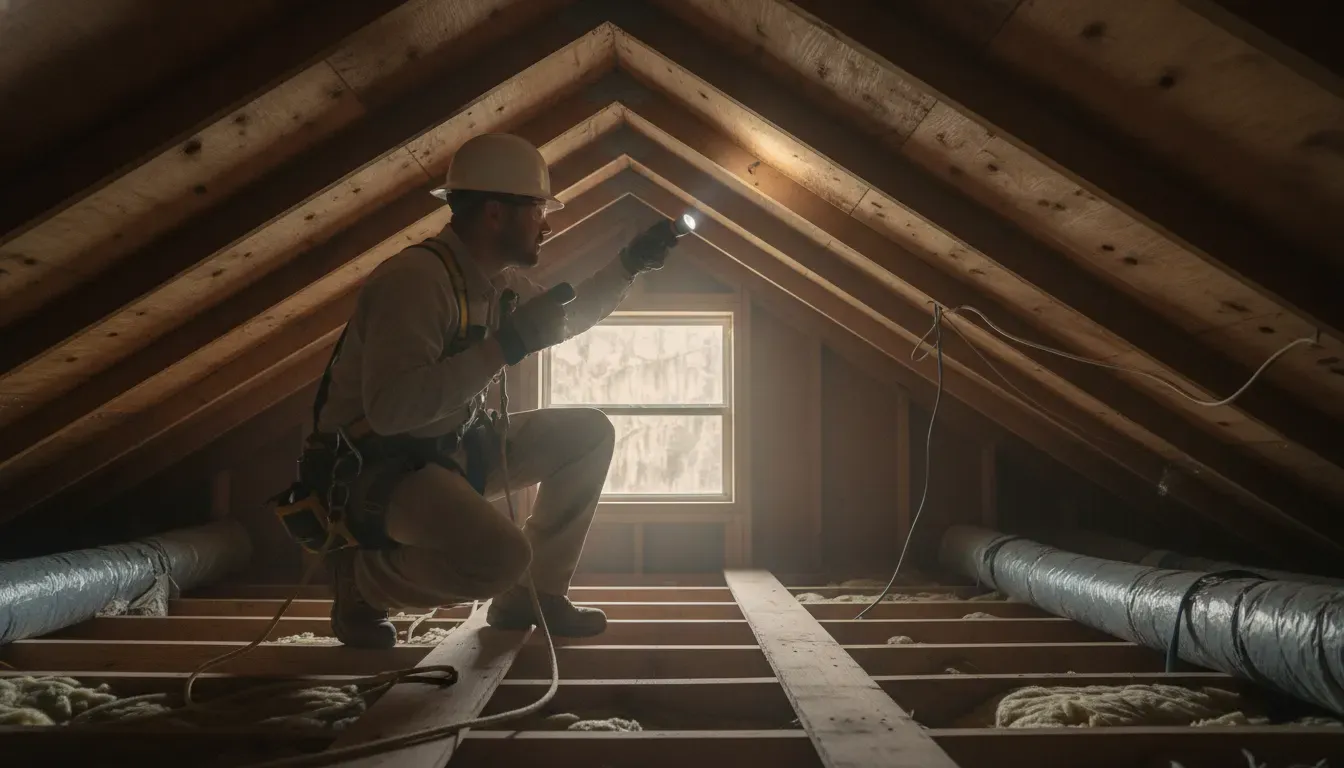
- Moisture or daylight in the attic. From a stable, accessible location, look for damp insulation, dark staining on the underside of the roof deck, rust around fasteners, or visible daylight. Use a flashlight, and do not crawl across insulation or step where the framing is not clearly supported.
- Missing, lifted, cracked, or visibly worn shingles. From the ground, look for a shingle that is out of alignment, a bare-looking patch, or roofing debris in the yard after wind. A ground-level view cannot confirm the condition of the underlayment or decking.
- Damaged flashing, pipe boots, or roof-edge details. From a safe position, you may notice lifted metal, cracked sealant, or an opening around a vent or skylight. These details are difficult to evaluate from the yard, and they should not be handled by a homeowner on a roof.
- Water that appears after a storm or heavy rain. A ceiling mark that returns after wind-driven rain, or water near an exterior wall or roof edge, deserves attention even if the roof looks mostly intact. Water can travel before it becomes visible inside.
Why can a small roof leak become a bigger problem?
A small roof leak can allow repeated moisture into roofing materials, insulation, framing, or interior finishes before the source becomes obvious. The visible ceiling mark may be several feet from the entry point because water can follow the underside of the roof deck or other building materials. Early observation helps you document the symptom before more damage obscures the source.
Florida homes face repeated sun, humidity, heavy rain, and wind exposure. Those conditions can affect roof coverings as well as details such as flashing, pipe boots, valleys, and roof edges. A roof may look acceptable from the driveway while a seal or connection needs a closer inspection. That is why a symptom-led checklist is useful for deciding what to document, but not for diagnosing the repair by itself.
If the same stain returns, expands, or appears in more than one place, treat it as a reason to arrange an evaluation rather than simply repainting the ceiling. North Wood’s Roofing describes its repair service as focused on finding the underlying cause, with inspections of roof components including soffit and fascia when needed.
See North Wood’s Roofing roof repair options when a leak symptom is recurring, active, or difficult to trace.
What can a homeowner safely check?
Homeowners can document interior symptoms and observe the roof from the ground, but a safe check has clear limits. Look up from the yard, inspect accessible rooms, and photograph what you see in good light. Do not climb onto a wet roof, walk on shingles, open a damaged ceiling, or enter an attic that is hot, unstable, contaminated, or difficult to access.
| Safe observation | What it may suggest | What it cannot confirm |
|---|---|---|
| Ceiling stain or peeling paint | Moisture reached an interior finish | The exact roof entry point |
| Dark attic mark or damp insulation | Recent or repeated moisture | Whether the roof or another source caused it |
| Loose shingle visible from the yard | Possible wind or wear damage | Underlayment or deck condition |
| Water near a gutter or roof edge | Possible drainage or flashing concern | Whether the gutter, roof, or wall is responsible |
Take wide photos that show the room, closer photos of the mark, and a few exterior photos from the ground. Include the date in your notes and record whether the symptom appeared after a storm, steady rain, or no recent rain. Avoid moving wet electrical equipment or touching fixtures near water.
When should you stop investigating and call a roofer?
Stop investigating when the next step would require a roof climb, walking on a wet or damaged surface, entering an unsafe attic, touching electrical equipment near water, or disturbing a sagging ceiling. Call for professional help when water is actively entering, the stain is growing, a storm has caused visible damage, or you cannot tell whether the issue is roofing, drainage, plumbing, or condensation.
- Keep people away from a sagging ceiling or visibly unstable area.
- Move furniture and belongings away from a drip when it is safe to do so.
- Use a container to catch water if the area is stable and there is no electrical hazard.
- Photograph the damage before cleanup changes what can be seen.
- Do not seal, patch, or paint over the symptom before its source is understood.
- Do not get on the roof to look for a missing shingle after rain or a storm.
These steps are for observation and damage control, not a substitute for a roof assessment. A professional can compare the interior symptom with the roof surface and related components instead of assuming the nearest visible defect is the source.
Contact North Wood’s Roofing for a photo-based, no-pressure next step if the area is safe to document but the cause is unclear.
How does a photo-based roof inspection help?
A clear photo-based inspection gives a roofer useful context before discussing repair or replacement options. Interior photos show where the symptom appeared, while ground-level exterior photos can show the roof slope, edge, debris, or storm-related changes. Photos do not replace an on-site inspection, but they can help organize the conversation around what is visible and what still needs to be checked.
North Wood’s Roofing emphasizes free honest inspections with clear photos and no-pressure options. That approach is helpful when the visible symptom does not identify the actual entry point. The goal is to understand whether the issue appears localized, related to drainage or a roof detail, or broad enough to warrant a more complete evaluation. Do not treat a photo as proof that a roof needs replacement, and do not assume a roof is sound simply because no stain is visible yet.
What if I notice only one warning sign?
One warning sign may be enough to document and monitor, especially if it is new or follows a storm. It is not enough to diagnose a roof leak on its own. Compare the timing with rain, plumbing use, indoor humidity, and gutter overflow, then arrange an evaluation if the symptom returns, spreads, or cannot be explained safely.
For a younger roof, a preventive check may also make sense when you are already seeing roof-edge wear, debris buildup, or loose details from the ground. North Wood’s Roofing offers a roof tune-up service that its site describes as including pipe boot and flashing resealing, gutter blowout, a roof health inspection, and a photo report. Confirm the current service details with the company before scheduling.
How can you tell a roof issue from a plumbing or condensation issue?
A ceiling mark is evidence of moisture, not proof of a roof leak. Compare when it appears with rainfall, plumbing use, air-conditioning operation, and gutter overflow, while keeping your observations simple and safe. A roof-related symptom may return after wind-driven rain, while plumbing or condensation can follow a different pattern. Only a qualified inspection can confirm the source when clues overlap.
Write down the room, approximate size, color, odor, and timing of the mark. Photograph the same area again after the next significant rain rather than opening walls or removing insulation. This record helps a roofer distinguish a recurring pattern from a one-time event and keeps the conversation focused on what can actually be verified.
A practical next step for North Florida homeowners
The safest response to possible roof leak signs is simple: contain any active water when you can do so safely, document the interior and ground-level exterior clues, stay off the roof, and ask for an evaluation when the symptom is recurring or unclear. North Wood’s Roofing serves homeowners in Gainesville, Live Oak, Lake City, and nearby North Florida communities with a local, owner-led approach.
Schedule a free, honest roof inspection with North Wood’s Roofing to discuss what your photos and observations may mean.
A visible stain is a reason to pay attention, not a reason to panic or guess at a repair. The right next step depends on the roof’s condition, the source of the moisture, and what can be verified safely.