
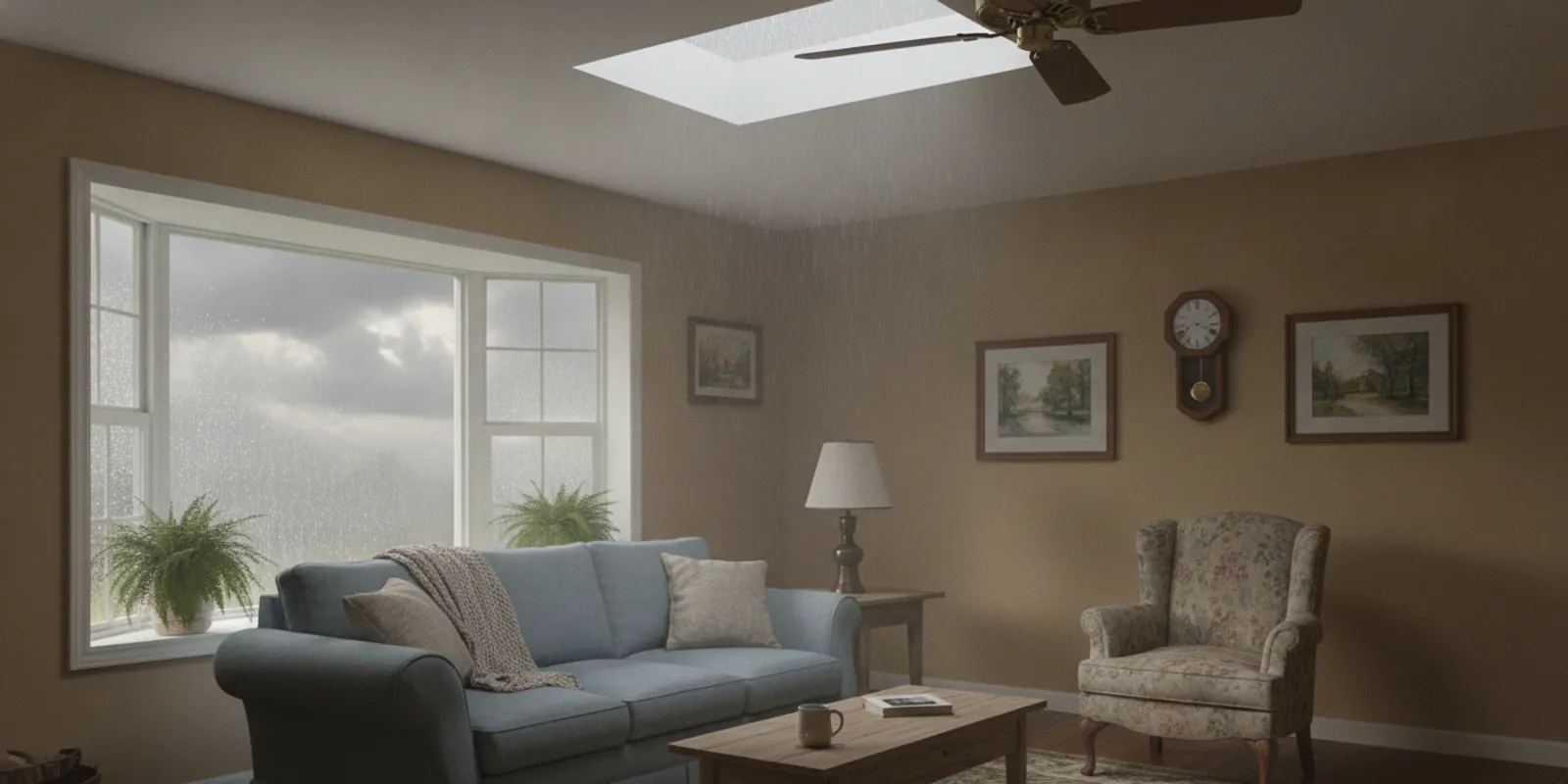
A skylight leaking in Florida during a rainstorm can be unsettling, especially when water appears far from the roof opening. The visible drip is a clue, but it does not always identify the source: water can enter around the skylight, move beneath roof materials, or show up indoors after traveling along framing. Knowing what to observe can help you protect the room and describe the problem clearly.
Request a free roof inspection
Why might a skylight leak during Florida rain?
A skylight interrupts the continuous surface of a roof. It needs a carefully integrated assembly of the skylight frame, flashing, roof covering, and underlayment to direct water downhill and away from the opening. If one part is damaged, poorly sealed, blocked, or no longer fitting together as intended, rain may get past the water-shedding layers.
Wind-driven rain can make the situation harder to interpret. Rain may strike the roof from an unusual direction, and water can enter at a small gap and travel before appearing on an interior ceiling or wall. A leak that happens only in heavy rain or from a particular direction can still point to a real roof issue; it does not prove that the skylight itself is the only part involved.
In North Florida, roofs experience heat, humidity, and storms. These conditions make regular observation useful, but no single indoor symptom tells you exactly which component needs attention. The safest approach is to note the conditions and have the roof opening assessed rather than trying to diagnose it from indoors.
Which parts around a skylight can let water in?
The leak may involve one component or a combination. An inspection considers the skylight and the surrounding roof area, not just the spot where water appears inside.
- Flashing: Metal or other flashing pieces help direct water around the skylight and back onto the roof surface. A lifted, bent, separated, or damaged section can create a route for water.
- Roofing material: Shingles or other roof covering near the opening may be cracked, displaced, worn, or damaged. Water can pass below the visible surface and travel toward the skylight opening.
- Seals and joints: The skylight frame and its connections have joints that can deteriorate or become separated. Adding caulk without identifying the leak path may conceal a symptom without correcting the underlying issue.
- Skylight glazing or frame: Damage to the pane, frame, or its connection to the roof may allow water to enter. Condensation on the inside surface is different from rainwater intrusion, so the timing and location matter.
- Roof drainage or debris: Leaves and other debris can collect around roof features. The condition of nearby roof surfaces and the way water drains from the area may be relevant to an inspection.
- Nearby roof details: A leak that appears beside a skylight may originate at another roof transition or penetration. Water can move along the underside of the roof before it becomes visible indoors.
These are possibilities, not a diagnosis. A trained roofer can inspect the accessible roof area and skylight details to determine what evidence is present. North Wood’s Roofing provides skylight installation and repair as part of its roofing services.
What clues should you note when the leak appears?
Start with observations you can make from a dry, safe place. Write down when the water appears and where you first notice it. If possible, note whether the leak begins during steady rain, stronger gusts, or after the rain has stopped. Record whether it has happened before and whether the location changes from one storm to another.
Look for visible indoor signs without touching a wet ceiling or climbing into an unsafe area. You might see a drip, a damp patch, bubbling paint, or discoloration near the skylight shaft. Take photos from a safe position and include a wider view as well as a close view. A photo can show how the mark relates to the skylight, but it cannot establish where water entered the roof.
Also note the roof type if you already know it, the approximate age of the skylight or roof if available, and any recent work near the opening. Do not guess if you are unsure. A clear description of what you observed is more useful than an unsupported conclusion about the cause.
Keep a simple record of the date, weather, room, and location of each occurrence. If water appears in a different place, record that too. This history may help the roofer compare the symptoms with the roof and skylight details during an inspection.
What should you do while water is coming in?
Protect people and belongings first. Move furniture, electronics, and valuables away from the wet area if you can do so safely. Place a container under a drip, and use towels to manage small amounts of water on the floor. If water is near a light fixture, wiring, or an electrical device, do not touch the wet area or the fixture. Keep people away and seek appropriate help if you believe there is an electrical hazard.
If the ceiling is bulging, sagging, or continuing to collect water, do not stand beneath it or poke a hole in it. A wet ceiling can be unstable. Keep the room clear and contact a qualified professional for guidance. Avoid going onto a wet roof, using a ladder in storm conditions, or attempting a temporary patch while rain or wind is present.
When conditions permit, take photos of the interior symptoms and make a note of the rain conditions. If you suspect active roof damage, describe what you can see when contacting a roofer. For urgent roof concerns, review the practical steps in this guide to what to do during an emergency roof leak. The advice there is not a substitute for help with an immediate safety risk.
For changing conditions and official weather alerts, check the National Weather Service. Do not attempt roof work during dangerous weather. Wait until the roof can be approached safely by an appropriate professional.
Why can water show up away from the skylight?
The place where water becomes visible indoors is not necessarily the point where it entered. Roof decking, framing, insulation, and ceiling materials can affect the route. Water may run along a surface or follow framing before reaching a low point, seam, or opening. That is why a mark on a wall or ceiling may appear offset from the skylight.
This movement can also make a leak seem intermittent. A small amount of water might take time to travel or may only become visible when enough moisture collects. A strong storm may expose an existing weak point that was not noticeable in lighter rain. A dry ceiling between storms does not by itself confirm that the roof is free of damage.
Because water can travel, do not assume a nearby patch of ceiling is the only area that needs review. A roofer may need to evaluate the skylight, flashing, adjacent roof covering, and other nearby transitions. If the leak pattern is unclear, share your photos and notes rather than narrowing the inspection to one visible stain.
What does a skylight leak inspection look at?
An inspection should connect the indoor symptoms with visible conditions around the roof opening. The exact process depends on the roof, access, and weather. A homeowner can ask the roofer to explain what was checked and what evidence supports the recommendation.
The table below can help organize what you have noticed before the visit. These patterns are useful context, not a way to identify the failed component on your own. Several different roof conditions can produce similar indoor signs, and a single storm does not always reveal the full water path.
| What you notice | Why it may be useful | What to share |
|---|---|---|
| Water appears only during heavy or wind-driven rain | The weather conditions may help the roofer understand when water reaches the roof opening or another nearby detail. | Approximate time, storm conditions, and whether the leak came from one direction as far as you can tell. |
| A damp mark appears below or beside the skylight | The visible location can guide the indoor review, but water may travel before it reaches the ceiling. | A close photo and a wider photo showing the mark in relation to the skylight. |
| The leak appears after rainfall has stopped | Water may take time to travel or become visible indoors; timing alone does not confirm the entry point. | When the rain ended, when you first saw moisture, and whether the pattern has repeated. |
| There are visible changes near the roof opening | Displaced or damaged material may be relevant, but roof access should be left to a qualified professional. | Describe what you can see from a safe place; do not climb up to investigate. |
Be precise about what is a direct observation and what is a guess. For example, “water appeared at the ceiling corner during a storm” is more useful than “the flashing failed” if you have not seen the flashing. A roofer can then compare your description with accessible roof conditions instead of starting from an assumed cause.
Also mention whether the room has shown dampness or staining at other times, even if it seemed unrelated. If more than one area is affected, include each location in your notes. This context can help the inspection cover the broader area without treating every mark as proof of a separate leak.
- The reported symptoms: When the leak occurs, where water appears, and whether the location changes.
- The skylight assembly: Visible condition of the frame, glazing, and connections, as accessible.
- Flashing and roof covering: How the materials around the opening meet and whether there are visible gaps, damage, or displacement.
- The surrounding roof area: Nearby transitions or penetrations that could be relevant to the water path.
- The next step: What the roofer found, what remains uncertain, and whether a repair estimate or additional evaluation is appropriate.
Ask for the explanation in plain language. If a contractor recommends work, ask which observed condition it addresses, what area the work includes, and how the completed work will be checked. A careful assessment should distinguish confirmed findings from possibilities, particularly when the leak path is not visible.
North Wood’s Roofing offers roofing services for homeowners in its North Florida market, including roof repairs and skylight work. Its inspection approach includes clear photos and no-pressure options, according to the company’s service information. You can also learn more about the company’s owner-led local approach before arranging an evaluation.
How can you prepare for a roofer’s visit?
A few details can help make the conversation focused. Gather photos of the affected interior area, note dates and weather conditions, and list any steps you took to protect the room. If you have paperwork about the roof or skylight, keep it available, but do not delay requesting an assessment while searching for records.
Before work is approved, consider asking:
- What did you observe around the skylight and adjacent roof area?
- Which findings could explain the indoor leak, and what is still uncertain?
- What specific work are you proposing, and which components are included?
- Will the written estimate identify the work and its scope?
- How will you communicate if additional conditions are found?
Compare the scope of estimates, not just the bottom-line amount. A proposal that addresses a different area or includes different work may not be directly comparable. North Wood’s Roofing describes its approach as honest pricing and no-pressure consultations; homeowners can use an inspection to understand the condition and options without rushing into a decision.
If the skylight is part of a broader roof concern, you may also find it helpful to read this homeowner’s guide to roof replacement. A skylight leak alone does not determine whether a larger roofing project is needed; the overall roof condition and documented findings matter.
How do maintenance and weather awareness fit in?
Routine observation can help you notice changes, but maintenance is not a guarantee against leaks and does not replace repairs when a defect is present. From the ground or another safe location, watch for visible changes around the skylight and note any interior staining after rain. Avoid walking on the roof or trying to inspect flashing yourself.
When leaves or debris are visible near roof features from a safe viewpoint, mention them during an inspection rather than attempting to clear them from a ladder or roof. Keep gutters and roof drainage in mind as part of the home’s broader water management, but do not assume a gutter issue is the cause of a skylight leak. Each condition should be evaluated on its own evidence.
For homeowners considering regular roof maintenance, North Wood’s Roofing explains its roof tune-up service. A tune-up is a maintenance and inspection service, not a substitute for evaluating a specific leak or correcting a defect. Tell the roofer clearly that water has appeared around the skylight so the concern can be assessed directly.
How can you tell whether moisture is linked to rain?
Timing can help you describe the problem, but it cannot confirm the cause by itself. Rainwater intrusion may show up during a storm or after it, while condensation can appear under different indoor conditions. Moisture on the room-facing surface of the glazing may look different from water running down a ceiling or skylight shaft, but appearance alone is not a reliable diagnosis.
Note whether the moisture is on the glass, the frame, the surrounding drywall, or a nearby ceiling surface. Record whether you noticed it during rainfall, later that day, or during a period without rain. If you see a repeating pattern, describe it without assuming what caused it. A roofing professional can assess the roof-side details, while other sources of indoor moisture may require a different evaluation.
Do not remove trim, open the ceiling, or take apart the skylight to investigate. That could create additional damage or obscure the original evidence. Keep your observations simple and let the inspection determine whether the roof opening or another condition needs attention.
Frequently asked questions about a skylight leaking in Florida
Can wind-driven rain cause a skylight leak?
Wind can push rain against roof areas from different directions, and a leak may only become noticeable during particular storm conditions. That pattern is useful information, but it does not identify the exact entry point. Note the conditions and have the skylight and surrounding roof inspected.
Does a ceiling stain beside a skylight prove the skylight is leaking?
No. The stain may be related to the skylight, nearby flashing, roof covering, or another roof detail. Water can travel before it becomes visible indoors, so the location of a stain is a clue rather than proof of the source.
Should I try sealing the area from inside?
A surface patch indoors may hide the visible symptom without stopping water from entering the roof. Do not apply a temporary fix as a substitute for finding the entry point. Avoid roof access during unsafe conditions and ask a roofing professional to assess the area.
What information should I share when requesting an inspection?
Share where water appeared, when it happened, the rain conditions, whether it has happened more than once, and any photos taken from a safe location. Mention any known roof or skylight work, but make clear when a detail is uncertain.
Contact North Wood’s Roofing to arrange an evaluation
A skylight leak during Florida rain deserves a careful look at the opening and surrounding roof, even if the indoor mark seems small. Document what you observe, keep clear of unsafe areas, and request an inspection to understand the next step.