Searching for roof replacement cost in Gainesville, FL usually means you want a realistic plan, not a number pulled from a generic calculator. The final estimate depends on the roof’s measured size, shape, existing condition, selected materials, access, and the work needed to protect the home. A useful estimate explains those decisions clearly so you can compare the scope, not just the bottom line.
Request a free honest inspection and estimate from North Wood’s Roofing before you compare replacement options.
What does roof replacement cost in Gainesville, FL?
Roof replacement cost in Gainesville, FL cannot be responsibly reduced to one universal price. A contractor needs to inspect the roof, measure the actual roof surface, identify the existing layers and damage, and build a written scope. The estimate should then show what is included, which materials are proposed, and which conditions could change the work.
Online calculators can be a starting point, but they often miss the details that separate one Gainesville roof from another. Two homes with similar living-area square footage can have different roof areas, slopes, valleys, penetrations, access conditions, and decking needs. Treat an online figure as general background, not as a quote for your home.
What factors affect a Gainesville roof replacement estimate?
A Gainesville roof replacement estimate is shaped by the complete project scope, including the roof system, labor, preparation, site conditions, and required closeout work. The most useful way to understand the estimate is to ask what each line item protects, replaces, or installs.
- Roof size: Roofing is measured from the roof surface, not simply from the home’s interior square footage. Roofers commonly discuss materials in squares, with one square representing 100 square feet of roof area.
- Roof geometry: Multiple planes, hips, valleys, dormers, skylights, chimneys, and steep sections can increase cutting, flashing, staging, and installation time.
- Existing roofing layers: The number and condition of existing layers affect tear-off, disposal, and preparation. A contractor should explain whether removal is included and what the inspection may reveal beneath the surface.
- Decking condition: Soft, damaged, or deteriorated roof decking may need to be replaced so the new roof has a sound base. The estimate should explain how this condition is handled rather than hiding it in vague language.
- Material selection: Asphalt shingles, metal roofing, and other systems differ in material requirements, installation methods, appearance, maintenance considerations, and expected service life. The right choice depends on the home and the homeowner’s priorities.
- Flashing and penetrations: Wall intersections, vents, chimneys, skylights, and pipe boots need careful detailing. These areas deserve more than a generic line that says installation.
- Ventilation and underlayment: The estimate should identify the underlayment, ventilation work, drip edge, starter components, ridge components, and other parts of the roof system that are included.
- Access and cleanup: Home location, driveway access, landscaping, staging space, tear-off protection, debris removal, and final cleanup can all influence the labor plan.
- Permits and inspections: Local requirements and project-specific inspections may affect timing and scope. Ask who handles permits, which fees are included, and how required inspections are scheduled.
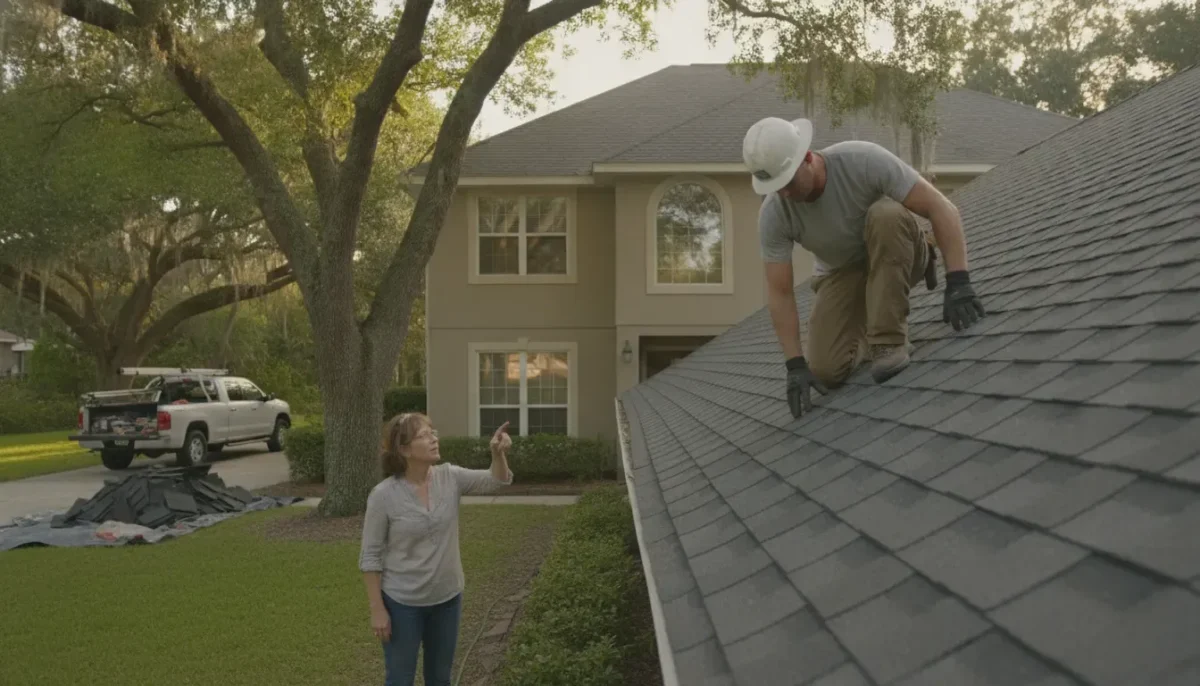
North Wood’s Roofing uses inspections and clear photos to help homeowners understand the condition of the roof before choosing between repair, replacement, or a material upgrade. That explanation is more useful than a bare total because it gives you a way to evaluate the work.
How do roofing materials change the total project?
Material choice affects more than the visible surface of the roof. It can change the weight, installation process, accessories, labor, maintenance expectations, and the way the system handles North Florida heat, storms, and humidity. Compare the complete system and warranty information, not just the shingle or panel name.
| Roofing option | What to compare | Questions to ask |
|---|---|---|
| Asphalt shingles | Shingle line, underlayment, ventilation, flashing, installation details, and warranty terms | Which shingle is proposed, and what components are included with it? |
| Metal roofing | Panel profile, substrate, fasteners, trim, penetrations, coatings, and maintenance expectations | How will the system be detailed around valleys, vents, walls, and other penetrations? |
| Existing roof repair | Repair area, source of the problem, flashing, surrounding materials, and future replacement risk | Why is repair appropriate, and what evidence supports that recommendation? |
North Wood’s Roofing offers shingle roofing and metal roof installation, including GAF-certified Timberline HDZ and Timberline UHDZ products. A material recommendation should still be tied to the specific home’s design and condition. Certification or a product name does not replace a complete installation scope.
Mid-project planning tip: If you are weighing shingle and metal options, ask for each option to be written as a separate scope. That makes it easier to compare the roof system, preparation, warranty, and cleanup without mixing details from two different proposals.
Ask North Wood’s Roofing about the roof system that fits your home after an honest inspection and clear explanation of your options.
How does North Florida weather affect roof planning?
Gainesville homeowners plan around a combination of strong sun, heat, humidity, heavy rain, and storm exposure. Those conditions make installation details and maintenance planning important. They do not create one automatic material answer for every home, but they are valid reasons to discuss ventilation, flashing, underlayment, drainage, and the product system with a qualified contractor.
When reviewing an estimate, ask how the proposed roof system is suited to the home’s exposure and how vulnerable details will be handled. Pay particular attention to valleys, eaves, roof-to-wall transitions, vents, skylights, and areas where water can collect or wind-driven rain can reach the assembly.
Florida’s official Hurricane Retrofit Guide includes homeowner information about reroofing and roof details. It is a useful background resource, but it is not a substitute for a project-specific inspection or the current requirements of the local permitting authority. The contractor’s estimate should connect general climate concerns to the actual roof instead of using storm language as a vague sales claim.
What should a written roof replacement estimate include?
A written roof replacement estimate should identify the proposed work, materials, responsibilities, and conditions that could affect the final scope. It should be detailed enough for a homeowner to compare two proposals line by line without guessing what is hidden behind a broad phrase such as complete replacement.
- Property and roof description: Confirm the address, roof areas, roof type, approximate measured surface, and any sections excluded from the proposal.
- Removal and preparation: Ask whether tear-off, disposal, protection for landscaping and exterior surfaces, and deck inspection are included.
- Roof system components: Look for the primary covering plus underlayment, starter materials, ventilation, drip edge, flashing, sealants, fasteners, and other components needed for the proposed system.
- Repair allowances: If the contractor cannot see concealed conditions before tear-off, the estimate should explain how damaged decking or other hidden conditions will be documented and approved.
- Labor and timeline: Ask who performs the work, what scheduling depends on weather, and what steps occur from preparation through cleanup.
- Permits and inspections: Confirm which party obtains required permits, coordinates inspections, and includes related fees.
- Warranty information: Separate manufacturer product coverage from contractor workmanship coverage, and ask what maintenance or registration requirements apply.
- Payment and change terms: Understand the deposit, payment milestones, cancellation terms, and process for approving a change in scope. Do not rely on an estimate that leaves these items unclear.
North Wood’s Roofing’s approach is to provide an honest inspection with clear photos and no-pressure options. When a homeowner can see the reason for the recommended work, the estimate becomes a decision tool instead of a mystery total.
How should homeowners compare roof replacement estimates?
Compare roof replacement estimates by matching the scope, roof system, preparation, warranties, contractor responsibilities, and exclusions. The lowest total is not necessarily the lowest project cost if it leaves out tear-off, ventilation, flashing, cleanup, permits, or likely deck work.
Use this comparison process:
- Match the measured roof: Check that each contractor is estimating the same roof areas and has noted the same additions, such as a garage, porch, low-slope section, skylight, or detached structure.
- Match the system: Compare the exact material line, underlayment, ventilation, flashing, fasteners, and accessories. A shingle name alone is not a complete specification.
- Match the preparation: Confirm tear-off, disposal, deck inspection, protection, and cleanup. Ask how concealed damage will be handled.
- Check exclusions: Highlight anything listed as excluded, optional, allowance, or owner-provided. Ask why it is excluded and when it may become necessary.
- Review warranty language: Make sure you know which warranties come from the manufacturer and which come from the contractor, and what each one covers.
- Evaluate communication: A contractor should explain the inspection findings, answer questions directly, and give you enough information to make a decision without pressure.
North Wood’s Roofing is a veteran-owned, owner-led residential roofing contractor serving Gainesville, Live Oak, Lake City, and North Florida. The company is licensed and insured and focuses on quality workmanship, durable materials, clear options, and an honest evaluation of the home.
What is Florida’s 25 percent roofing rule?
Florida’s 25 percent roofing rule refers to a code provision that may require more extensive replacement when more than 25 percent of a roof area or roof section is repaired, replaced, or recovered within a 12-month period. The exact application depends on the building, roof section, permit, and code edition, so homeowners should ask the contractor and local authority to confirm the current requirement.
The Florida Building Commission publishes the code modification language and related documents. Review the official Florida Building Code reference for background, then rely on a project-specific evaluation rather than assuming an internet summary applies to your home. A contractor should explain whether the planned work is a repair, a replacement, or a larger code-triggered scope.
What time of year is best for a roof replacement?
There is no dependable single cheapest season for every Gainesville roof replacement. Scheduling depends on contractor availability, weather, material availability, permit timing, and the condition of the existing roof. Waiting for a preferred season can also leave a known leak or deteriorating roof exposed to more heat and rain. Ask for the earliest realistic schedule and the weather-related plan.
Rather than choosing a month based on a broad online claim, ask each contractor how the schedule is set, how rain affects installation, how materials are protected, and what happens if concealed damage is found. A clear plan is more valuable than a promise that a particular season will automatically reduce the cost.
Ready to replace an aging or damaged roof? Contact North Wood’s Roofing for a free honest inspection and estimate with clear photos and no-pressure options.
Before you request a roof replacement estimate
Gather any records you have about the roof, including the approximate installation date, past repairs, storm events, leaks, insurance correspondence, and visible changes such as missing shingles or ceiling stains. Do not climb onto the roof to investigate unsafe areas. Take ground-level photos when it is safe, note where and when water appears, and tell the contractor about attic moisture or ventilation concerns.
For homeowners still deciding between repair and replacement, North Wood’s Roofing’s roof repair service page can help you identify the next conversation. For broader planning, read the comprehensive roof replacement guide. If you are comparing materials, review the company’s shingle roofing and Gainesville metal roof installation pages, then request an inspection for recommendations tied to your home.
The goal is not to chase an unverified price. It is to understand the work, compare equivalent scopes, and choose a roof plan that fits the home’s condition and your priorities. A clear inspection and written estimate give you the information needed to make that decision with confidence.